
Artificial Egg.
Bird News Items
1. Let's begin with great news from the City That Never Sleeps: From the 1990s until his death in 2023, Pale Male was the red-tailed hawk that was famous for the Fifth Avenue address and the girlfriends. Now Octavia, the name given to his last mate, has returned to the nest they shared — with someone else. “So much drama,” said Stella Hamilton, a birder who has watched Octavia since 2014, even following her to stealthy rendezvous with another hawk during the Pale Male days. Then, after Pale Male’s death, “she was kind of picky about selecting a mate,” Hamilton said. “Every year she would have a boyfriend, but it wouldn’t last. Just not satisfied with their nest-building skills, or whatever.” The birding world doesn’t seem to have settled on a name for the new guy. But in the last few days, the two of them have been seen doing the things new parents do, like flying off for takeout — a rat, or perhaps a pigeon. There have been occasional glimpses of a fuzzy whitish ball — a chick. (via The New York Times)
* Pale Male was memorialized 10 years ago in Marie Winn's "Red-Tails in Love" - a really fun read for a beach near you this summer.
2. The Power of Merlin - powering an "avian tourism" industry in Columbia: Samantha Giraldo, 21, was at her family’s home in Colombia last Christmas when an email from a birding enthusiast in India, half a world away, arrived. Merlin and eBird, the world’s most widely used birding apps, had highlighted the Giraldo family’s small hotel — named after the guácharo, or oilbird, often found on the property — as a birding hot spot. He was preparing, he wrote, to make the long journey to see it. That was when Ms. Giraldo felt something fundamental had shifted. “So many people tell us that’s how they found us,” she said, referring to the apps. “Not just avid birders but backpackers, retirees, people who are new to this passion.” (via The New York Times)
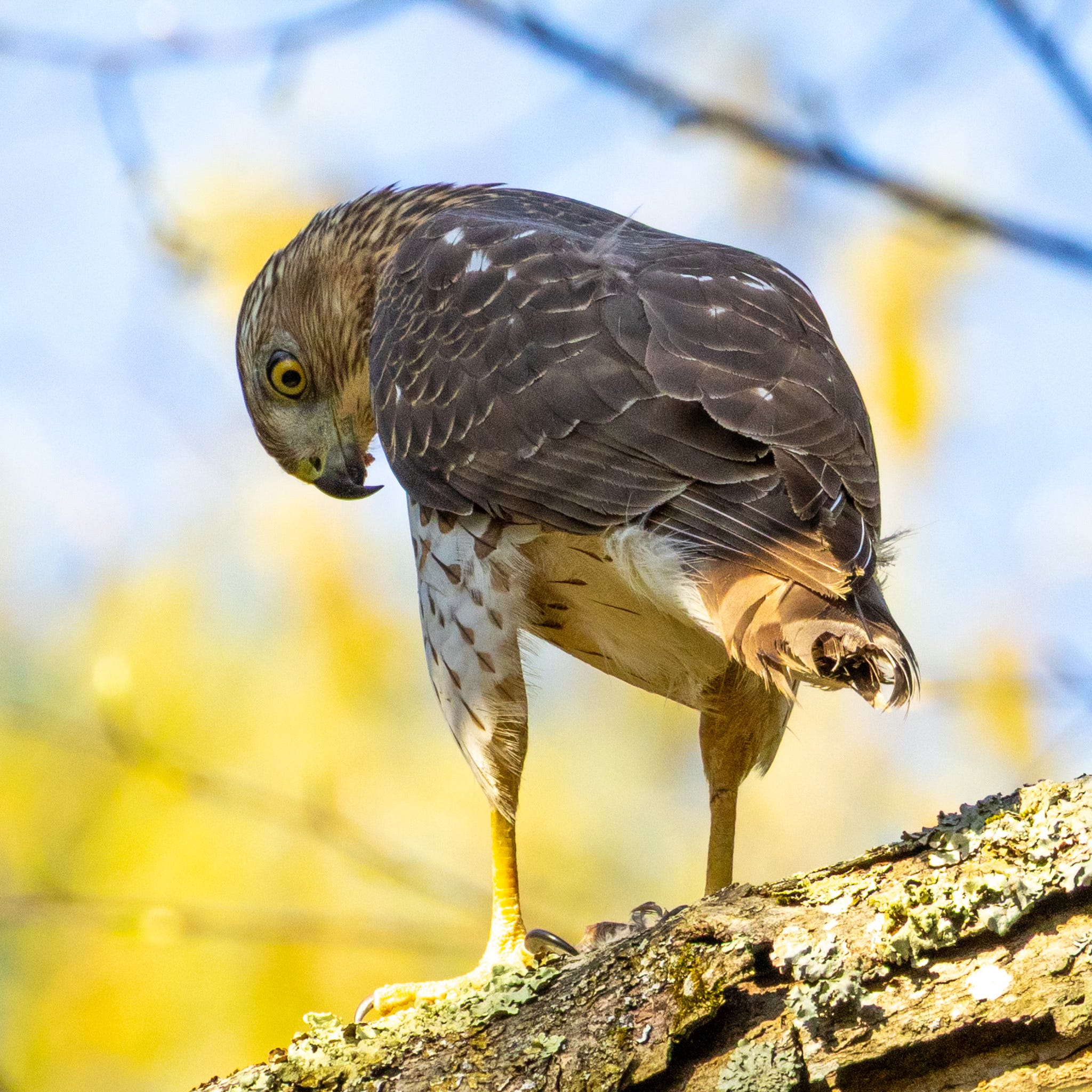
By Hap Ellis, Cooper's Hawk - Arnold Arboretum, Boston, MA
3. Heartwarming story about Brian Lendrum, blind since infancy, birding by sound: For the past decade, each spring has been a little more quiet to Brian Lendrum. The 76-year-old birder likes to stand outside his home on the shores of Lake Laberge, north of Whitehorse, and record the calls and songs around his property. Then he listens back — and hears birds he missed while standing there. Lendrum, who is blind, spent decades learning to locate and identify birds by sound. But now, he said, as he ages his hearing is “just very, very gradually going down every year.” He first began to take notice of the avian soundtrack when he moved from Whitehorse to his more rural Lake Laberge home about 40 years ago. “I have been blind since infancy,” he said. “So naturally I pay attention to my ears all the time.” (via CBC)
4. Wildlife resistance can help! (Note: this may be the only time this year you will see the phrase "...the share of K. pneumoniae isolates resistant to third-generation cephalosporins..." in print): Red foxes and birds regularly cross between human-dominated and natural ecosystems. For this reason, they may be heralds of spreading antibiotic resistance into ecosystems unexposed to antibiotic pressures, a study done in Italy showed. Results indicated that the share of K. pneumoniae isolates resistant to third-generation cephalosporins – a key group of hospital antibiotics – was about five times higher in wildlife than in isolates from human hospital patients. This shows that studying wildlife resistance can be an effective tool to monitor antimicrobial resistance in natural environments, the researchers said, and called for improved wastewater management, a reduction of antibiotic pollution of water, and a restriction of clinically important antibiotics to human medicine. (via Frontiers)
5. Red-tails mating on Fifth Avenue is a feel good story, but wild bird sales in NYC? Not so much: The City Council will reintroduce a bill banning the sale of birds at pet stores across New York after a fledgling attempt last year didn’t get off the ground. Councilmember Harvey Epstein, a Democrat from Manhattan, will introduce the bill that would prohibit the sale of some birds in pet shops. These include non-poultry birds like parrots, cockatiels, finches, parakeets, and macaws. “Far too many birds sold in New York City pet stores come from out-of-state bird mills: massive commercial breeding facilities where thousands of birds are confined to cages and treated like inventory instead of living beings,” Epstein said in a statement. (via The City)
6. With all of the threats to existing bird populations, not sure spending money on "de-extinction" makes much sense: Colossal Biosciences—the same company that claimed to “de-extinct” the dire wolf and touted a “woolly mouse” bearing mammoth genes—announced the development of an “artificial egg” that it says is a step toward “resurrecting” extinct birds, including New Zealand’s South Island giant moa and Mauritius’s famous dodo. Many scientists disagree with the entire notion of “de-extinction.” “Nothing will ever bring back a mammoth; nothing will ever bring back a dodo,” says Victoria Herridge, an evolutionary biologist at the University of Sheffield in England. “Extinction really is forever.” But Colossal’s “artificial egg” technology is intriguing. In past work in mammals, scientists have proposed impregnating closely related, still existent species with lab-created embryos carrying the genetic material of an extinct species. (via Scientific American)
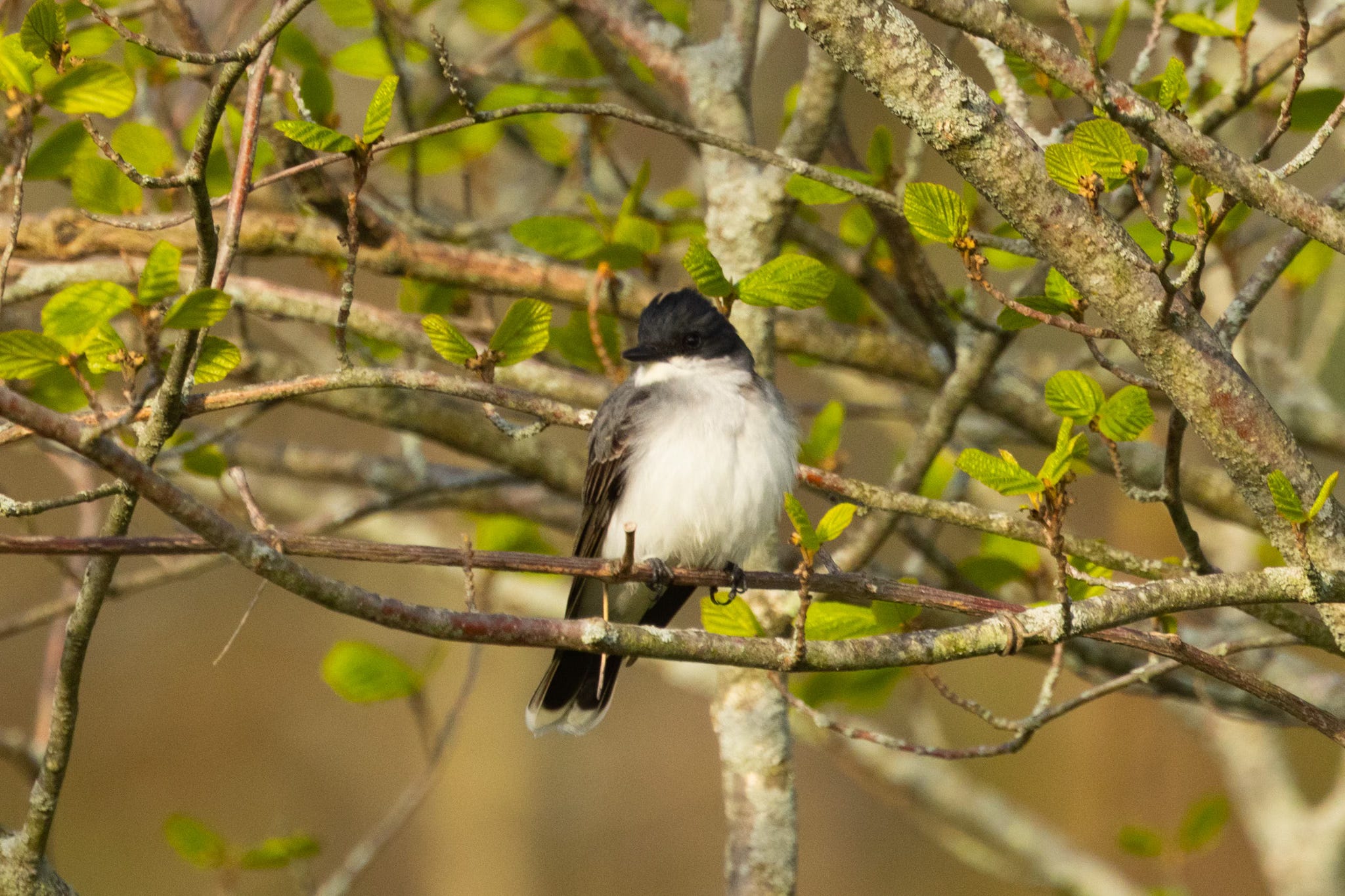
By Hap Ellis, Eastern Kingbird - Arnold Arboretum, Boston, MA.
7. From China, "Birdwatching cured my mental burnout": On Xiaohongshu, “birdwatching” has racked up over 820 million views. , 700 million plays. In the past year alone, birdwatching posts on Xiaohongshu (also known as RedNote) reached 1.2 times the total of the previous decade combined. But the most telling number is the , based on an official report from Xiaohongshu: two years ago, content creators in this space were around 35. Now, most are around 25 years old. The turn toward birdwatching is not an isolated hobby shift. But it is worth being precise about what makes this generation’s version different from what came before. (via Jing Daily)
8. Keeping track: Birds, lights, windows and migration in Chicago: Every morning during the spring migration season of March to June, Prince, director of the Chicago Bird Collision Monitors, leads hundreds of volunteers who scour downtown Chicago searching for migratory birds that have collided with windows. Their busiest period is right now: Mid-May is the peak time for migratory birds to fly north through Chicago. And while millions of birds fly through Chicago this spring, conservationists, architects and city leaders are grappling with how best to protect hundreds of species, as the city serves as both a critical stopover site and a dangerous obstacle along that migration route. (via The Chicago Tribune)
9. A look at the Confluence Lab at the University of Idaho through the eyes of Lexi Arritt: Lexi Arritt likes birds. Migratory birds, songbirds, local all-year-long birds. She owns binoculars for bird watching, hikes birding trails and wears bird merch for fun. The University of Idaho English student who earned a master’s degree in Spring 2026 wasn’t always a bird buff. But her six-year long enthusiasm to recognize the songs, silhouettes and learn the names of feathered creatures also prompted her to look for new ways to talk about birds. Arritt is in the process of building a community birding web platform called Migratory Methods that will include narratives about the avian world, stories and poems, ornithological research, fly zone maps, bird identification, and a birder’s forum. (via University of Idaho)
10. And then looking into the eyes of a bird through the eyes of Sci-Fi novelist: On a cool April morning at the height of Washington, DC’s always brief spring, the science fiction novelist Ray Nayler and I found ourselves in a staring contest with the world’s heaviest flying bird. We were standing at the fenceline of the Kori bustard exhibit at Washington’s National Zoo when the largest of the already enormous omnivores broke away from its flock at the rear of the enclosure and began stalking toward us. Gray and black and white with a parrying dagger for a beak, the Kori bustard resembled a heron that had taken up powerlifting. (via Vox)
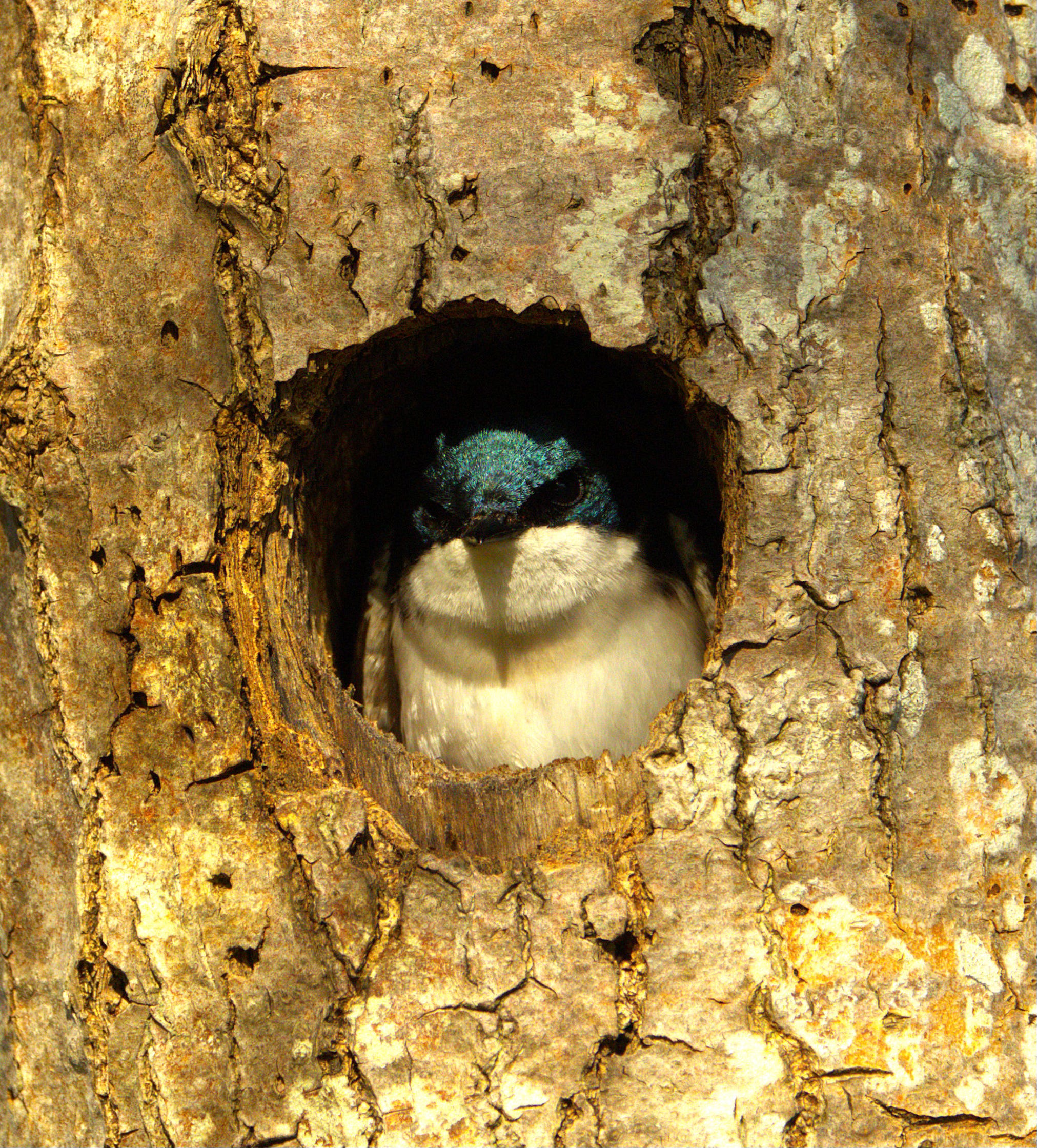
By Hap Ellis - Tree Swallow in a tree (and not a nesting box) - Biddeford, ME
11. New gear news: Spotting scopes are traditionally a wildlife and bird watching essential, offering a stable and highly magnified view of distant subjects — much greater than monoculars can — but little has changed in these devices for decades. That was until now. Meet the Go Birding M One Smart AI spotting scope — it looks just like a regular spotting scope, only it’s equipped with AI hardware and a host of handy tools that could change wildlife and bird watching. Following in the footsteps of the premium Swarovski Optik AX Visio binoculars, which we have tried and tested, the Go Birding AI spotting scope has ‘industry-leading AI recognition’ and can identify up to 10,000 species of birds. (via Tech Radar)
12. Costa Rica has long since taken notice of the power of avian tourism: Costa Rica will host the North American Bird Fair Costa Rica 2026 from June 4 to 7 in Sarapiquí, bringing together birdwatchers, nature photographers, tourism operators, educators, naturalists and conservation groups for a four-day event focused on birding, conservation and nature-based tourism. The event will take place in Puerto Viejo de Sarapiquí, Heredia, one of the country’s best-known birding areas and a long-running destination for visitors interested in rainforest wildlife. The fair’s program is expected to include field activities, talks, educational spaces, photography experiences, exhibitions, meetings with experts and activities tied to conservation and nature tourism. (via Tico Times)
13. From the American Ornithological Society, the James G. Cooper Early Professional Award winners are: Each year, the American Ornithological Society (AOS) recognizes early-career researchers with awards celebrating excellence in ornithology. This year’s early-career research awardees represent remarkable contributions to the scientific study and conservation of birds. The 2026 recipients will accept their awards and deliver plenary talks at the 2026 AOS annual meeting (AOS 2026) this August in Amherst, Massachusetts, USA. (via EurekaAlert)
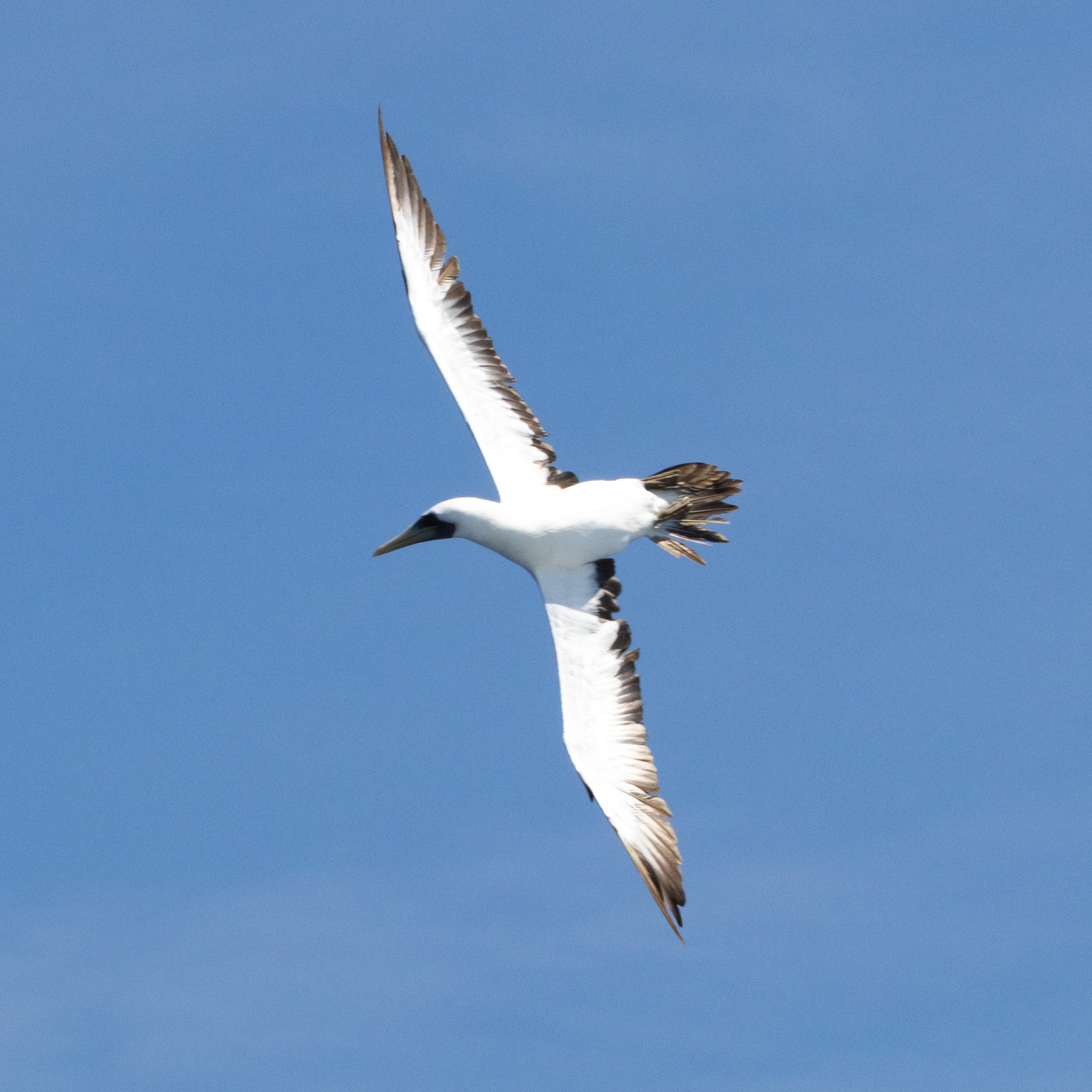
By Hap Ellis - Masked Booby - ~60 miles Off Cape Canaveral, FL.
14. Deep science: protein markers improve the accuracy and quality of bird DNA sequences: A new computational program, MicroFinder, enables faster and more accurate assembly of bird genomes. Improved genome assemblies will help researchers better understand bird biology, evolution, and help inform conservation efforts. Detailed in an article published in GigaScience, MicroFinder uses protein markers to improve the accuracy and quality of bird DNA sequences, particularly in their tiny and difficult microchromosomes—regions that normally make genome curation incredibly challenging and time-consuming. MicroFinder was created by researchers at the Wellcome Sanger Institute and has been made freely available to scientists worldwide on GitHub. (via Phys Org)
15. Book review: Birds are in trouble. In the United States alone, one-third of bird species are rated as of high or moderate conservation concern. North American forests have lost more than one billion birds in the past half-century. A 2019 study found that grassland bird populations have declined by 53%, and 90% of those losses come from just 12 of the most common avian families, including sparrows, blackbirds and finches (K. V. Rosenberg et al.Science366, 120–124; 2019). Naturalist Scott Weidensaul, the author of more than 30 books about birds and nature, calls this trend “a gut punch”. Weidensaul wrote about the wonders of bird migration and the challenges facing migrating birds at a time of rapidly changing climate and massive habitat loss in his 2021 book A World on the Wing. After a colleague suggested that he might write another book about what is going right for birds, Weidensaul responded with his latest work, The Return of the Oystercatcher. (via Nature)
16. Let's finish with a wonderful story about Iris, the Queen of Hellgate Canyon. Iris is a female Osprey in Montana and her story is worth your time over a second cup of coffee: An online sensation, Iris the osprey has captured hearts as viewers remain glued to her nest camera. Here’s why you should be watching. You probably don’t often think about how long wild birds live. While some species, such as bald eagles, have lengthy lifespans, others are with us only for a short while. With that in mind, birds that survive past their species’ typical lifespan can generate interest — especially if they happen to be the subject of a beloved, long-running nesting cam. Iris, the oldest known nesting osprey, is one such bird. Here’s why she’s remarkable. (via Birds and Blooms)
Bird Videos of the Week
Video by 60 Minutes, “The Pigeon Mafia”.

Cornell Live Bird Cam - European Starling fledgling’s sudden appearance in the nest.

Cornell Live Bird Cam - Shhh... someone's sleeping.
Thanks for mentioning Iris. I love her.