
Beautiful Wilderness.
Bird News Items
1. To begin, grab a second cup of coffee and enjoy this wonderful Cornell Lab video regarding the raptors of Alaska's Colville River - "America's Arctic":
Alaska’s Colville River is internationally recognized for its extraordinary raptor populations. The river drains much of the North Slope of Alaska as it winds more than 400 miles to the Arctic Ocean. Its steep cliffs host among the highest densities of nesting birds of prey in the entire Arctic: Peregrine Falcons, Gyrfalcons, Golden Eagles, and Rough-legged Hawks all raise their young here. The area is also home to caribou, moose, wolves, grizzly bears, and fish and provides subsistence resources for Alaska Native communities.
But in 2025, Special Areas are under imminent threat of losing their protections from proposals that aim “to allow the maximum possible extraction of gas and oil to meet the Nation’s total energy need,” according to the Federal Register. (via All About Birds)
2. No more "little old ladies in tennis shoes" in the Central Park birding community: Tamir Gray had been skeptical when his girlfriend invited him along to bird-watch one weekend last spring. He figured it would be boring. Gray was still in university and had been living according to the maxim that time outside was best spent being active. Still, Gray went with her to Central Park, which is a bird-watching hub due to its size and combination of woodlands, open spaces and bodies of water. His girlfriend, who’d started birding a few months prior, had a pair of binoculars, and, shortly after they set out, something came over Gray: “I don’t know what exactly it was, but I just — the entire time that we were there, I was like, ‘I want to hold the binoculars,’” he said. Gray became a birder overnight and has been frequenting Tompkins Square Park during migration seasons ever since. (via Salon Magazine)
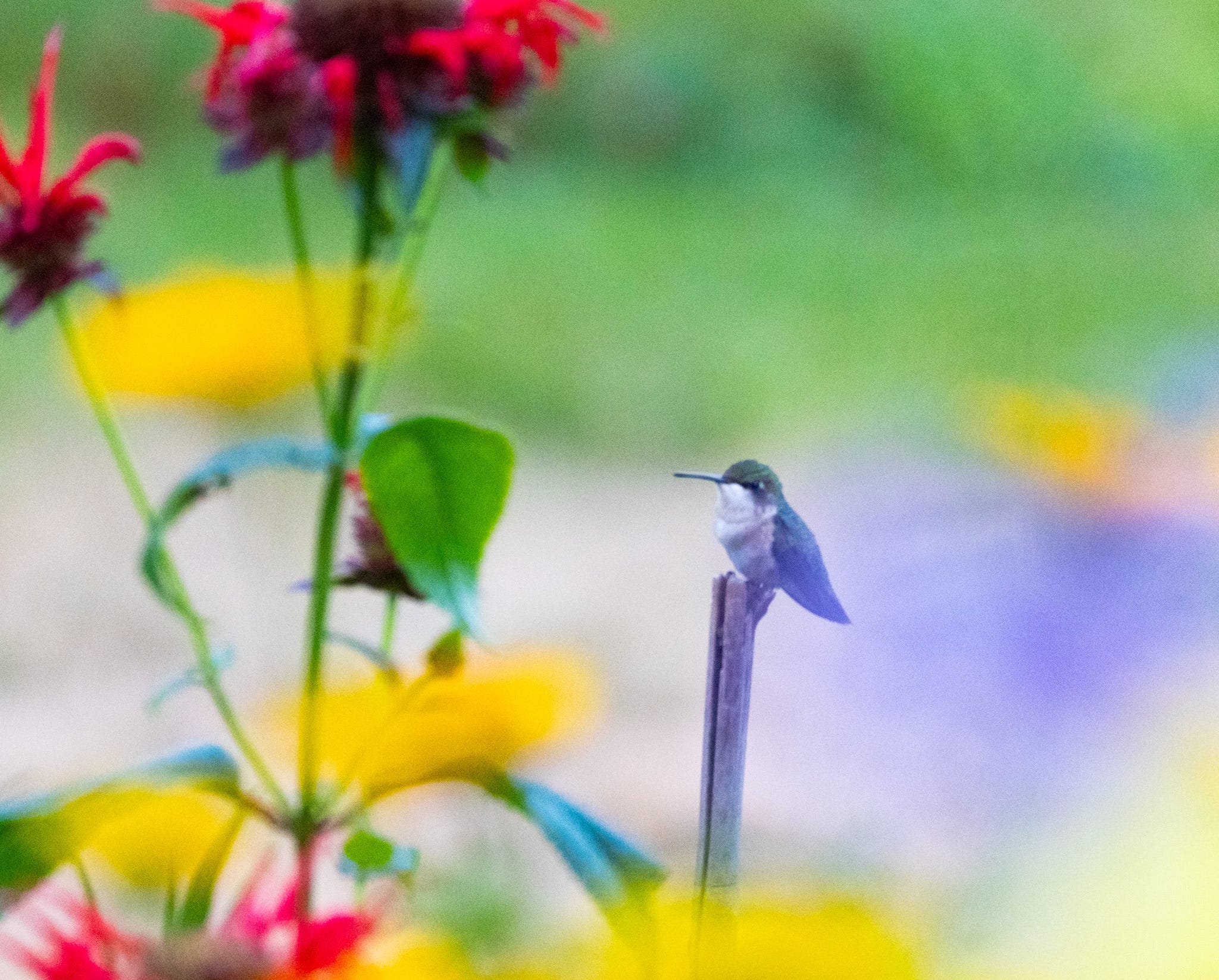
By Hap Ellis, Ruby-throated Hummingbird - Kennebunkport, ME.
3. Troubling news from Hawaii - no "long-term substitute for Federal funding: Ever since the federal budget ax came for wetland and forest protection jobs earlier this year, nonprofits and private groups have been trying to fill the gap in hopes that the government would soon see the error in its ways. But with limited resources, several of their leaders said, those efforts can only go so far and for so long. “We’re not a long-term substitute for federal funding; it’s just not possible,” said Peter Stine, president of the nonprofit Friends of Hakalau Forest. “But we do everything that we can.” Yet the threat to the work has not gone away. Some of the local U.S. Fish and Wildlife Service and National Park Service employees who were fired in February managed to get their jobs back as legal challenges to the cuts moved through the courts. Some could lose their jobs again, however, as the threat of more cuts looms. (via Honolulu Civil Beat)
4. This Oxford study finds "a clear behavioral signature in the winter months that can forecast...divorce" in these song birds: In a discovery that deepens our understanding of animal social bonds, a study led by University of Oxford researchers in collaboration with the University of Leeds has demonstrated that wild great tits exhibit clear behaviours signalling ‘divorce’ long before the breeding season. The findings, published this week in Proceedings of the Royal Society B, provide valuable new insights into how animals navigate complex social decisions. (via University of Oxford)
* Add the word "divorce" to research on birds and editors, like the ones at NPR, take note apparently: Getting divorced is a common and unpleasant experience for many people, but new research shows a European songbird has its own version of heading to splitsville. The new study reveals that some avian couples appear to call it quits at the end of their breeding season. The divorcees appear to go their separate ways while other couples stick together over the winter months so they can breed together again in the spring. While the findings may be unsurprising to anyone who's been through a breakup, it does show that socialization matters for more than just humans. (via National Public Radio)
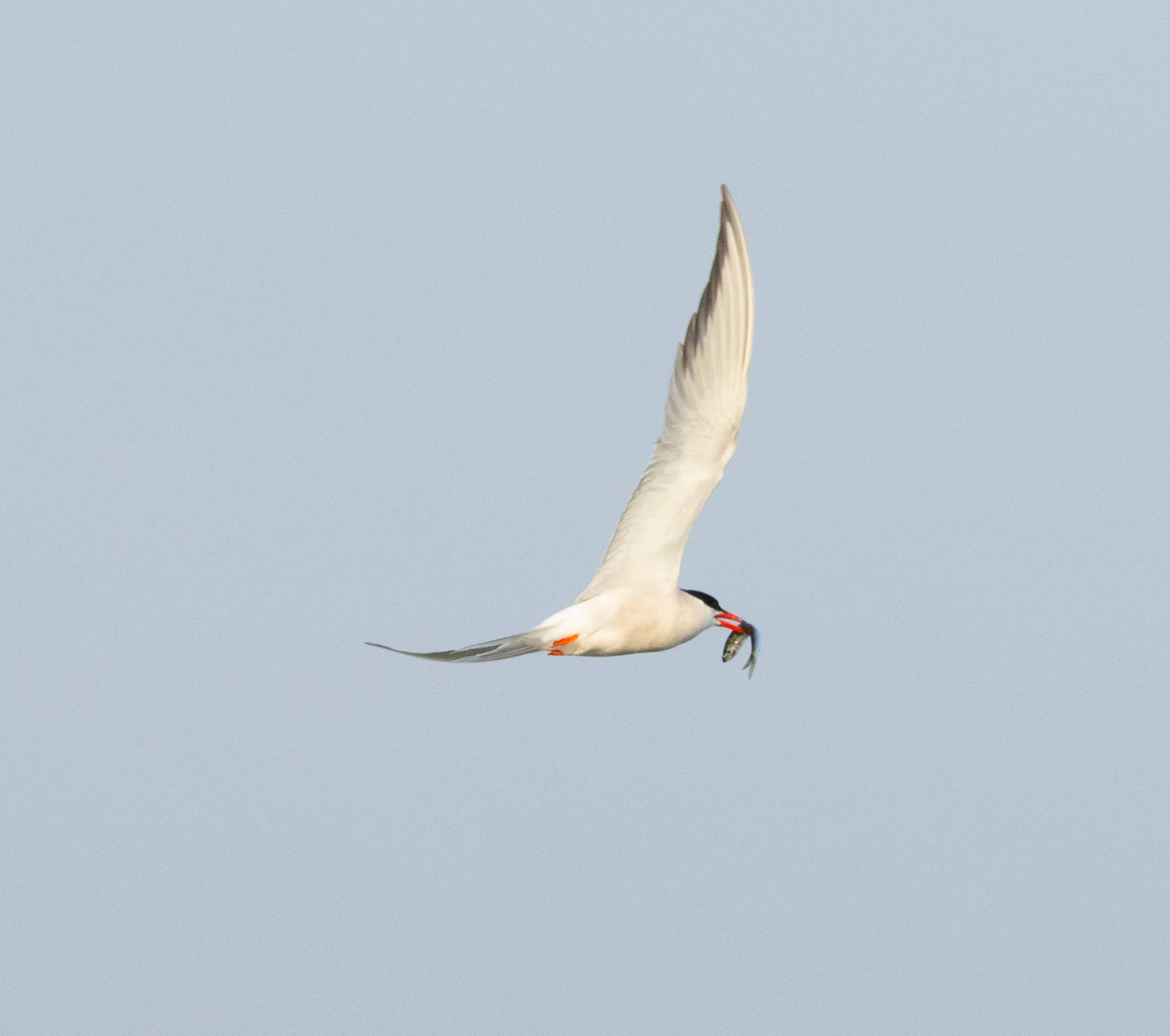
By Hap Ellis, DoorDash (Common Tern style) - Cape Porpoise, ME.
5. 47% fewer birds this Spring in Oregon - "(A) call to action instead of a reason to despair": Every spring, Oregon birders break out their binoculars to catch glimpses of colorful migrating birds. But this year, something was off. The trees and skies were unusually empty. “They just weren’t there,” said Brodie Cass Talbott, an engagement manager with the Bird Alliance of Oregon. Cass Talbott leads group birdwatching walks around the Portland area every spring. “When in the past, on a birdsong walk on Mount Tabor, you might come across five or six Nashville warblers, this year there were zero,” Cass Talbott said. So he turned to national data aggregated by academic researchers, including some from the Cornell Lab of Ornithology. The lab helps run BirdCast, which uses weather radar to track bird migration patterns, and eBird, a citizen science project where birders can document what they see on the ground. (via Oregon Public Broadcasting)
6. Check this out (only 2 minutes):

 Tiktok failed to load.
Enable 3rd party cookies or use another browser
7. From Nature Reviews, "a comprehensive picture of the contribution of avian studies to understanding numerical cognition: Avian species are one of the most diverse and adaptable groups of animals: there are far more species of birds than of mammals, and they occupy a broad range of habitats. Birds and mammals split from a common ancestor over 300 million years ago. Yet certain bird species can perform complex mental tasks, including numerical problems, at levels similar to — and in some cases surpassing — primates, including great apes. Birds thus offer a privileged perspective on the cognitive functions underlying numerical abilities and their evolution. Moreover, birds provide excellent models for studying the ontogenetic development and neural mechanisms underlying numerical computations. (via Nature)
8. A very interesting study in 'People and Nature', researchers examine the unique (and powerful) interaction between birds and humans in western Ethiopia: When Abebayehu Aticho first visited the flat terrains and floodplains in the Gambella region for his Ph.D. research in 2014, he was captivated by the rich biodiversity and bird varieties that inhabited the region. Tucked in western Ethiopia, bordering South Sudan, the Gambella region is home to various bird species like the colorful kingfisher that locals trail to find fish and the black-crowned crane whose calls signal seasonal changes. For the traditional pastoralist Nuer people, who seasonally migrate within Ethiopia’s plains and Africa’s largest wetland in South Sudan, the Sudd, these birds are gaatkuoth, “sacred children of God.” (via Mongabay)
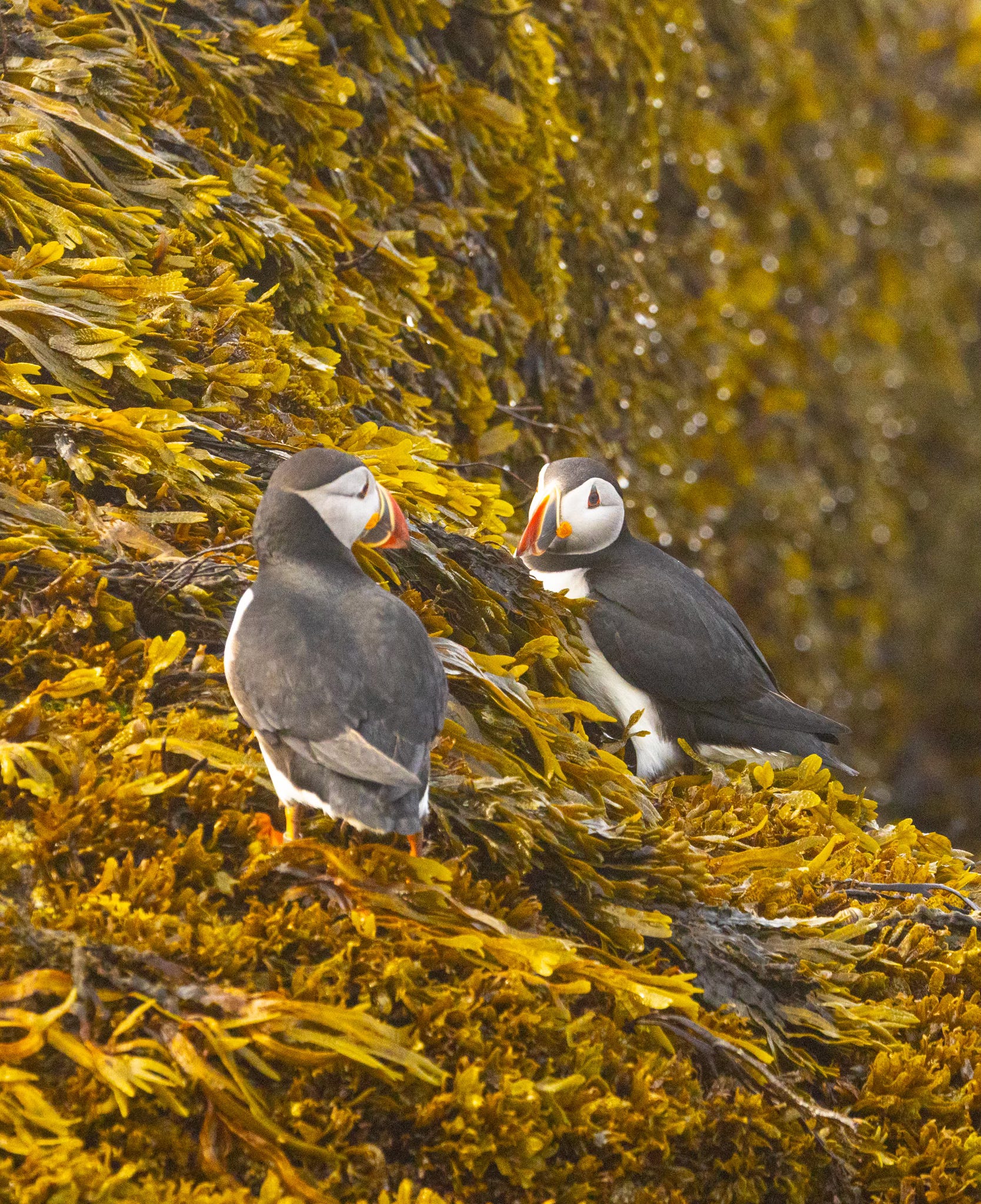
By Hap Ellis, Atlantic Puffins - Eastern Egg Rock, Gulf of Maine.
9. From 4 million birds in 2022 to 500,000 - Peru's "guano birds" (cormorants, pelicans and boobies) are in sharp decline:Scientists along Peru's central Pacific coast are sounding the alarm that more action is needed to protect seabirds, sea lions, and penguins as climate change, disease, and overfishing threaten their survival. Research shows the number of guano birds has dropped by more than three-quarters in the past three years to around 500,000, according to local biologists, down from a population of 4 million in 2022. These black-and-white coastal birds form an important part of Peruvian wildlife, producing large quantities of excrement used as a natural fertilizer. (via Reuters)
10. A license from the state is required simply to birdwatch in a Wildlife Management Area? Say it ain't so, Utah!: Like a school of minnows trying to escape the sharp bite of the pied-bill grebes Ron Rood was trying to photograph in mid-July, Utah’s birding community is confounded. Trail runners, mountain bikers, paddleboarders and other recreational groups in the northern parts of the state have also been caught in the eddy of uncertainty. A new law governing access to Wildlife Management Areas in Utah’s four most populous counties has become so confusing and affected so many groups, in fact, that state legislators are saying they want a do-over. “The impact on the public was more than I certainly expected when we passed the legislation,” Sen. Mike McKell, the floor sponsor for the bill that created the license requirement, told The Salt Lake Tribune. “And sometimes we learn when we pass legislation… there are unintended consequences.” (via Salt Lake Tribune)
11. From younger birders in Central Park to Birding-by-bikes in the Twin Cities (good to see): Monthly for the last four summers, Sherry Gray and David Blaney have been gathering people to ride bicycles around the Twin Cities and look for birds. Called Bike & Bird, it’s one of the activities of the St. Paul Bird Alliance (formerly the Audubon Society), and aims to spread the gospel of low-speed, two-wheeled birding. Last weekend I joined the Bike & Bird group for a ride around Shoreview, a northern St. Paul suburb, where I saw and heard a lot of birds and had a lovely time. My main discovery was that birding by bicycle is a great way to teach yourself patience, the practice of deep observation, and to connect to place. I recommend it as good way to escape your car and get active outside. (via MinnPost)
12. A migration primer from the Cornhusker state: Every spring and fall, the skies above Nebraska fill with thousands, if not millions, of migrating birds. From tiny warblers — weighing less than a few nickels — to towering sandhill cranes, birds are on the move. However, bird migration is more than just “flying south for the winter.” It’s a deeply complex journey essential for the survival and nesting of many Nebraska species. About 75 percent of North America’s 900 bird species are migratory, although each one takes on migration in its own way. Some species migrate short distances, moving just a few hundred feet in elevation into the mountains. Some migrate medium distances, traveling a few hundred miles or so between states, such as North Dakota to Texas. Others, like the Arctic tern, are long-distance migrants, traveling from the Arctic to Antarctica and making a round-trip journey of over 18,000 miles each year! (via Nebraskaland)
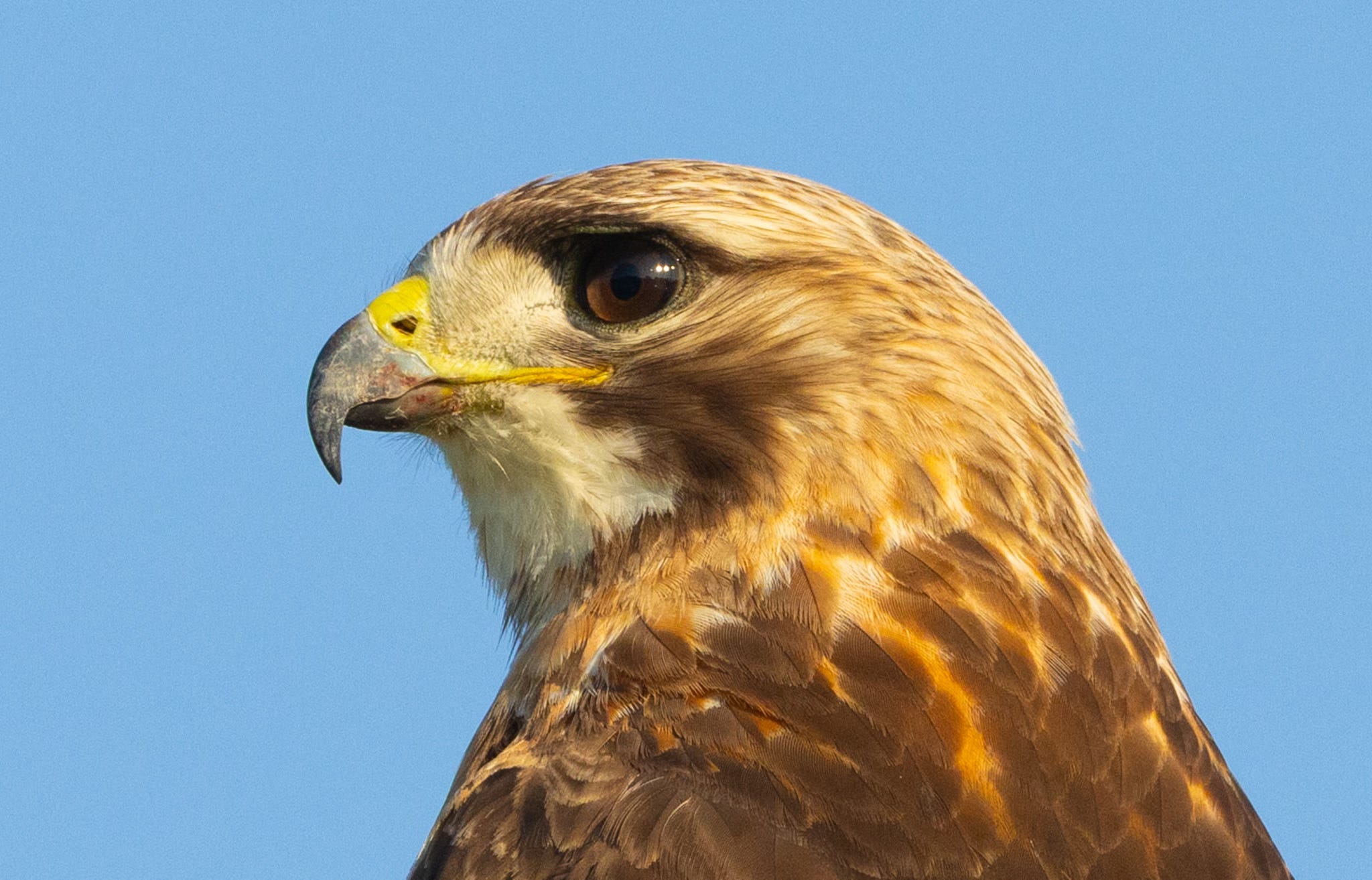
By Hap Ellis, Red-tailed Hawk - Wells, ME.
13. ":One cool example" of...urban evolution: As California’s cities have expanded and encroached upon natural landscapes, it turns out the state’s wildlife is adapting in fascinating ways. Studying these changes is central to urban evolution, or how species adapt over time, both genetically and behaviorally, to the unique pressures of city life. One cool example of urban evolution in California is the story of the dark-eyed junco(Junco hyemalis), a small songbird traditionally found in mountainous forests that is now thriving in urban environments like San Diego and Los Angeles. If you’re a birder or simply someone who enjoys watching the wildlife in your backyard, you’ve almost certainly seen them. Dark-eyed juncos are small songbirds with distinctive dark heads, often spotted hopping around on the ground rather than perching at feeders. (via California Curated)
14. Finally, don't miss this last item - Princess Takamado, a member of the Japanese Imperial Family, captures birds bathing in beautiful photographs: As Japan marks the 80th anniversary since the end of World War Two, constant conflicts remain all over the world. As an ardent birder who takes delight in capturing their beauty through photography, I wish we could take inspiration from these ordinary, blessed moments we are privileged to observe in nature. Perhaps if we valued the sublime magnificence of nature and birds better, peace might return to the planet. Watching children happily splashing around in the fountain at a local park makes me feel cooler myself. When it’s hot, splashing around in water helps cool us down, so I thought it would be fun to share some of my photos of birds also playing in water. (via BirdLife)
Bird Videos of the Week
Video by Channel 4, “UK’s rarest breeding birds raise chicks for first time in six years”.

Cornell Live Bird Cam - Cornell Hawks nest with this chipmunk delivery for her fledgling.

Cornell Live Bird Cam - Iris the Osprey.