
Celebrity Sighting.
Bird News Items
1. April has arrived - and with April spring migration kicks into high gear: Millions of birds have begun winging their way to breeding grounds-which means the BirdCast Migration Dashboard has taken flight. Every day through June 15, BirdCast publishes radar-based reports tracking nocturnal bird migration across every state and county in the contiguous U.S., including estimates of how many birds are on the move, along with their direction, speed, and altitude. If you live in the Lower 48, or if you're just curious about the miracle of migration, be sure to check out the dashboard to see how much migration is happening over your county. (birdcast.org)
2. Attention New Yorkers - the woodcocks are back (briefly) at Bryant Park: The paparazzi staked out their turf, elbow to elbow with dozens of other gawkers on their lunch break on an unseasonably warm spring day in Bryant Park in Midtown Manhattan. Pétanque balls clanged in the background on Tuesday as one celebrity visitor, an American woodcock, a migratory bird, bopped along in a manner befitting John Travolta in “Saturday Night Fever.” An artist, Bird Warde, 28, a former New Yorker who lives in Maine, glanced up from a sketchbook. “Oh, my God,” Mrs. Warde said. “It’s my first time seeing the dance for more than a second.” (via The New York Times)
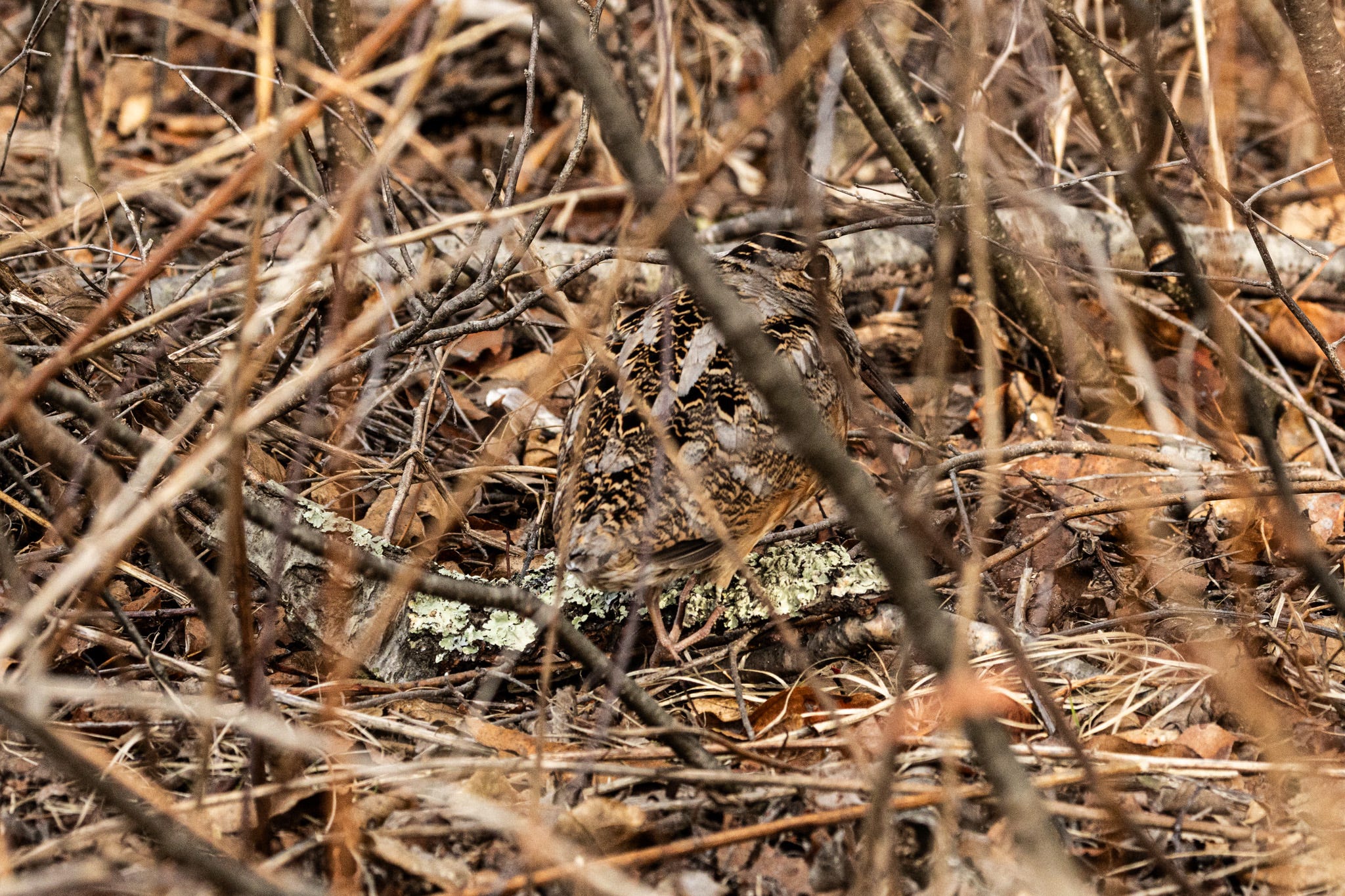
By Hap Ellis, Spring Migration: American Woodcock - Parker River NWR, Newburyport, MA.
3. Good news from the UK: Cranes enjoyed a record-breaking breeding season in 2025, with surveys showing that 87 pairs successfully raised 37 chicks across the UK. The results mark the highest number of breeding pairs recorded and bring the total UK population to around 250 birds, including both adults and non-breeding individuals. This latest milestone highlights the continued recovery of a species that was once lost from the British landscape, offering a clear example of how long-term conservation work can reverse historical declines. (via The Telegraph)
4. 200 years later in the Galapagos...a new bird?: Almost 200 years after Charles Darwin’s groundbreaking trip to the Galápagos islands, a graduate student from San Francisco State University (SFSU) in California discovered a new Galápagos bird species. Ezra Mendales found that the Galápagos lava heron (Butorides sundevalli) is actually a distinct species, and not a subspecies of the South American striated heron (Butorides striata), as scientists previously believed. The bird is described in a study published in the journal Molecular Phylogenetics and Evolution. The Galápagos lava heron is one of 72 new species recently described by researchers with the California Academy of Sciences (Cal Academy). At about 14 to 19 inches tall, Butorides herons like the lava heron are among the smallest of these leggy birds. (via Popular Science)
5. Seabirds and the importance of IBA's: Every year, birds travel extraordinary distances to reach the productive coastal waters of California, where they depend on critical marine and coastal habitats recognized as Important Bird Areas (IBAs). Sooty Shearwaters undertake one of Earth’s longest migrations, breeding in New Zealand before crossing the vast Pacific Ocean to feed in places like Monterey Bay, where they forage offshore within the Piedras Blancas Marine IBA near Cambria. Elegant Terns travel as far south as Chile, but some first feast in places like Aramburu Island in Richardson Bay, part of Audubon’s sanctuary, and nest and forage within the Palos Verdes Marine IBA, an area that supports an estimated two percent of the global population. IBAs are much more than lines on a map—they reflect incredible bird journeys and help us protect the places birds like Sooty Shearwaters and Elegant Terns depend on throughout their remarkable migration cycle. (via Audubon)
6. Speaking of seabirds, a concerning story from the beaches of Santa Barbara: Dead and dying seabirds are breaking the hearts of beachgoers. An Independent tipster described a scene she saw near Goleta Beach on Saturday, walking from the UC Santa Barbara Lagoon to Campus Point: a mass bird grave. She had never seen anything like it. First, she and her companion noticed at least 30 dead cormorants — those short, black seabirds — strewn across the rocks and sand. There are four local cormorant species in Santa Barbara. That includes the Brandt’s cormorant, known for perching on bluffs overlooking the ocean, and which have been observed moving up and down the coast in large numbers recently. The live birds our tipster saw may not have been dying — they may have just been stressed — but it was still a jarring spectacle. (via The Independent)
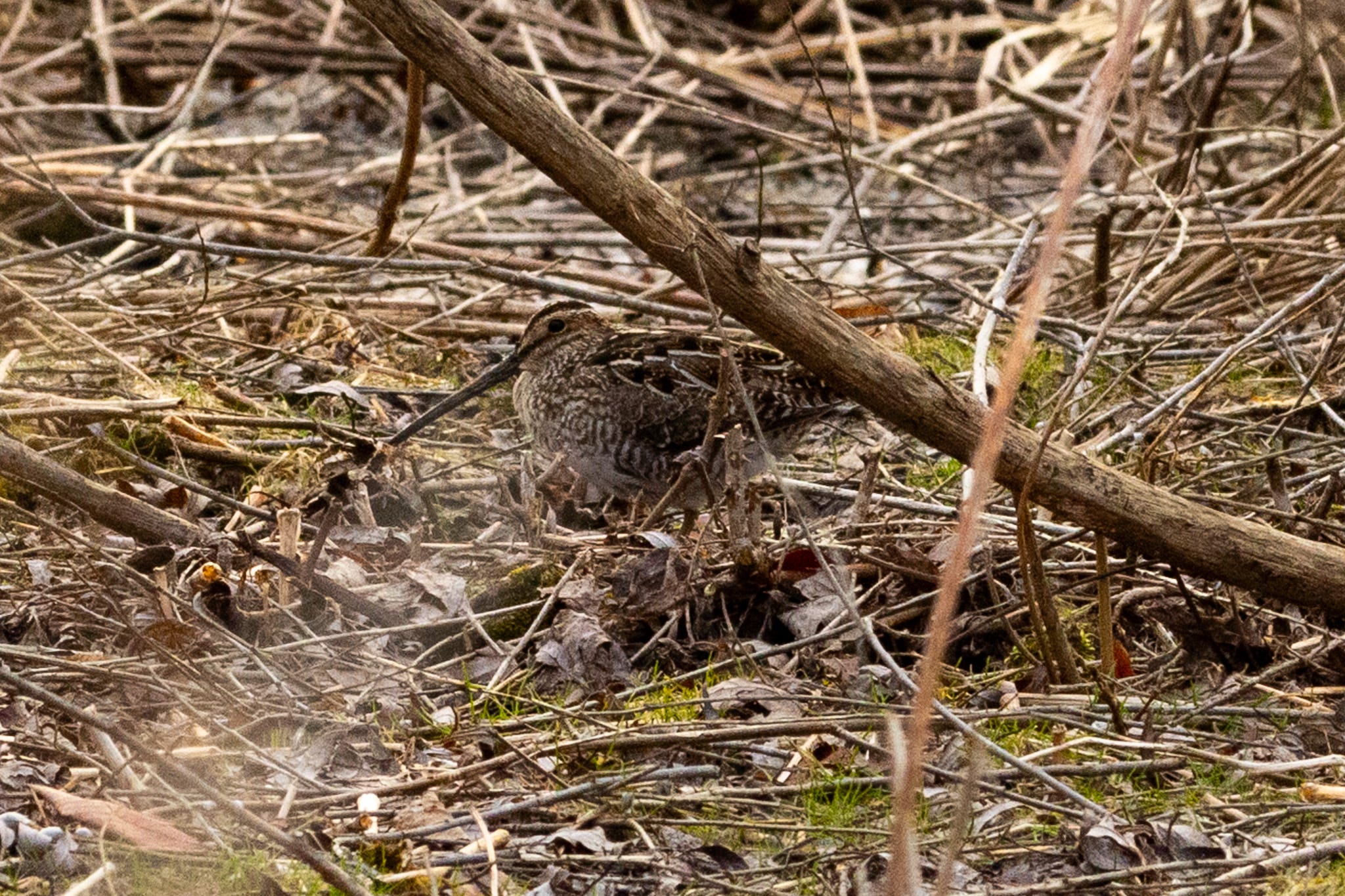
Spring Migration: Wilson's Snipe - Arnold Arboretum - Boston, MA.
7. What it takes - in this case "exclusion zones" in the UK: People are being asked to keep their distance at one of the island’s coastal beauty spots, to protect endangered birds nesting. Manx Birdlife has implemented an “exclusion zone” around Langness during the ground-nesting season from March to August. Of the island’s 332 known bird species, more than 200 have been recorded at the southern peninsula. To safeguard important nesting areas along the coast, signs and temporary rope barriers have been put up in key locations. The measures are aimed at reducing any disturbance to breeding birds, particularly species considered vulnerable or specially protected under Manx wildlife legislation. (via The BBC)
8. Quick video take - the beauty of a swan landing:

9. What 74,974 photographs can tell you: Anyone who keeps a bird feeder has likely had the same uneasy thought after seeing a sudden blur of wings in the yard: What was that hawk doing here? A University of Kentucky Martin-Gatton College of Agriculture, Food, and Environment (CAFE) study helps answer that question. Using thousands of photos shared through the citizen science platform iNaturalist, the authors took a closer look at the diets of two common hawks often seen around neighborhoods, feeders and wooded areas: The Cooper’s hawk and the sharp-shinned hawk. The study found both species are mainly hunters of other birds, filling an important gap in what scientists know about two raptors many people see but few fully understand. (via Phys Org)
10. Your bird of the day? Birds&Blooms takes a close look at Lark Buntings: Standing in stark contrast to the vast blue sky and the golden green prairie grasses, the bold black-and-white male lark bunting is a handsome sight to see. During the breeding season, these distinguished male sparrows are velvety black with white wing accents, a beautiful match for their pale gray beaks. Females, fledglings and nonbreeding males are sandy brown, sporting similar white wing coverts and fine-lined feather edges. It may surprise you to learn that this bird is classified as a sparrow, rather than a true member of the bunting bird family. (via Birds and Blooms)
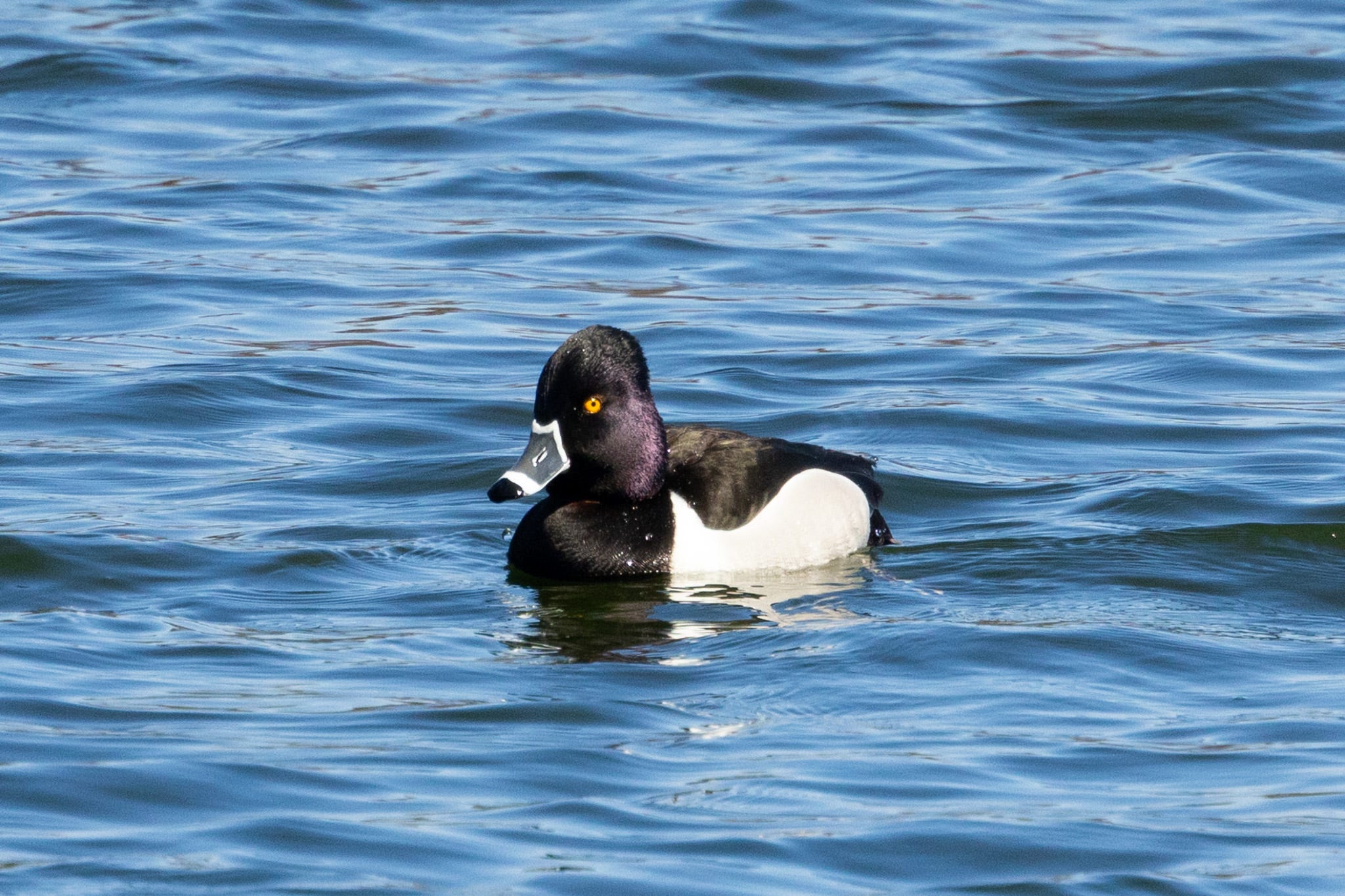
By Hap Ellis, Ring-necked Duck - Chestnut Hill, MA.
11. The wren who changed everything: One day in late 2017, I sat writing. On this morning, I rode a fretful moment, the worry du jour being my first novel, Wren, for which I wasn’t finding a publisher. The challenge of publishing a first novel as an unknown literary novelist with no platform was weighing on me that day. Should I check in with that agent again; should I submit the novel for first-fiction contests; should I…, should I…? We all know this grip of worry, whether or not we work in the creative arts: the fear we are failing at something, missing something we should be doing, watching something we care about (whether kids or relationships or projects) slip from our [illusory] grip of control. (via Patheos)
12. For the botanists among us - "Taking a Birder's Approach to the Botanical World" - a NYT book review: “You see, but you don’t observe,” Sherlock Holmes says more than once to Dr. Watson in an 1891 Arthur Conan Doyle short story. The fictional detective’s vintage admonition feels just right today because let’s be honest: Between rounds of weed pulling, pruning and mulching, how much of the exquisitely intricate order of things in the botanical world outside have we slowed down enough to truly take in? The new book “Let’s Botanize” urges that we do just that: make time to pursue every curiosity, not just march to the demands of the to-do list or look closely only when something blooms or otherwise shows off. Even the most familiar plants probably have more to reveal than we’ve invested the time to notice. (via The New York Times)

Photos from Friends - By Elizabeth Rand, Guessing that the "Lights Out" movement won't hit Hong Kong any time soon! - Hong Kong, China.
13. US travel tip - a "melodious Eco-Resort" in PA: It’s 6:30 on a June morning, and the meadow beneath my eco-lodge balcony is abuzz with chirps, twills, warbles and tweets. The sun’s barely up, but I can already see boats heading out on picturesque F.J. Sayers Lake as the mist rises from its placid surface. Seems I’m not the only early bird at The Nature Inn at Bald Eagle, tucked inside Pennsylvania’s Bald Eagle State Park. From my perch, I note the presence of at least 14 distinct bird species—including indigo bunting, yellow warbler, American redstart, barn swallow, common yellowthroat and red-eyed vireo—identifying their calls with my trusty Merlin app. A flutter of bright yellow is likely a goldfinch, but I’m hoping to catch a glimpse of a warbler or bunting. As an amateur birder, I don’t have the drive to keep a “life list” of all the winged creatures I’ve seen, but I do enjoy a good game of hide-and-seek. (via Arlington Magazine)
14. And then check out Chris Cooper's global travel guide to birding:
15. Finally, this is what we might call "bird adjacent" (Hello Matt!): Do you ever worry that your brain’s slowing down and your mind is … what’s the word … fogging? If you do, I have news. A recent study on birdwatching, with the appropriately named lead author Erik Wing, found that learning to become an expert birder causes changes to the brain that may help to protect against age-related cognitive decline. These same areas also appear more compact, and age-related changes in them are smaller. The take-home message is that learning to tell a chiffchaff from a willow warbler could help us to stay mentally sharp as we age. But what about discerning a common quaker from a clouded drab? Or a brown-line bright-eye from a bright-line brown eye? These are the names, not of birds, but of moths. I’ve been hooked on moths ever since I was a kid. (via The Guardian)
Bird Video of the Week
Video by CBS New York, “American Woodcock Makes Yearly Appearance in NYC”.

Cornell Live Bird Cam - Rufous Motmot.

Cornell Live Bird Cam - Big Red wasn't joking around on April Fool's Day when she laid her fourth egg of the breeding season!
Happy Easter! Go Birding!
always love reading these!