
Filoplume Feathers.
Bird News Items
1. Let's start with the importance of the tiny filoplume: Vanya Gregor Rohwer slid open a drawer to display the rich pink spread wing of a roseate spoonbill, one of thousands of mounted wings at the Cornell University Museum of Vertebrates. He pulled up a long flight feather to expose, at its base, a palm-tree shaped feather so minuscule it could easily be missed. For a long time, this tiny feature called a filoplume was indeed obscure. “The history of research on filoplumes is not super robust. They are kind of an overlooked feather,” said Dr. Rohwer, a curator of birds and mammals at the museum. “They were considered a degenerate feather or a useless feather, a relic.” No longer. Dr. Rohwer and his father, Sievert Rohwer, an influential feather researcher and curator emeritus at the Burke Museum at the University of Washington in Seattle, believe that the tiny filoplume is a key player in the monitoring and maintenance of birds’ feathers, which keep them airborne. (via The New York Times)
2. And then a (very) worrisome question: Every winter, millions of birds fly thousands of kilometers via the Central Asian Flyway (CAF) and East Asian-Australasian Flyway (EAAF), from the frozen expanses of Siberia and Central Asia to the warmer South Asia and beyond. The birds’ migration depends on a chain of intact ecosystems: primarily wetlands, riverine forests and coastal mangroves, which serve as their crucial stopover sites for rest and refueling. However, today, many of these habitats and food sources are disappearing. Researchers from Bangladesh, Nepal, Pakistan, India, the Maldives, Bhutan and Sri Lanka have assessed that wetland conversion amid agricultural expansion and rapid urbanization, unplanned fishing and pollution are degrading the wetlands, mudflats and river systems across South Asia. Bangladeshi ornithologist Sayam U. Chowdhury, a researcher at the Conservation Research Institute (CRI) under the University of Cambridge, explains how rapid urbanization and the loss of natural wetlands pose a serious threat to migratory waterbirds. (via Mongabay)
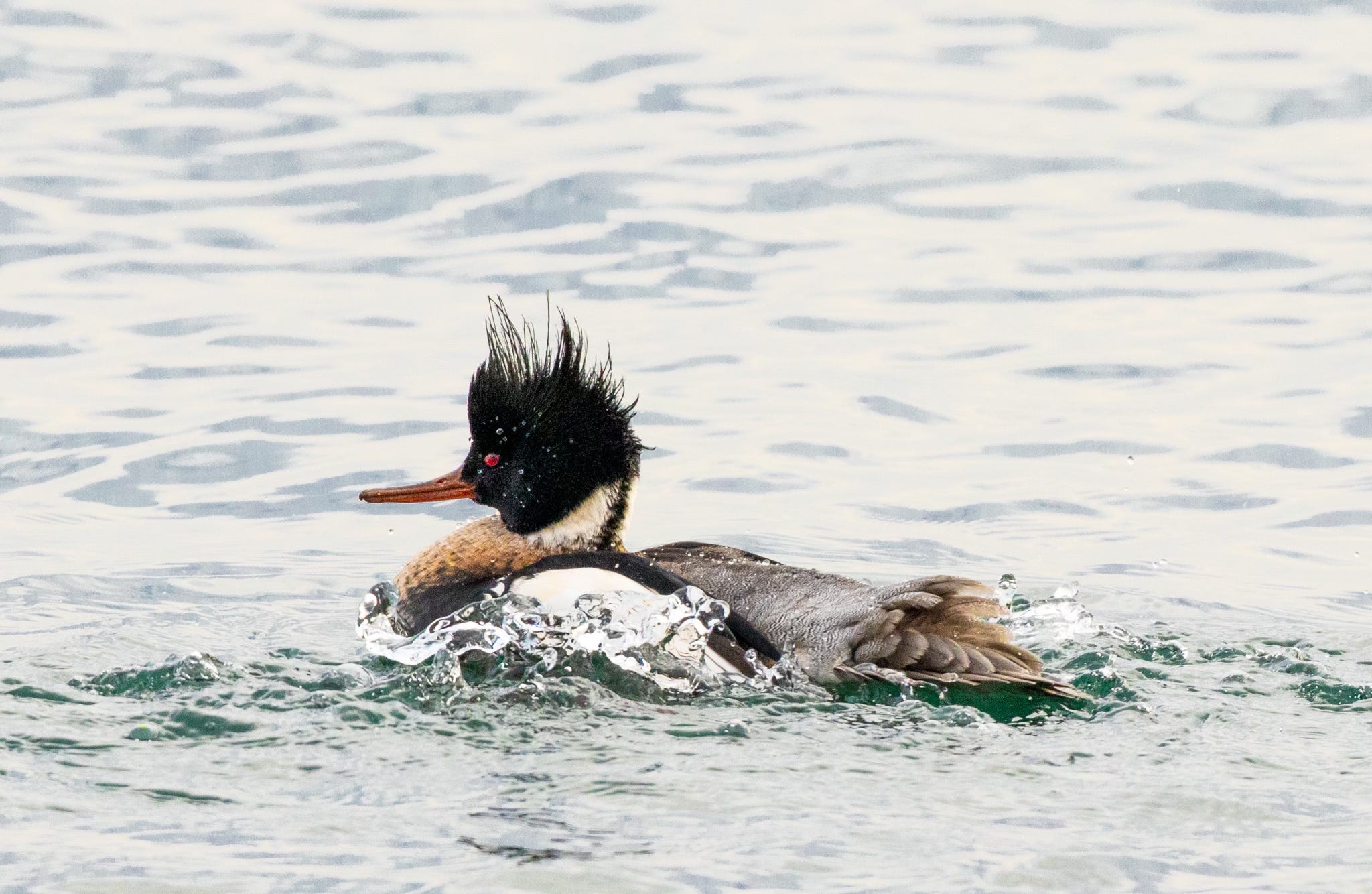
By Hap Ellis, Red-breasted Merganser - Boston Harbor, MA.
3. If you missed earlier articles on the "Five Great Forests", this is a good overview from Audubon. Only about 5 billion (with a "b") birds funnel through Central America!: Ricardo Berrios Perez leads bilingual birdwatching tours in New York City’s Central Park as a volunteer for the nonprofit Latino Outdoors. He knows when migratory warblers have returned to their breeding grounds in North America just by their distinct chirps. But when the colder months roll around, he’s more likely to be found waiting out the freezing temperatures indoors: Much like his favorite travelers, Perez is “not a big fan of winter,” he says. Asthe blistering winter blankets much of North America, migratory birds like Wood Thrushes, Kentucky Warblers, and Magnolia Warblers (one of Perez’s favorites) seek refuge in Central and South America, enjoying the warmer weather and richer foraging. Now, research is revealing a clearer picture of where these species spend time during the months they are absent from North America. (via Audubon)
4. 2025 update on Peregrine Falcon restoration in Iowa: Peregrine falcon reproduction in Iowa “likely remains stable” following successful reintroduction efforts in the 1990s, but the Iowa Department of Natural Resources said monitoring is still warranted due to the threat of the bird flu on the recovering bird population. According to the 2025 peregrine falcon report, four peregrine falcons died from the highly pathogenic avian influenza outside of nesting season that year. The highly pathogenic avian influenza, which has notably killed millions of commercial poultry and egg-laying birds, also spreads among wild migrating birds. The virus primarily infects waterfowl and shorebirds, but can also reach birds of prey like peregrine falcons, osprey and eagles that feast on the other birds. (via Iowa Capital Dispatch)
* Report is here: Iowa DNR Peregrine Falcon Restoration in Iowa - 2025 Nesting Report
5. The importance of native trees underscored in this research: Native trees, such as oaks, have long held a special place in our culture and countryside. Now, researchers have shown that these trees are also important to woodland birds and their offspring. A new study, led by the University of Glasgow and published in the journal Ecology, shows that common woodland birds, such as blue tits, produce more chicks when surrounded by a greater abundance of native tree foliage. (via Phys Org)
6. Can't be lingering in the Adirondacks this time of year: We got through the New Year’s weekend before the next January thaw came with rain on top of the snow which iced up most driveways and walks again. Then, this week, we have been getting snow in inches at a time, where out in some Western states they are getting it in feet at a time. Several loons have been rescued since most of the lakes have frozen over and some Loons lingered too long and got frozen in or tried to get to the ocean but fell short and landed in open fields and on frozen lakes. Some of these were seen, reported and rescued. (via Adirondack Explorer)
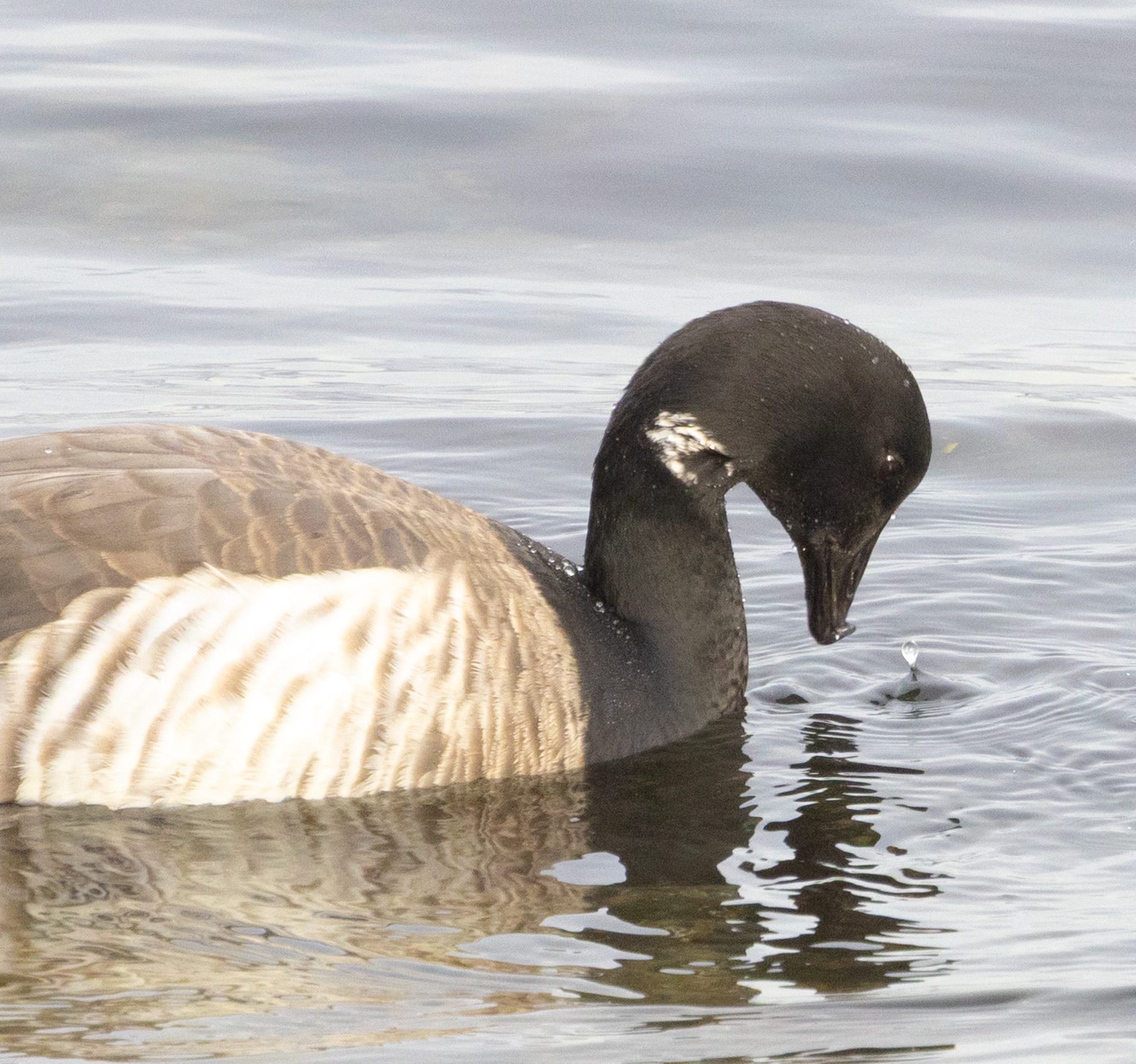
By Hap Ellis, Brandt - Boston Harbor, MA.
7. Despite the extreme violence of the drug wars in the state of Jalisco, these two professors soldier on with important work on climate, draught and migratory birds: Academics from the University of Guadalajara are warning that climate change’s impact on migratory birds from the U.S. and Canada is causing “a silent and growing imbalance in the local ecosystem.” The continued migration of many bird species that arrive in Jalisco each year faces serious threats due to rising temperatures, pollution and the expansion of urban areas with excessive lighting. Biologist Jesús Alberto Espinosa said migration has declined among species that depend on increasingly dry regional wetlands. The climate crisis is particularly evident in the reduction of critical ecosystems that are losing their capacity to provide refuge. (via Mexico Daily News)
8. The Great Backyard Bird Count is just around the corner (February 13-16). Audubon says "show the love" and offers webinars the week before: Love is in the air—listen closely and the sounds of chickadees, sparrows, and thrushes are beckoning you to step outside to experience the love from birds and nature. Take a moment to celebrate what birds and nature give us during the annual Great Backyard Bird Count (GBBC) from February 13 through February 16, 2026. Spending time immersed in nature and watching birds can reduce stress and bring a smile to everyone’s face. Check out this happy group of participants from 2025. Join in the fun this February and spend at least 15 minutes watching birds and sharing what you see with the world at birdcount.org. (via Audubon)
9. Speaking of counts, a CBC report from Great Dismal Swamp NWR: Laura Mae fell in love with birds about a decade ago. She noticed them in the world around her, such as a rare pair of breeding peregrine falcons she watches nest every year in downtown Norfolk. “Birds have just become my favorite,” she said. “I bird morning, noon and night. I dream about birds.” Mae, who lives in Chesapeake, also participates in the annual Christmas Bird Count, which is considered the nation’s longest-running community science project. The National Audubon Society launched the count on Christmas Day in 1900 amid concerns about declining bird populations. A hermit thrush seen at the Great Dismal Swamp during a past Christmas Bird Count. Researchers, wildlife officials and other interested people use the information to monitor the long-term health of the creatures. (via WHRO News)
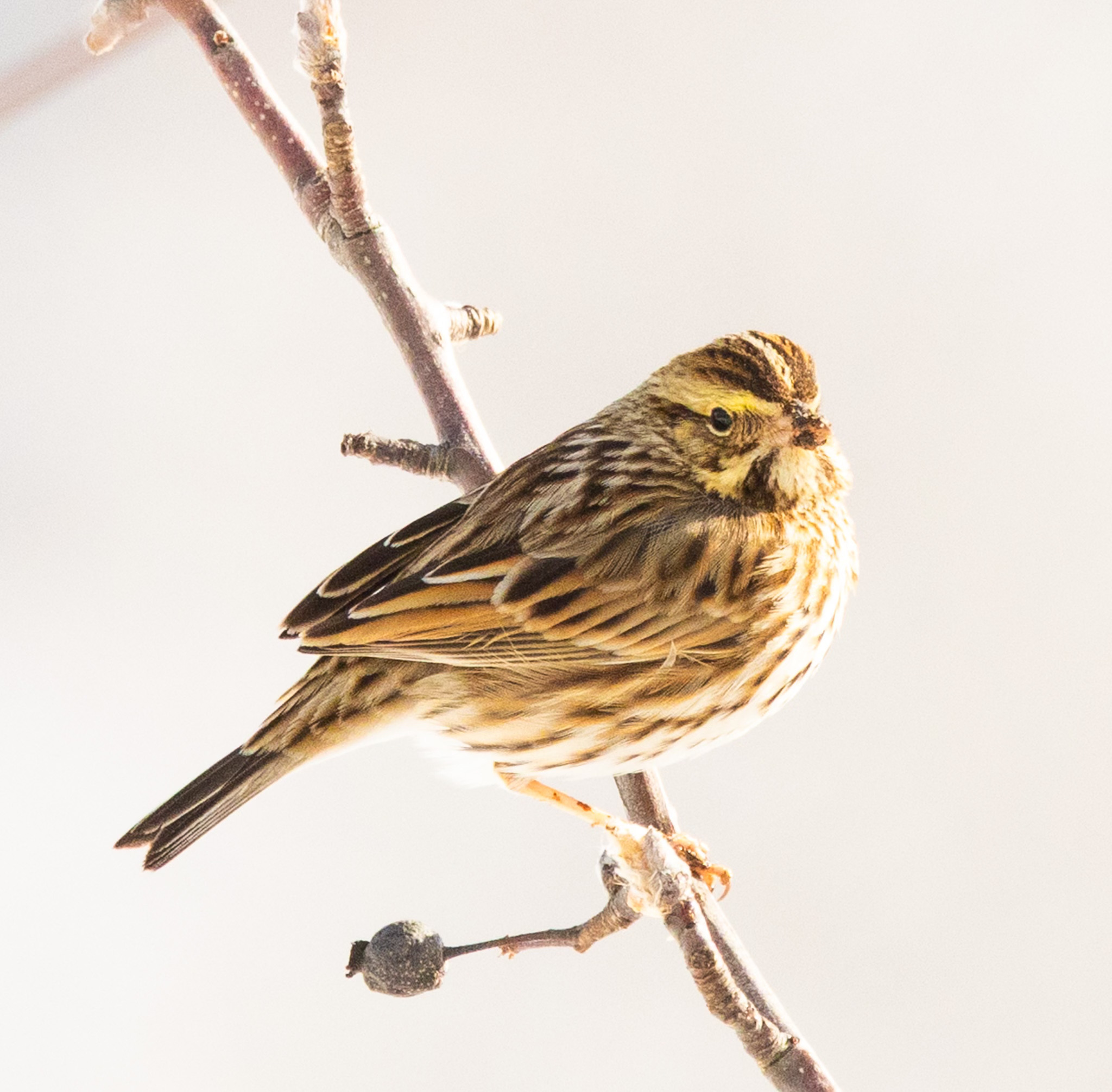
By Hap Ellis, Savanah Sparrow - Millennium Park, Boston, MA.
10. A short shout-out to Northern Shrikes - a favorite here: Few things will clear out the bird feeders faster this time of year than the sudden appearance of a butcher bird. That’s the common name for a shrike, and here in a North Country winter that means the northern shrike, a species that summers in the boreal forest, up to the tree line, with highly variable wintertime movements. Virtually every winter at least some of these birds move into Minnesota. They’re generally considered rare and for birders, it’s a sighting guaranteed to engender a bit of excitement for those so inclined. I once narrowly missed driving my car into a snow-laden ditch when one flew across the road in front of me.The shrikes are an interesting genus. They are considered passerines, which means they’re a songbird versus a raptor. Yet as their common name implies, they are birds of prey and frequently feed on other birds, as well as mice and voles, particularly in winter. (via The Timberjay)
11. "Farmers of the marsh" - wildlife managers' constant travail in Louisiana's coastal wetlands: About a third of birds in the United States need conservation action as populations decline due to habitat loss from crop clearing, residential development and rising sea levels, according to research. Louisiana has lost about one-quarter of its coastal wetlands since the 1930s, an area the size of Delaware. Despite the losses, one wildlife refuge continues to host millions of migrating birds each winter. The Lacassine National Wildlife Refuge south of Lake Charles sits at the intersection of two major flyways and hosts one of the country’s great bird migrations. Snow geese and migrating ducks spend their winters in the refuge alongside year-round residents. (via Investigate TV)
12. Don't like hearing this news from USFW: The U.S. Fish and Wildlife Service announced today that Wilson’s phalaropes — migratory shorebirds that rely on saline lakes in the American West — will advance to the next stage of review to determine whether they warrant protection under the Endangered Species Act. In its positive 90-day finding, the Service said a 2024 petition submitted by conservationists, scientists, public health advocates and community members presented substantial scientific evidence that listing the bird may be warranted. The petition cited extensive hydrologic and climate evidence showing that the decline of Great Salt Lake — an essential migratory stopover — poses a risk of extinction for the bird. (via Venter for Biological Diversity)
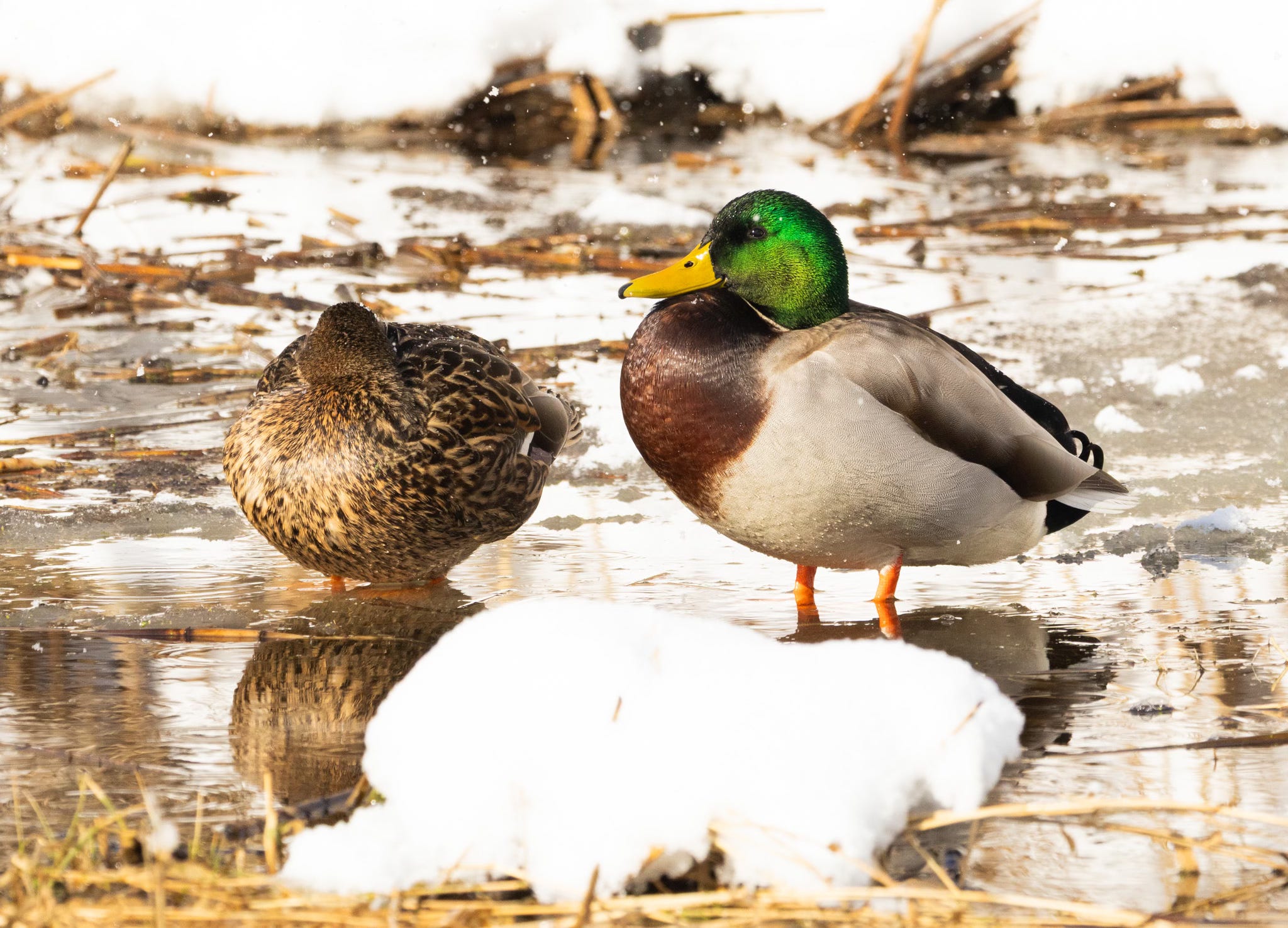
By Hap Ellis, Sometimes Mallards are all you get on a winter morning - Millennium Park, Boston, MA.
13. We don't often see Marbled Murrelets and EA-18G Growlers together in the same article, but sadly they are in the news together: A Central Whidbey group that advocates against military jet noise recently filed a new lawsuit against the U.S. Navy and the U.S. Fish and Wildlife Service on behalf of birds. On Jan. 16, Citizens of Ebey’s Reserve filed a complaint in federal court that argues the “extremely loud” Navy’s EA-18G Growlers, based at Naval Air Station Whidbey Island, are jeopardizing the existence of a small seabird, the marbled murrelet, in Washington state. The bird is designated as threatened by the federal government and as endangered in Washington, Oregon and California. The complaint argues that the Navy’s biological opinion, created in consultation with Fish and Wildlife Services, on the impact of Growler operations was flawed and failed to take into account new information related to the marbled murrelet, in violation of the Endangered Species Act. (via Whitney News Times)
14. From the UK, we're partial to The Guardian's Country Diary - where else will you find Great Black-backed Gulls referred to as "Gentleman thugs in naval trim"?: Last week, three guys I know took a winter walk around this patch of water, wetland and waterside scrub, and saw 84 bird species. I’m going to write that out in full, like they used to on the football results when someone notched up an improbable score: eighty-four. Most people would be hard-pressed to name 84 bird species, let alone find that many on this frost-bitten stretch of post‑industrial West Yorkshire. And they do this every year (in a good cause: the Michael Clegg Memorial Bird Race, in aid ofYorkshire Swifts). And now here I am. I do keep a list when I go birdwatching, but really only for form’s sake. My lists will never impress anyone, nor will they ever be of use to ornithologists of the future. (via The Guardian)
15. Another favorite reporter - from northern New England - with another delightful birding report: “Now is the winter of our discontent,” wrote William Shakespeare in “Richard III.” Shakespeare was obviously a birder. His Romeo and Juliet knew the difference between larks and nightingales. He certainly knew winter. And discontent. Maine birding is still pretty good in winter. The forest and ocean host Canadian breeders fleeing the frozen north. Backyard feeders are active. Still, as January drags on, there is a certain discontented yearning for the return of colorful songbirds from their tropical vacations. If you’re reading this column, you’re a birder. But what species of birder are you? What species would you like to be? (via Bangor Daily News)
16. Finally, say it ain't so!! The Washington Post picks up on the woefully misguided effort to name the American Flamingo the state bird, displacing the Northern Mockingbird: Jim Mooney has launched a high-wattage campaign to elevate the flamingo to Florida’s state bird. The Republican has handed out flamingo lapel pins and 11-by-16 prints of flamingo artwork to his 119 colleagues in the state legislature. He sported a suit with a pink shirt, a pink pocket square and a tie festooned with flamingos to testify on behalf of his legislation. (via The Washington Post)
* BNI take: The state bird should be the Florida Scrub-Jay - nobody goes to Florida to see a Northern Mockingbird; but thousands from all over the world come to see the endemic Florida Scrub-Jay. As for the flamingos? Please...they don't even breed in the Sunshine State.
* For more, if interested: Florida Scrub-Jay - Aphelocoma coerulescens (via Birds of the World)
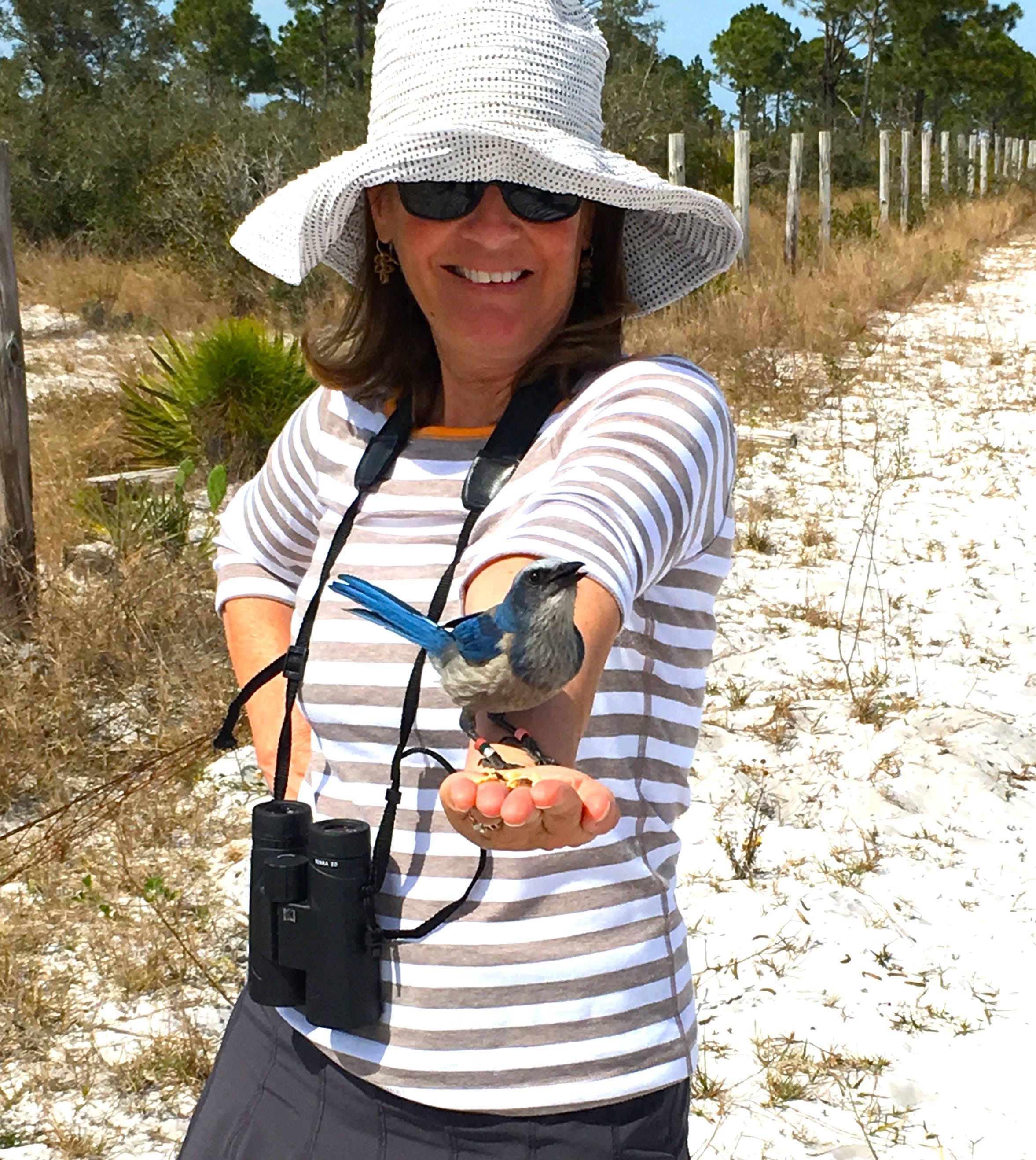
By Hap Ellis - People come from all over the world to see the Florida Scrub-Jay - Archbold Biological Station, central Florida.
Bird Videos of the Week
Video by Michael Kalm, “Utah Birds in a snowstorm”.

Cornell Live Bird Cam - Meeting moment

Cornell Live Bird Cam - Chick meets dad.
I've seen Wilson's pharalopes a few years back at nearby Hagerman NWR. But not more recently. Probably need protection. That said, per the Whidbey Island (ongoing) story, USFWS is a pseudoenvironmental agency half the time.