
Flying Spirits.
Bird News Items
1. Let’s begin with Hurricane Mellisa. The NYT had a story - sadly - about birds spotted in the “eyewall”: There are birds trapped in the eye wall of Hurricane Melissa, according to a message from hurricane hunters at the National Hurricane Center. The alert, known as a vortex data message, was sent on Monday afternoon and included the simple but noteworthy sentence “Birds in eyewall,” along with information about the speed, character and location of the vortex. It is not unusual for migrating birds to get sucked in by the force of a hurricane’s winds. Once they reach the eye of the storm, where conditions are relatively calm, it is nearly impossible for them to escape. Flocks will often fly with the storm across vast distances. The news underscores the profound ecological toll that Hurricane Melissa will have on Jamaica’s biodiversity. (via The New York Times)
2. Don’t like to read stories like this - from The NYT’s “Lost Science” series: The project that was terminated was on this hummingbird, the white-necked jacobin. The males in this species have a deep blue iridescent head, a bright white belly and a white tail, which they’re constantly spreading and showing off to each other. And the females look very different. They have a mottled gray throat and belly, and then their tail is very dark, almost black. But 20 percent of the females look nearly identical to the males. Why, if you’re a female, would you want to look like a male? It’s all about access to getting food. They get nectar from flowers. These females that look like males are essentially mimicking the males because they get away with avoiding the aggression from other hummingbirds. They’re pretty vicious. (via The New York Times)
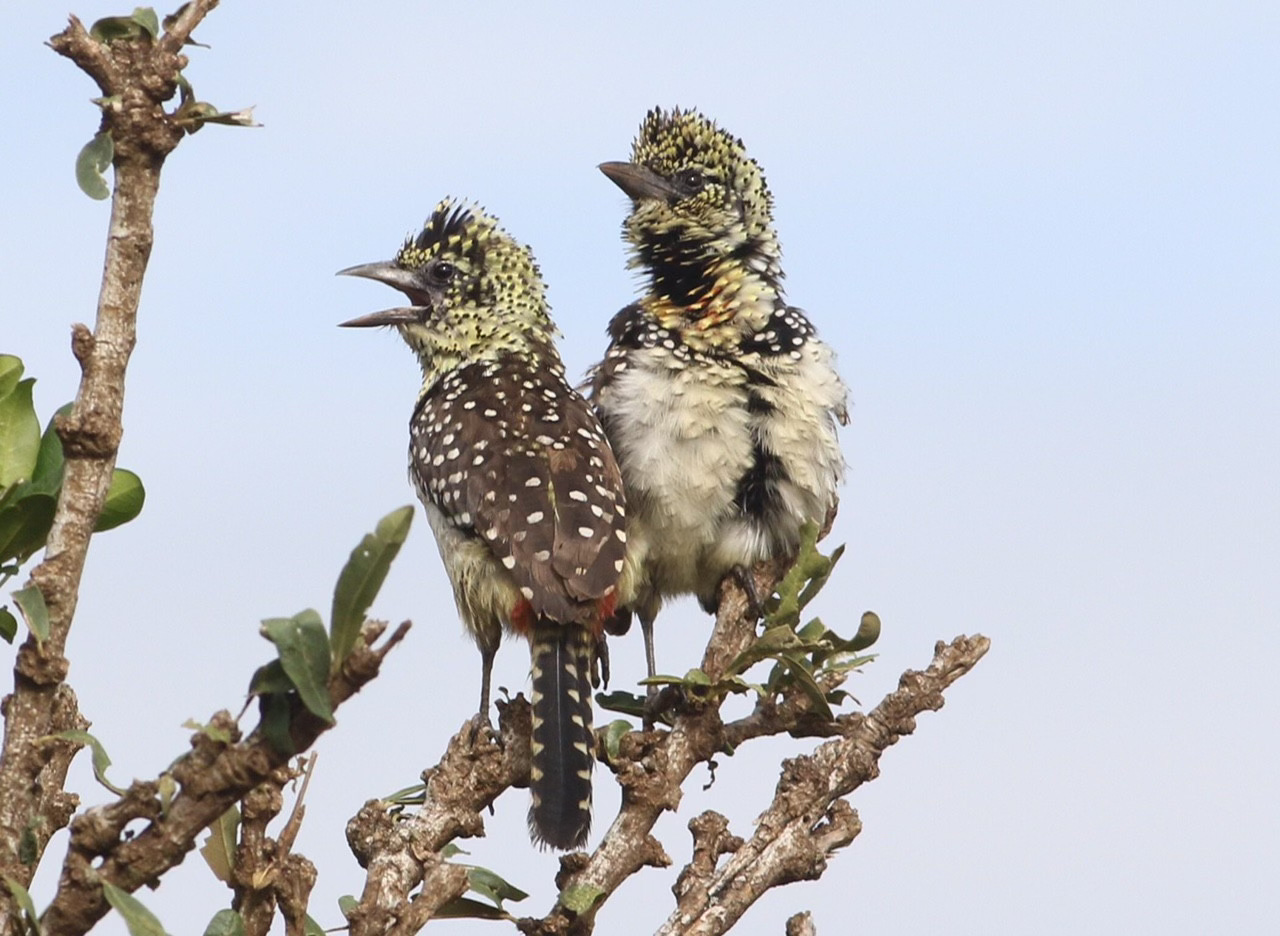
PFF (Pictures from friends): By John Fitzpatrick, D’Arnaud’s Barbets - Kenya.
3. “Avian divination traditions” making a comeback (not sure we knew what they were): In a new oracle deck, the birds have a lot to tell us. Pull the Hummingbird card and you’ll be guided to slow down to appreciate the simple things, like burying your nose in a flower or taking a walk in a public garden. If you pull the Hawk instead, it’s a sign that you might be too close to a situation, and need to take a step back to get a better view.Meanwhile, the Starling reminds you to communicate with thoughtfulness and clarity. Much like the related practice of tarot, oracle decks have long been used for divine guidance, deeper reflection, and spiritual insight. Pick out a card from the deck, and it’ll reveal what you need to know most at that moment. By 2027, tarot and oracle decks are projected to become a $93 million industry worldwide. (via Audubon)
4. A bad week for bird flu news, starting with over 2,000 migrating Common Cranes have died near Berlin: In a spot outside Berlin that’s usually a paradise for birdwatchers, volunteers have recovered nearly 2,000 dead cranes in recent days as bird flu has hit the migrating birds hard. Linum, a small village about an hour’s travel from the German capital, is known in summer for its many nesting storks. In the fall and spring, it’s a popular resting spot for thousands of cranes as they migrate between the Baltic and Nordic regions and southern Europe. But this month, many of the birds’ journeys have ended in the ponds and fields that surround it, as well as at other spots in Germany. (via Seattle Times)
5. And then there was this unsettling article in Scientific American: Experiments suggests H9N2 has adapted to human cells, but cases of person-to-person transmission haven’t been reported yet. A bird flu virus that has often been ignored because it mostly causes minor disease in birds has the potential to cause a human pandemic, says a team that has tracked how the H9N2 virus has become better adapted to infect people. The researchers say more surveillance of the virus is needed. (via Scientific American)
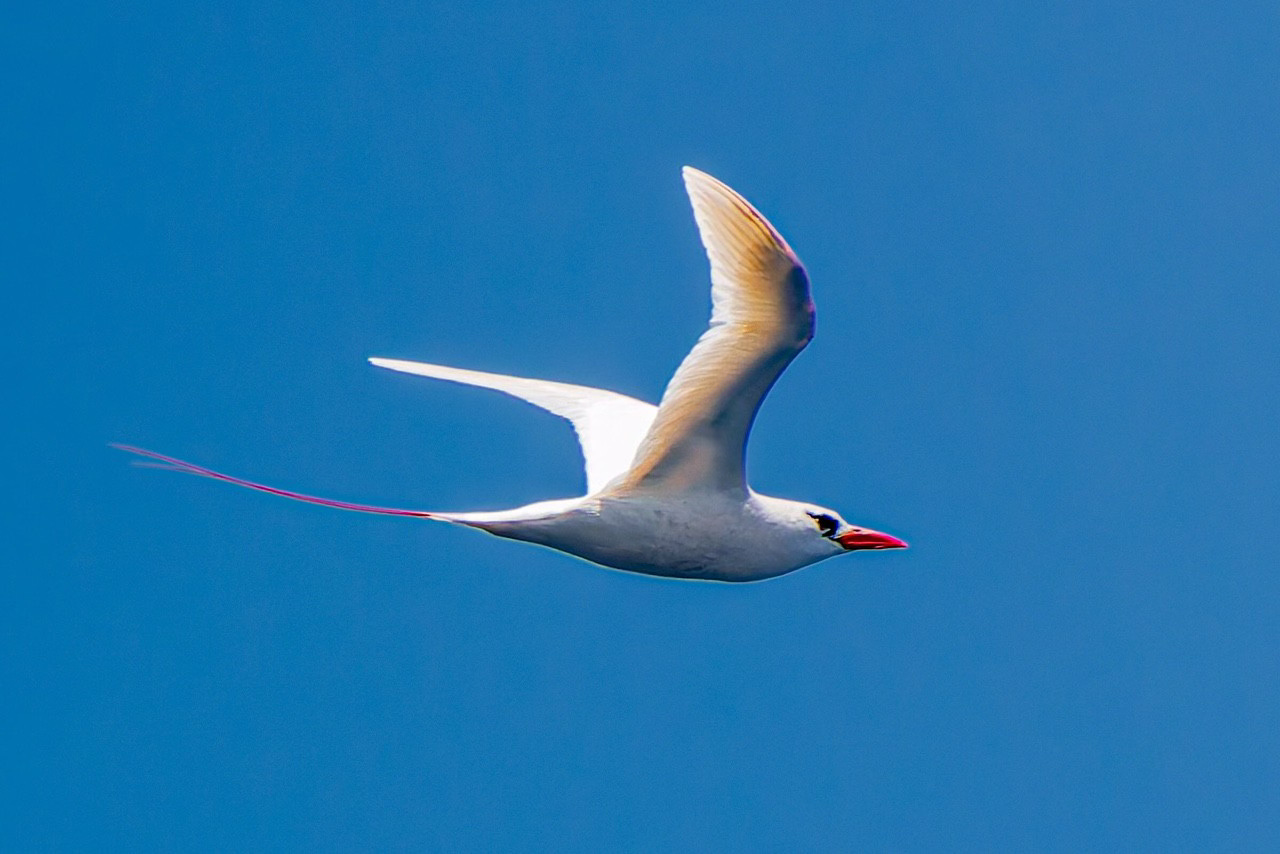
PFF (Pictures from friends): By John Fitzpatrick, Red-tailed Tropicbird - Seychelles.
6. Slow down! Naturalist Bridget Butler’s new initiative: Birding is fun — but it can be exhausting, too. Here’s how ‘slow birding’ can help you connect with birds in calmer, more meaningful ways. For a hobby most non-birders consider easy and relaxing, birding actually involves a fair bit of work. Monitoring rare bird reports, getting up before dawn to see birds when they’re most active, keeping tabs onbird migration routes and vagrants within driving distance… birding is fun, but it can require significant time and energy, plus financial commitments. If you’re unable to do all of that, can you still be a birder? Vermont-based naturalist Bridget Butler says yes! In fact, that’s the purpose of her slow birding initiative. Here’s what it means to be a ‘slow birder,’ and how you can participate. (via Birds and Blooms)
7. AI-assisted preservation efforts in NZ: New Zealand is turning to artificial intelligence to find new ways to protect incredibly rare species of birds that were once thought to be extinct. The country’s bird population was decimated when settlers moved in hundreds of years ago, bringing invasive species such as stoats, a relative of ferrets, rats and similar mammals. Flightless birds like the takahē, with their distinctive red beak and legs, and the kākāpō, a bright green parrot that weighs as much as 8 lbs., were not prepared to adapt to the creatures that came with the settlers. (via People)
8. Rare Bird Alert #1 - a common cuckoo on Long Island NY: Birders are going cuckoo for a rare sight on Long Island. The common cuckoo bird has been spotted only four times in U.S. history in the lower 48 states, experts say. Now, it’s in Riverhead. Hundreds of people have traveled from dozens of states, hoping for a glimpse of the bird that is native to Europe and was blown off course. “We started a crazy viral birder insanity,” said Roy William Gardner, the eagle-eyed golfer who first saw the cuckoo. Gardner said he was in a golfcart moving between holes when he spotted “an unusual bird going post to post.” He texted photos of the bird to his nephew, an ornithologist from Cornell and now a bird biologist at UCLA. “He said, ‘what you have there is called a lifer.’ He goes, ‘people go their whole lifetime and not see this,’” Gardner said. (via CBS News)
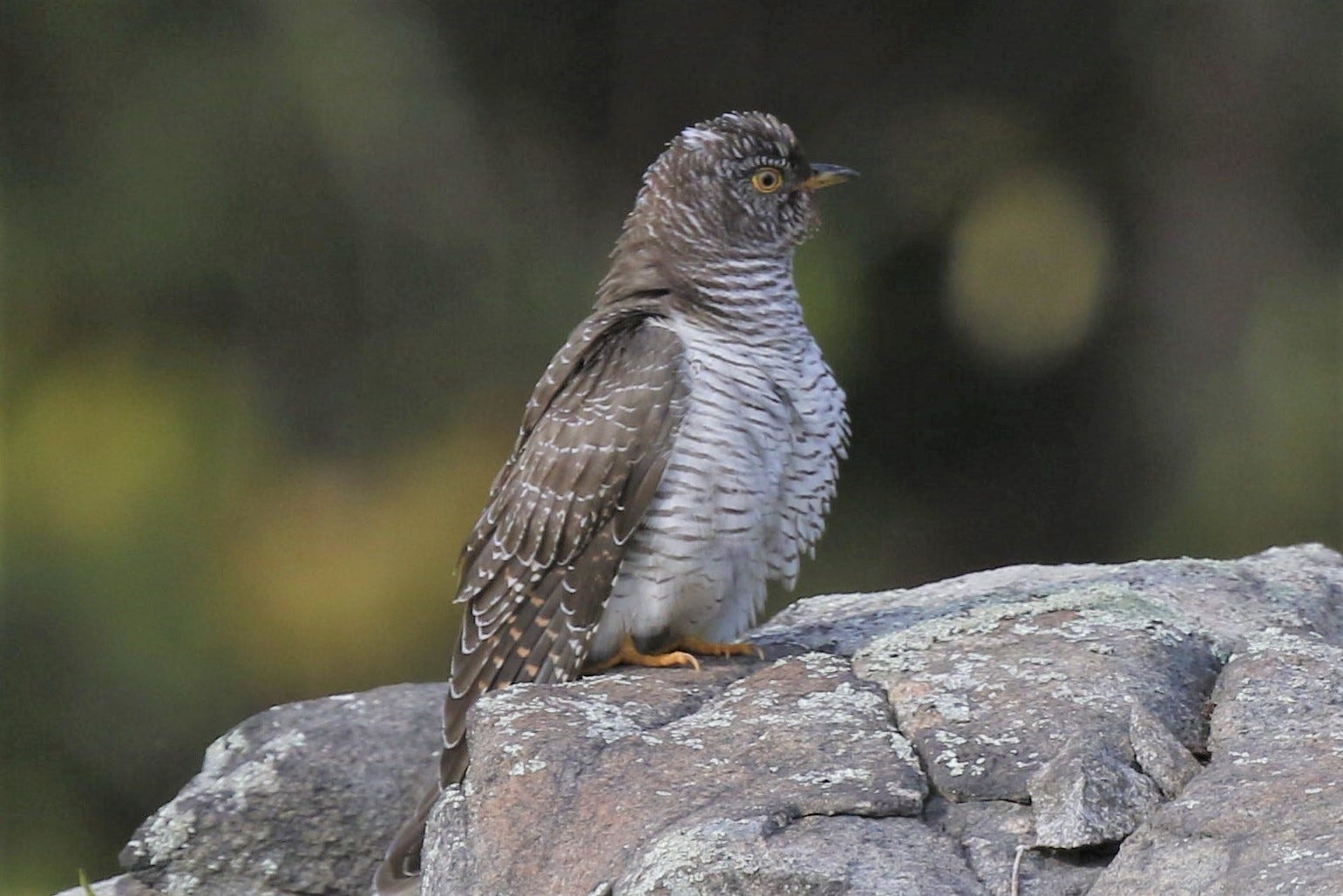
From the files: Common Cuckoo that wandered to Rhode Island in the Fall of 2020 - by Hap Ellis.
9. Rare Bird Alert #2! - a brown-headed cowbird! (Our first reaction: Seriously?) So where would that be rare?: Icelandic birders have been treated to a spectacular trio of Nearctic vagrants in late October, includingVaried Thrush andBrown-headed Cowbird. The late-autumn flurry of North American birds in the country began on Friday 24 October, when a visiting American birder discovered a juvenile Brown-headed Cowbird in the centre of the capital city, Reykjavík. It later transpired that the bird had probably been present since at least 11 October. An Icelandic first, the cowbird marks only the 10th record for the Western Palearctic and, interestingly, the first to be found in the autumn. The last regional record was some 13 years ago in Mecklenburg Vorpommern, Germany, on 15 May 2012. (via BirdGuides)
10. What It Takes - in this case, for a community to help American Kestrels: The most inspiring conservation efforts often start in the hands of everyday people who care deeply about local wildlife and open spaces. That’s what’s unfolding right now for one of New Jersey’s most vulnerable birds – the American kestrel. The smallest falcon in North America, the American kestrel is a colorful, captivating raptor that once flourished across our state’s fields and meadows. But in recent decades, their numbers have sharply declined. While the exact reasons remain uncertain, experts point to the degradation of high-quality habitats – including loss of nesting sites – as a likely culprit. (via Community News)
11. Gear advice - Birding must be “cool” if PC Magazine is offering advice to techies: Bird watching has surged in popularity lately—so much so that some have dubbed it the “hot-girl hobby of the year.” I get it: Birding is fun, and it’s a wonderful way to connect with nature (and if that makes me a hot girl, then so be it). I first started exploring wildlife preserves and scanning the trees for feathered friends about a decade ago when I reviewed the wildly popularSigma 150-600mm Contemporary zoom—a lens I still see fellow photographers wielding out on the trails. Although I came to bird photography a bit later than some, I quickly found my footing. My upbringing gave me a head start: I grew up surrounded by birds. Raised in a multi-generational household, I was immersed in a world of wildlife art. (via PC Mag)
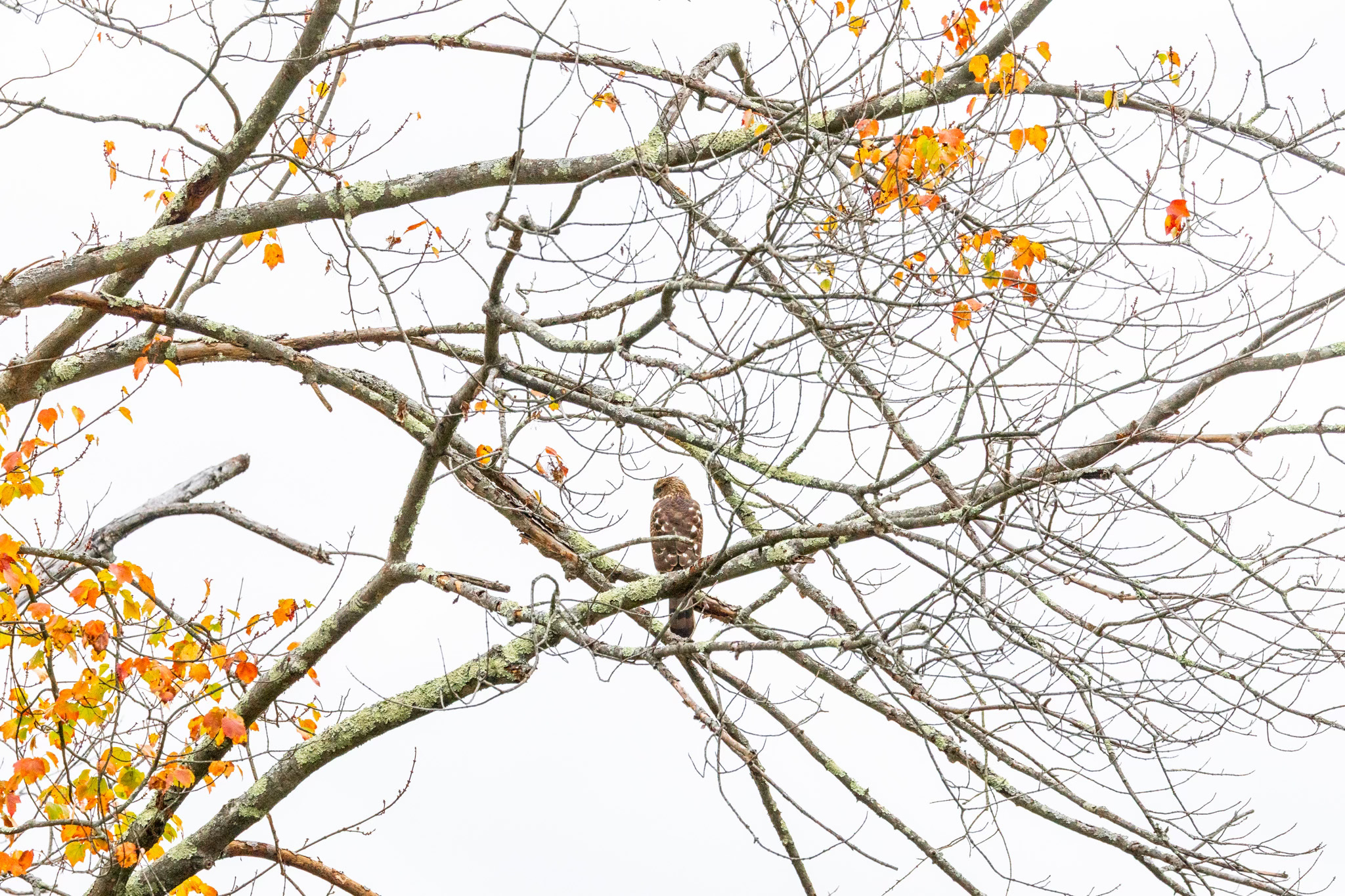
Familiar Fall Scene: By Hap Ellis, Young Cooper’s Hawk - Millennium Park, Boston, MA.
12. “The giant nameless vulture” (hint: it was 13,000 years ago): The prehistoric vulture would have been larger than the Andean Condor, the largest soaring bird of the modern age, pictured here. (Image Credit: BearFotos/Shutterstock) The place is called Giant’s Path, and it’s no coincidence. Remains of local megafauna had already been found in a stream near the city of Canelones, just 45 minutes from Montevideo. Now, an unexpected fossil confirms that the name holds more truth than anyone imagined. The discovery, recently published in the journal Historical Biology, offers an unexpected glimpse into the Ice Age in the Americas. It reveals a bird large enough to feed on glyptodonts and mastodons, and a powerful glider capable of long-distance travel in search of carrion. (via Discover Magazine)
13. Villain or no villain (or...a paean to the Great-tailed Grackle): The next time you walk out of a grocery store to find your freshly waxed car spotted with white blobs of bird poop and curse the glossy obsidian-hued birds nesting on a power line above your head, I would like you to remember one thing about this species. They are smart. As members of the icterid family (blackbirds), all subspecies—Common Grackle, Great-Tailed, and Boat-Tailed, plus numerous subspecies —have endured decades of human hatred and still have managed to thrive. Alfred Hitchcock depicted them as evil murderers of schoolteachers and kids. They are not. There is not a bird therapist in the world who would confirm that. Instead, great-tailed grackles have used that emotional abuse as a means of survival. (via Dallas Magazine)
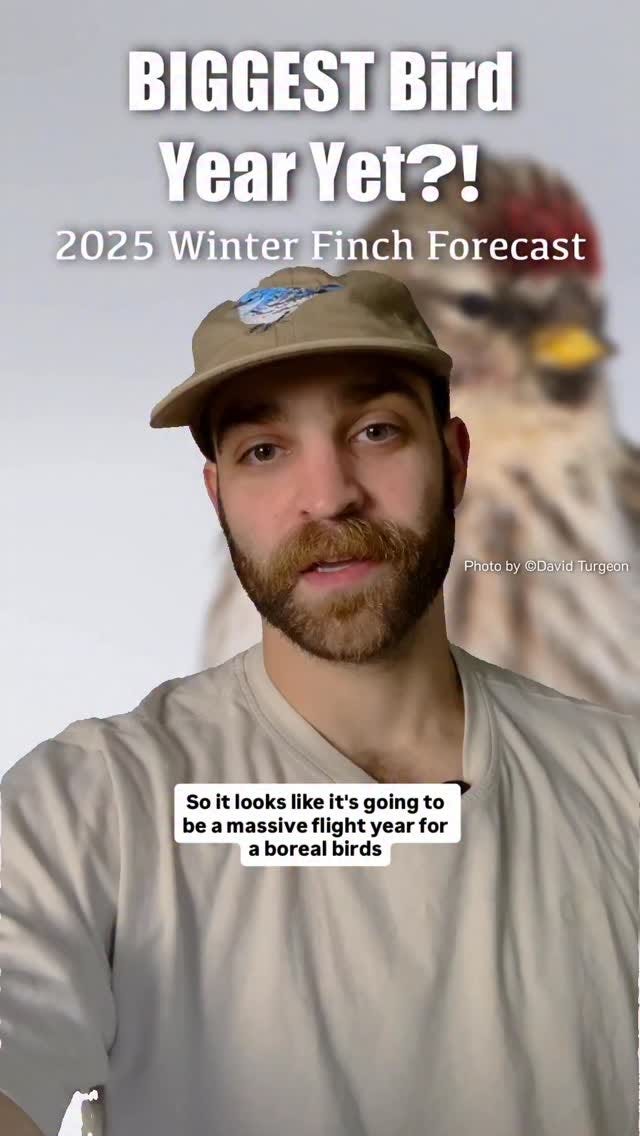
14. Finally, exciting news for birdwatchers in the upper Midwest and Northeast: Northern finches don’t leave home for the winter unless their winter food — seeds from cones and catkins — is scarce. Last weekend the Finch Research Network published the Winter Finch Forecast 2025-2026, that predicts which northern finches will visit lower Ontario and perhaps the U.S. The news looks good for an irruption this winter. Red-breasted nuthatches (Sitta canadensis) are a great indicator of an irruption year and are already in Pittsburgh since September. They resemble their white-breasted cousins but are smaller, red-breasted (of course), prefer conifers, and make a nasal “ank, ank” sound. (via Outside My Window)
* And the same take on Instagram:
Bird Videos of the Week
Video by BBC, “The Amazing Lyre Bird sings like a chainsaw"!”

Cornell Live Bird Cam - Trick-Or-Treat With Blue Jays—How Much Food Can This Blue Jay Carry Away?!

Cornell Live Bird Cam - Red-crowned Woodpeckers are common visitors at our Panama Fruit Feeder Cam at Canopy Lodge, in el Valle de Antón, Panama.