
Goose Management.
Bird News Items
1. No better way to start than with Garrit Vyn in The American Arctic:
2. Case closed in Hawaii - feral cats guilty in grim deaths of Wedge-tailed Shearwaters: First come the killings. Then, inevitably, the comments. Whenever feral or free-roaming cats are deemed the culprits in a high-profile killing of Hawaiʻi’s native wildlife, such as the recent mass slaughter of ʻuaʻu kani seabirds on Kauaʻi, plenty of vocal feline enthusiasts raise doubts on social media and in posts below stories. Was it really cats? How can you be so sure? Wildlife managers in the islands constantly come across those scenes and, much like a forensic crime investigator, they know which clues conclusively reveal whether a cat, a dog or some other invasive predator killed the animal in question. Tell-tale signs are immediately there. (via Honolulu Civil Beat)
* More on this beautiful shearwater here: Wedge-tailed Shearwater - Ardenna pacifica - (via Birds of the World)
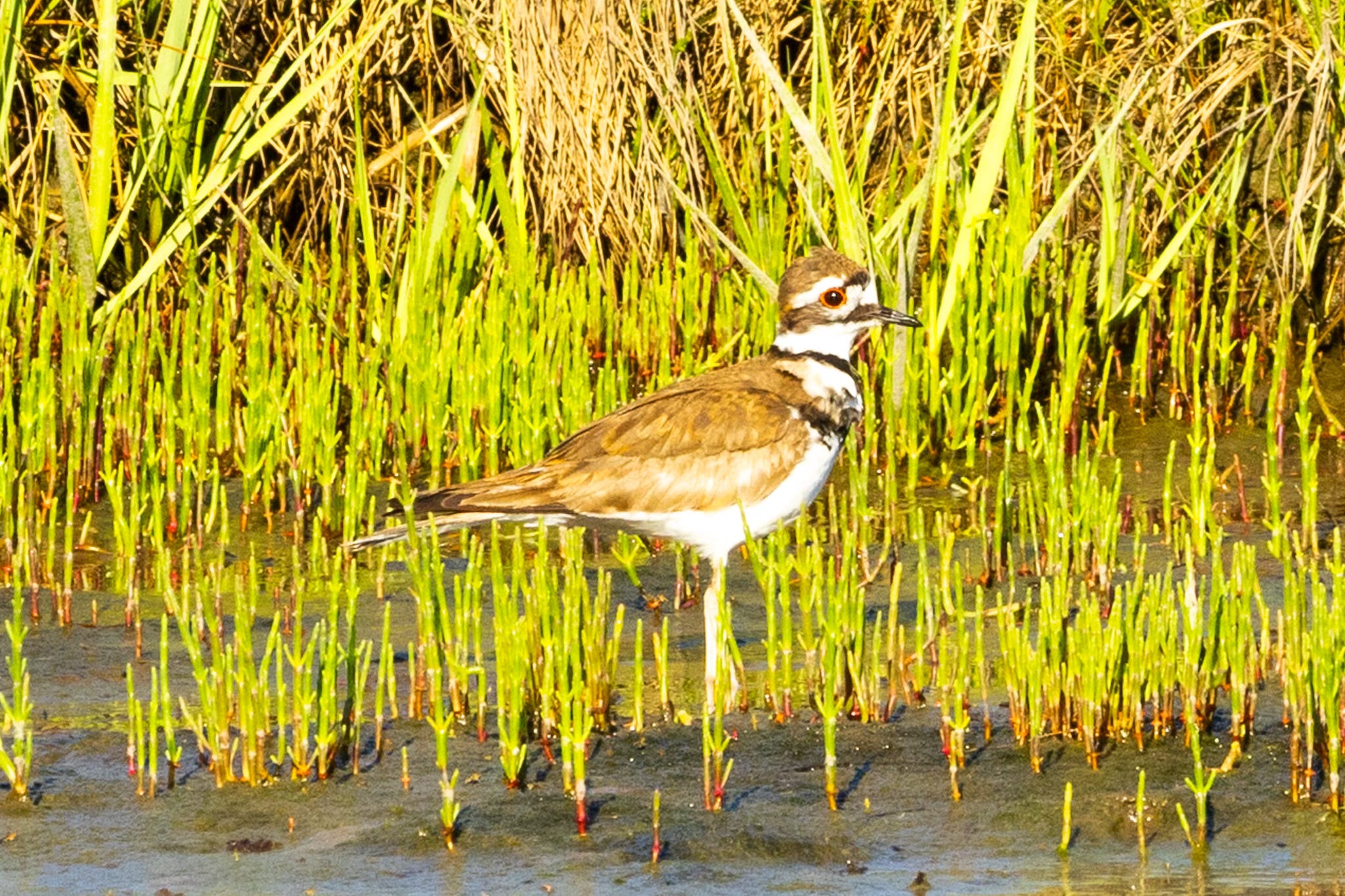
By Hap Ellis, Killdeer - Biddeford, ME.
3. On crows as friends - is the feeling mutual?: Annie first met Sal in early 2024, soon after she and her partner, Jack, moved into their house. She was removing old landscaping fabric when a crow landed on the fence and looked at her curiously. She pointed to where the lifted tarp had exposed fresh soil and was intrigued when the bird swooped down and grabbed a worm. “It seemed like Sal understood,” she says. American Crows all look more or less identical to the human eye. But Annie and Jack came to recognize Sal, a bold character with a distinctive hop due to a bad leg, and began offering the bird unsalted peanuts. The treats attracted a second, more timid crow, whose deformed foot also distinguished it. They called Sal’s buddy Pal. Within a few weeks, Annie and Jack were buying peanuts in bulk. Using food as a reward, they trained the two corvids to pay them regular visits. Or did they? Annie wondered whether, from the crows’ perspective, it might be the other way around. (via Audubon Magazine)
4. And the winner is...: A scientist who decoded the dictionary that a bird uses to communicate has won a $100,000 prize for making progress towards a world in which humans can talk to the animals – without being met with a blank response. Dr Julie Elie at the University of California, Berkeley, was awarded the 2026 Coller-Dolittle prize for two-way interspecies communication after working out the 11 core calls in the zebra finch vocabulary and their meanings. Her work revealed how the birds announce who they are and what they are doing, and recognise one another regardless of what they are saying by using individual signatures. She also found that at times, the birds confused calls with similar meanings more than those that sounded the same. (via The Guardian)
5. A new bird discovered in Japan (first time in 40 years!): A bird long thought to be a single rare species in Japan has turned out to be two. Scientists discovered that the elusive Ijima’s Leaf Warbler and a newly identified Tokara Leaf Warbler look almost identical, but their DNA and songs reveal they are distinct species. The finding marks Japan’s first new bird species discovery in more than 40 years and highlights how modern genetic tools are uncovering hidden biodiversity that would otherwise go unnoticed. (via Science Daily)
6. Manic manakins: Manakins can move so quickly that they often appear only as blurs of blue or red as they flit along the rainforest floors of South and Central America. The males, known for their elaborate courtship rituals, snap their wings, spin around their rivals and even do backflips to woo potential partners. Where do they get the energy? Previous studies have shown manakins possess fast-moving muscles and hearts that can manage short bursts of intense activity. Now, genetic research suggests that these evolutionary adaptations were made possible by an important dietary change: Before they could dance, manakins had to be able to detect and digest sugary fruits. (via The New York Times)
* More on the Lance-tailed Manakin here: Lance-tailed Manakin - Chiroxiphia lanceolata (via Birds of the World)
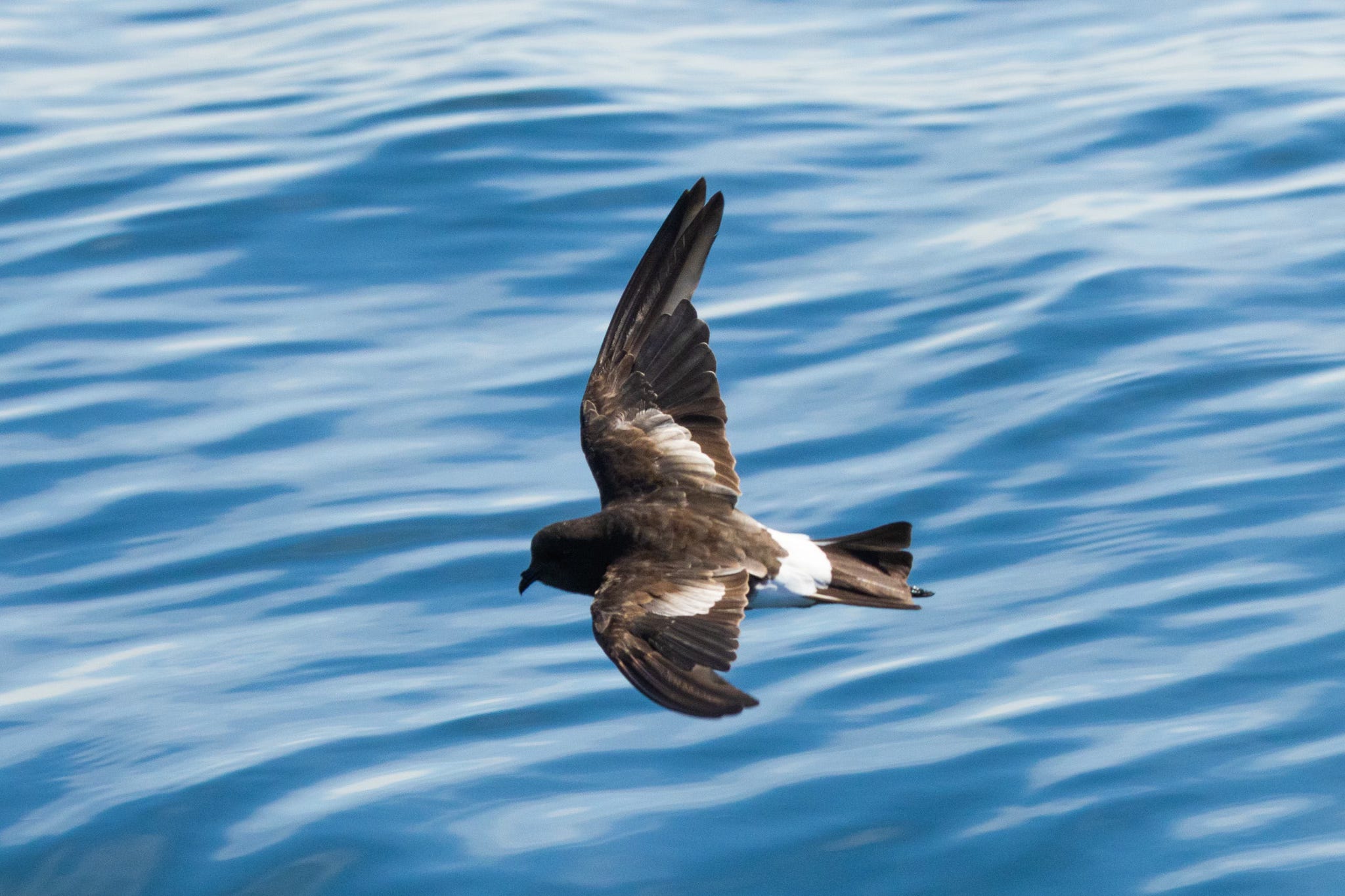
By Hap Ellis, Wilson's Storm-Petrel - 8 miles off Kennebunkport, ME.
7. What it takes (to reintroduce the Blue-winged Macaw to a rainforest): The first step in returning a blue-winged macaw (Primolius maracana) to the Misiones rainforest in Argentina takes place in Dante Di Nucci’s office. There, the veterinarian at the Güira Oga Wildlife Refuge examines the bird’s every feather, takes X-rays, runs blood tests, and treats existing wounds. The animal refuge center sits in Puerto Iguazú, in the far northeast of Argentina. Decades ago, the blue-winged macaw—a small parrot with bright green plumage, blue wings, and a distinctive red patch on its forehead, back, and belly—flew in noisy flocks over the rainforest. But with each health check, Di Nucci holds in his hands a species that no longer flies freely in Argentina. Hunting, the pet trade, persecution as an agricultural pest, and the loss of large nesting trees drove the blue-winged macaw to local extinction in the wild, although some birds still survive in captivity. (via National Geographic)
8. From Audubon - Building bird havens: For years, Joshua Harkness and his family had seen American Woodcocks on their farm and forest property Perry Hill in Amenia, NY, but only at the tail-end of winter. The woodcocks would arrive in March and utilize the family’s open meadow and grassy areas in an old cow pasture to “display,” making a spiraling flight up into the sky and dramatically plunging back down in an effort to impress a mate. But American Woodcocks require dense shrubby areas for nesting, and so Joshua hadn’t seen them later in the spring... until he made an important change. (via Audubon)
9. What it takes (to help the Eurasian Griffon in Serbia) - check out the climber approaching the nest!: Griffon vultures used to be on the brink of extinction in Serbia but are now making a remarkable comeback. Three decades of conservation work by the Serbian Foundation for the Protection of Birds of Prey have helped restore the population of one of the country’s most iconic protected species. The foundation supports the birds by providing feeding sites, organizing and running rehabilitation programs for injured vultures and monitoring the birds scientifically. But one initiative has captured the public’s imagination more than any other: people can now adopt a griffon vulture and even give the bird a name. (via DW)
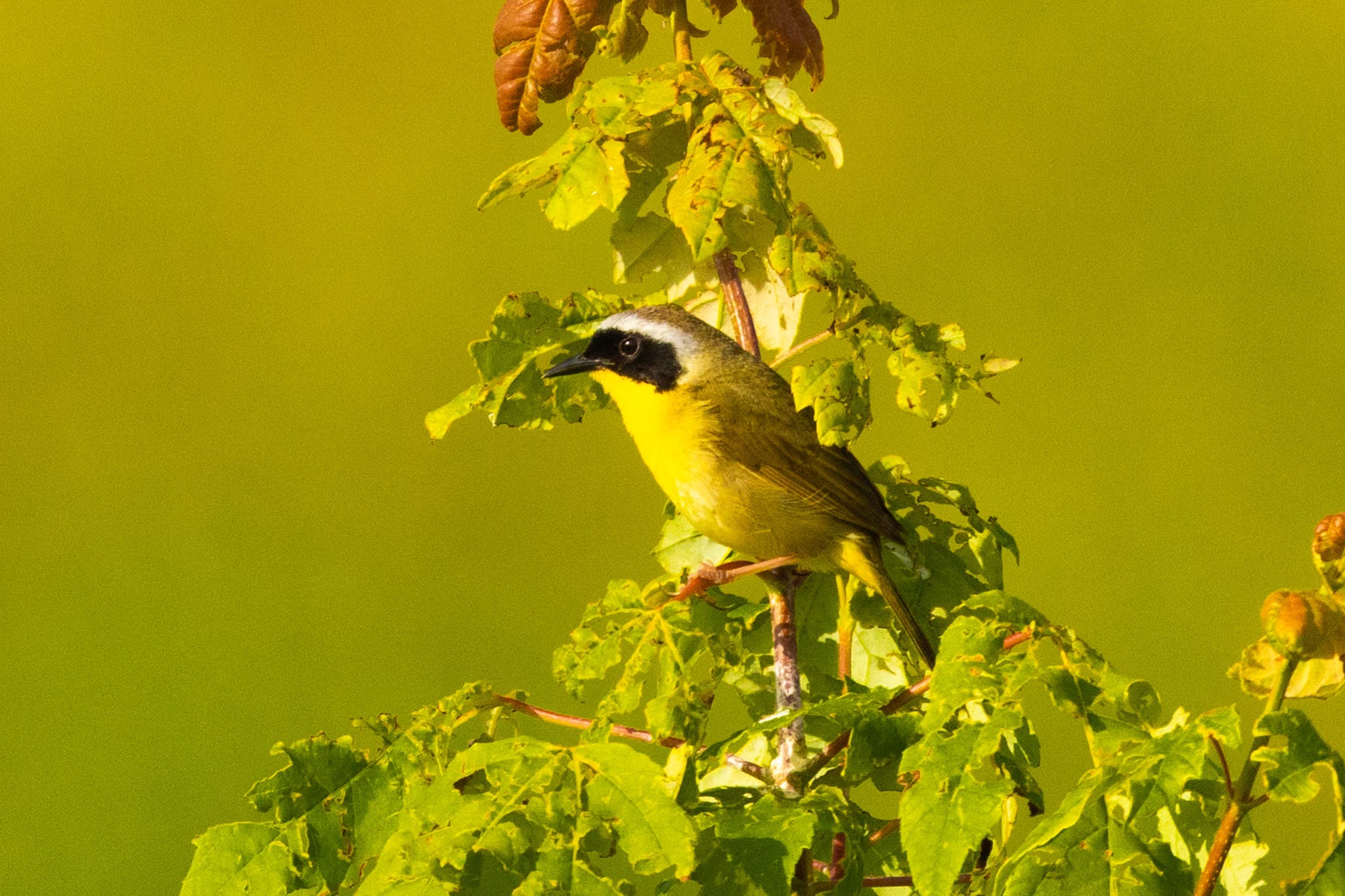
By Hap Ellis, Common Yellowthroat - Wells Reserve at Laudholm, Wells, ME.
10. Well, that depends (on the wind and trees): In the flatwoods of South Florida, tiny brown birds emerge from the underbrush to sing from the branches of pine trees. To human ears, their songs sound nearly identical, but any given population of these birds — Bachman’s sparrows — uses as many as 120 different song types to communicate. Like human language, birdsong is dynamic. Every avian generation makes choices about which songs to continue singing, which to improve upon and which to drop altogether. A single Bachman’s sparrow might learn only 48 of the songs used by its community, and for decades researchers have been trying to figure out how baby sparrows choose which songs to adopt. Previous studies have focused on social and cultural factors. Now, a new study of Bachman’s sparrows reveals another possible part of the equation: the physical environment. (via The New York Times)
11. A study of the European Pied Flycatcher's migratory routes (some fly as much as 8,000 miles!!): Migratory birds such as the pied flycatcher typically have wintering locations in Africa close to others from the same breeding population. That means that birds breeding in the Netherlands run into each other again in Africa, while Spanish populations also end up close together. But how do they know where to go? A team of European researchers has tracked the migration of pied flycatchers from eight different countries, and also investigated what happens to the birds of Dutch eggs being raised by Swedish foster parents. The results of this study appear in Science. The researchers conclude that genes as well as environment influence where in Africa a bird finds its wintering spot. (via Phys Org)
12. A local pest in a LA neighborhood (last week's story) is key to an important species restoration effort in Bangladesh: Conservation authorities in Bangladesh say they’re still on track to fully release peafowl back into the wild, under a program that began with a “soft” release of the birds last year. But experts warn against rushing the release, noting that because the species has long been extinct in the wild in Bangladesh, habituating captive-raised birds to life in the forest won’t be easy. The Bangladesh Forest Department, with the support of nongovernmental organization Creative Conservation Alliance, in May 2025 moved 20 captive-raised common Indian peafowls (Pavo cristatus) into a forest enclosure within Madhupur National Park, which falls under the jurisdiction of the forest department’s Tangail division. (via Mongabay)
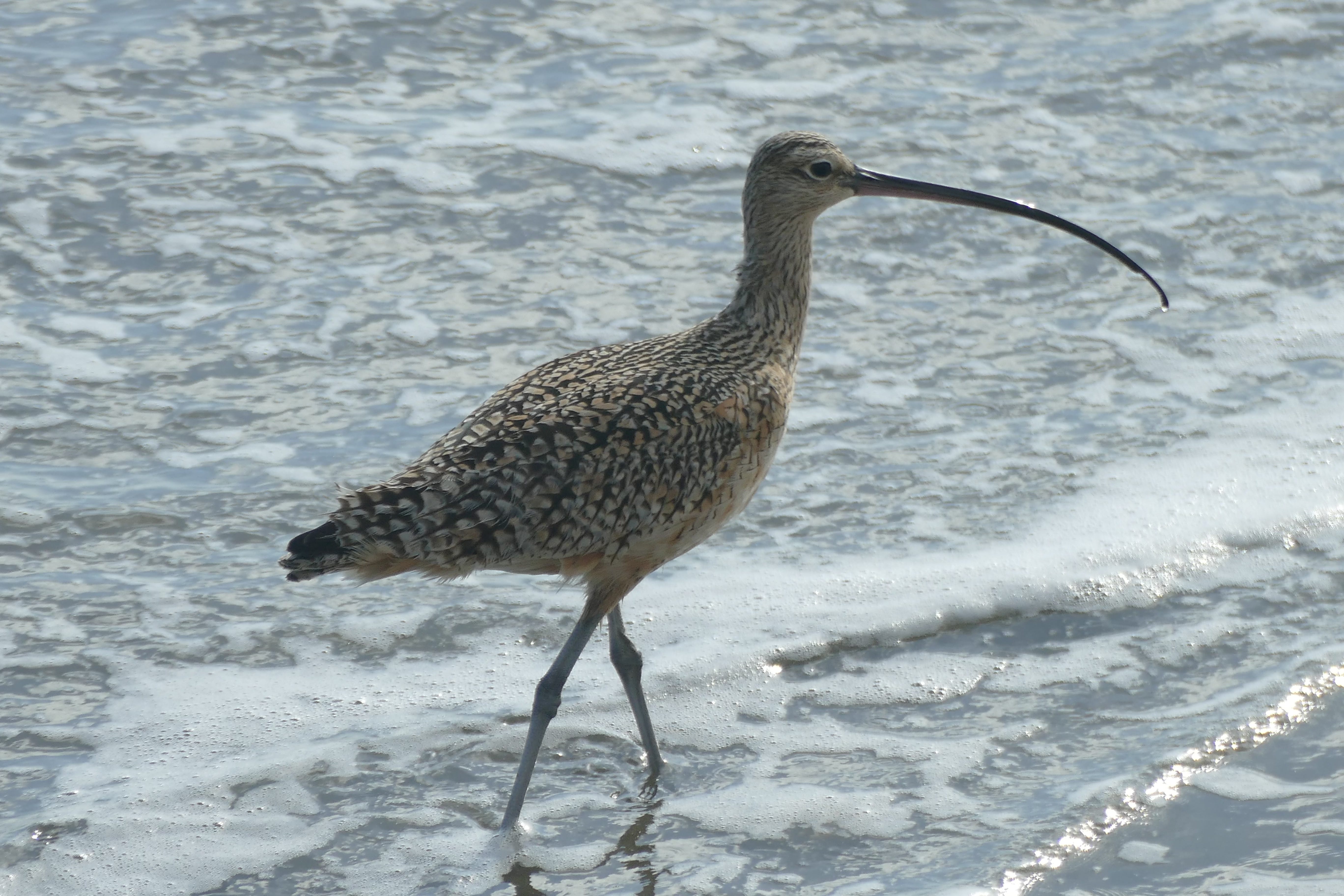
Photos From Friends by Christopher Ellis - Long-billed Curlew - Santa Barbara, CA.
13. Good news!: Black bears aren’t the only creatures making a comeback in Ohio. Sandhill cranes, once gone from the state, are also growing in number. And that’s good news for the Buckeye State. The Ohio Department of Natural Resources announced the results of the 2026 sandhill crane count on June 24. The bird, still a threatened species with only a few hundred individuals in the state, returned to Ohio in 1987. Their numbers has been slowly growing ever since. (via Akron Beacon Journal)
14. 17 pellets - one tough Golden Eagle in Scotland: Police are investigating the shooting of a golden eagle found with at least 17 shotgun pellets lodged in its body. The bird - which survived the incident - was released in the Lammermuir Hills in the Scottish Borders earlier this year as part of a pioneering project to boost numbers in southern Scotland. Squeagle - a four-year-old female - is fitted with a tag which showed she had travelled through Northumberland, the Pennines and the Yorkshire Dales. A photograph on 4 May in Northumberland showed damage to her feathers before gamekeepers in the Lammermuirs noticed the bird was in pain and alerted the charity behind the conservation project. She was collected on 1 June and taken to the Scottish SPCA for assessment and treatment. (via BBC)
15. BNI shamelessly trying to connect the bird world with the World Cup: Border collies Ben and Sally have a special mission for the World Cup in Toronto: keeping the notorious Canada geese off the training pitch used by visiting teams to prepare for their games. It is hard work that needs to be done twice a day, five days a week, while being on standby if the birds decide they would like some football action at the facilities in Centennial Park in the northwest corner of the city. But Ben and Sally are always up for the task.”They’re absolutely perfect work companions. They will work from (dawn till dusk) and still be wanting to go in the evening when we finish work,” said Gareth Williams, the owner of Border Control Bird Dogs, a goose management agency contracted for the job. Williams explained why the birds, which are protective and sometimes aggressive — with a reputation for occupying green spaces near airports and parks — are a problem for organizers of the global showpiece event. (via Reuters)
16. Finally from the WSJ, the Florida state bird battle continues: Tourist shops across Florida hawk T-shirts, hats and beach bags emblazoned with the flamingo. A two-story flamingo sculpture named Phoebe welcomes visitors at Tampa International Airport. Flamingo is the name of a magazine about the state. You can send your children to a Flamingo elementary school, buy groceries at a Flamingo supermarket, get your hair cut at the Stinky Flamingo Salon or enjoy adult entertainment at the Brass Flamingo strip club. It’s Team Flamingo against the ‘forces of Big Mockingbird’ in a political flap that’s consuming the state. (via Wall Street Journal)
Bird Videos of the Week
Video by CBC, “Edmonton-area couple to bike 30,000 km to track bird migration”.

Cornell Live Bird Cam - Meet Āwheo!

Cornell Live Bird Cam - P2 has fledged from the Cornell Hawks nest!
Outstanding edition