
Little Blue Penguins.
Bird News Items
1. Let's begin with a "must watch" video tracking the elusive Northern Cassowary in Papua: Roosters crow back and forth in the cold morning air of Malagufuk Valley, in the Makbon District of Southwest Papua, Indonesia. The sun is still hiding, preparing to rise and spill light across the land. Inside a modest wooden house, three young Indigenous men from the Moi Tribe get ready to head into the forest and wade into the layered sounds of a tropical rainforest waking up. Yance and Nimbrot Kalami—both members of the Kalami clan—and their friend Bastian Magablo carefully pack three camera traps. They will carry them deep into the Malagufuk forest to replace earlier cameras damaged by rain and humidity. It is their third month in a row entering the forest, routinely checking and reinstalling cameras at selected sites. (via All About Birds)
2. To New Zealand for a fun story on a cool bird - the Korora(or Little Penguin): We were clinging to the edge of a cliff, battered by the wind as storms gathered on the horizon. Dressed in camo to blend into the landscape, we remained still and silent – joined by a team of experts who track and monitor little blue penguins, or kororā, as they’re called in this part of New Zealand (Aotearoa). Only red torchlight was allowed on this cliffside, as bright white beams can disorient the kororā as they climb up from the ocean and into their nests scattered across the cliffs. Each night, under the cover of darkness, the penguins make this grueling journey from the sea to the land. As treacherous as this nightly trek was, somehow the penguins always made it, showing persistence even when knocked down. Each time, they got back up and kept going as if totally unfazed. This species of penguin is often viewed as a symbol of the broader environmental challenges faced here. But before getting into that, it’s worth understanding more about these charismatic seabirds, and why they matter so much in this rugged pocket of Aotearoa. (via Oceanographic Magazine)
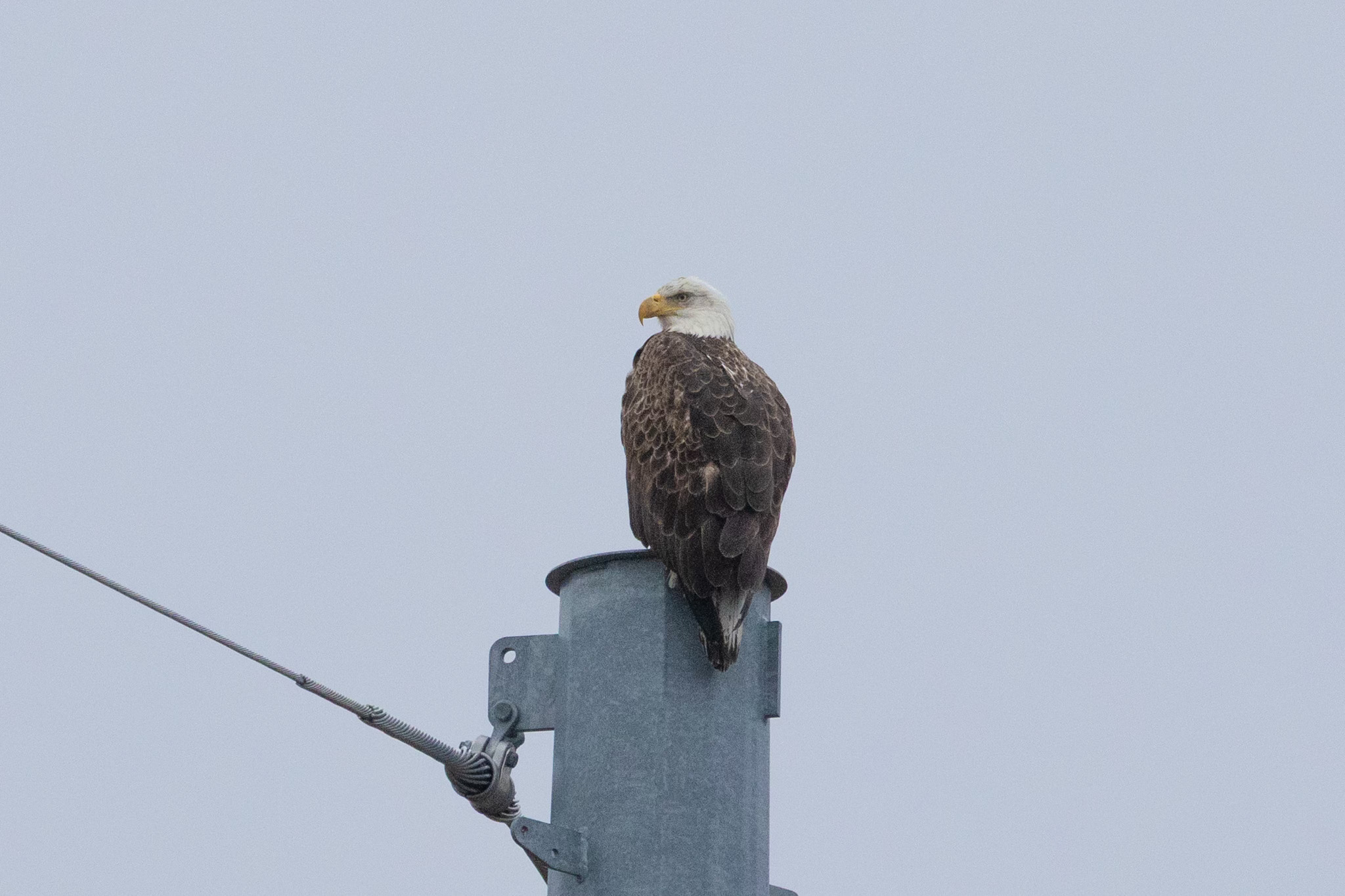
By Hap Ellis, Bald Eagle - Millennium Park, Boston, MA.
3. And from South Africa, a concerning study on the country's raptor population: A comprehensive study has revealed substantial declines in many of South Africa’s birds of prey (raptors) over the past 16 years, raising fresh concerns about the conservation status of several iconic and threatened species. Researchers assessed population trends for 18 raptor and 8 large terrestrial bird species across central South Africa between 2009 and 2025. Half of the species experienced significant declines, many exceeding 50%, while only three showed clear increases. “These results point to widespread and often severe population declines across South Africa’s raptor community,” said Dr Santiago Zuluaga, lead author of the study and a researcher at the University of Cape Town and National Museum of Natural Sciences of Spain. “What is particularly concerning is that some of the steepest declines were detected in species that play key ecological roles and are already considered conservation priorities.” (via Eureka Alert)
4. Lovely piece on "unplugging" by birding: I recently went birding for the first time in two years – having twin babies has a way of putting your hobbies on hold. But this trip to one of my favorite spots, Huntley Meadows Park in Alexandria, Virginia, reminded me why I love it so much. Ambling along the wetlands boardwalk, I saw two birds for the first time: a common yellowthroat and a blue grosbeak. I’m no ornithologist, but I’ll venture a scientific observation: If the McDonald’s Hamburglar were a bird, he’d be a common yellowthroat. Go ahead, Google it. Tell me I’m wrong. This bird has mocked me since I began birding six years ago. It’s very common, you see – one might even call it the everyday or can’t-miss-it or dime-a-dozen yellowthroat. For me, it might as well have been a resplendent quetzal. (via The Christian Science Monitor)
5. And speaking of "unplugging", a huge shout-out to actor Sean Bean and his podcast (Get Birding) in the NY Times: Long before his days as Boromir, and Ned Stark, and Macbeth, the English actor Sean Bean turned his head to the sky as a young schoolboy and discovered his love of birds. Although Bean’s life on set and as an often-traveling actor doesn’t always allow ample time for bird-watching, it’s something he consistently comes back to, no matter where he lives: “I’d always keep that interest in feeding the birds and watching out for them.” Bean has found himself once again out in the field. He recently narrated the documentary Osprey: Sea Raptor, and this year he became the host of the popular British birding podcast Get Birding. (via The New York Times)
6. In praise of Purple Martins: We’re in the full flush of spring. Here on the east coast of Vancouver Island, British Columbia, signs of renewal abound, including winged arrivals from Espírito Santo, Brazil—the ravenous and ravishing purple martins. I, too, am feeling revived. I think the new me has become better at finding joy in and connection to the burgeoning life around me: the unfurling leaves, the riot of blooms, the return of migratory birds—especially the purple martins. While the females of this species are mostly shades of gray, the males are a resplendent, iridescent purple-black. North America’s largest swallows, their acrobatic aerial feats as they pursue insects, and each other, command attention. Their complex vocalizations—urgent proclamations of metallic clicks and chirps reminiscent of R2-D2—delight me every time. (via bioGraphic)
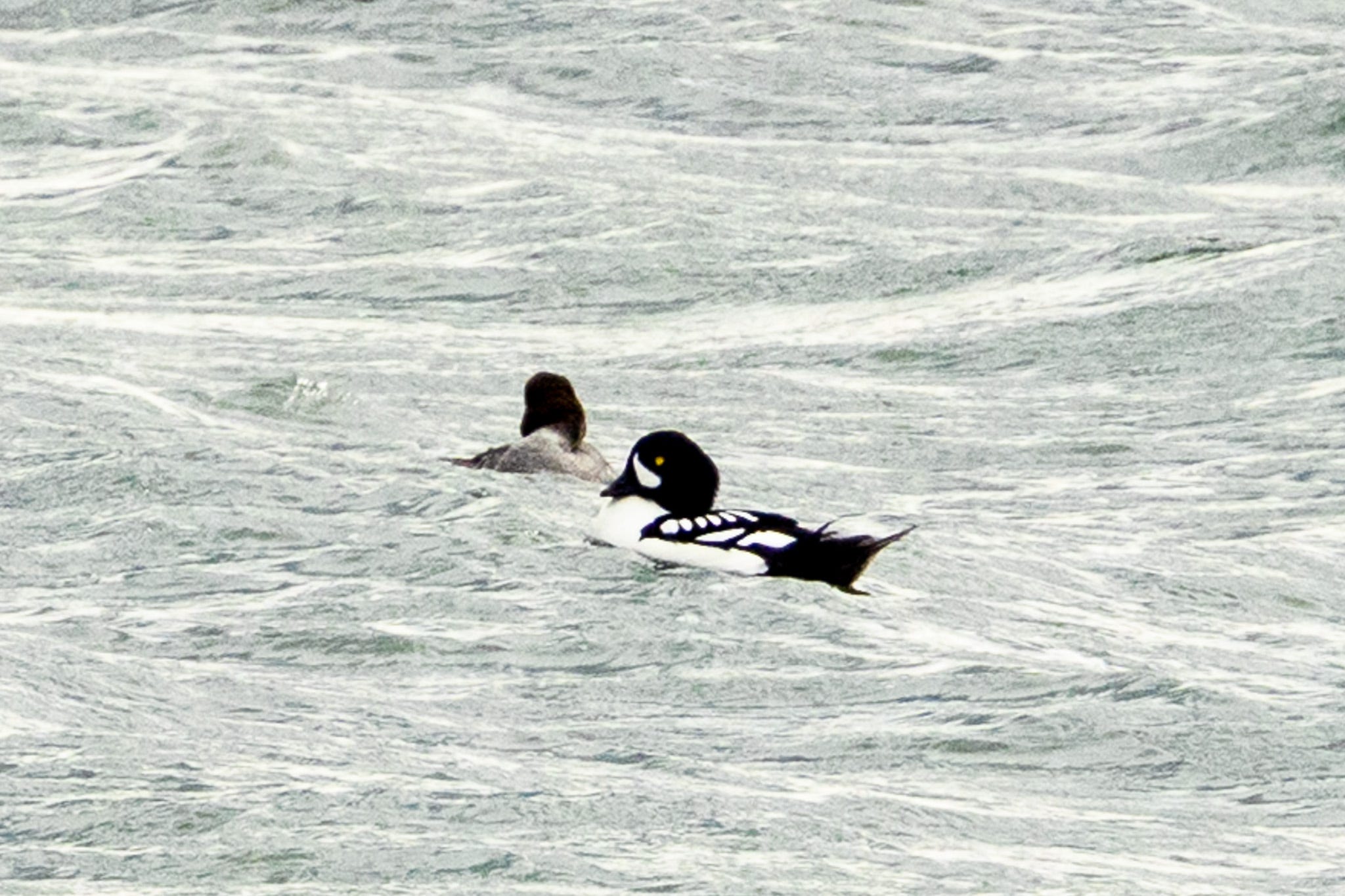
By Hap Ellis, (rare) Barrow's Goldeneye - Boston Harbor, MA.
7. Birds and booze - well, more precisely hummingbirds and nectar: As bees and hummingbirds flit from flower to flower, greedily sipping nectar in exchange for pollination, the animals often get another treat: alcohol. In the first broad analysis of the alcohol content of flower nectars, University of California, Berkeley biologists found detectable alcohol in at least one flower of 26 of the 29 species of plants tested. While most samples had very low levels, almost certainly from yeast fermenting the sugars in the nectar, one contained 0.056% ethanol by weight: about 1/10 proof. While this concentration may seem minuscule, for some animals nectar is their main source of calories. Hummingbirds consume between 50% and 150% of their entire body weight in nectar every day. (via UC Berkley News)
8. Again (!) the tension between solar projects and open grasslands - this from New York: As New York advances its transition to clean energy, we face another environmental emergency — the dramatic loss of grassland birds. The 2025 “State of the Birds” report, produced by a coalition of scientific and conservation organizations, revealed that these birds are the fastest-declining species, with populations down more than 40% since 1970. Habitat loss is at the center of this crisis, and now the crisis is hitting home in the 13,000-acre Washington County Grasslands. Here, sweeping fields anchor a rare ecosystem that is one of the state’s last lifelines for vulnerable grassland birds, including the state-endangered short-eared owl and threatened northern harrier. (via Audubon)
9. In search of a tropical spring: Many years of scientific observation and research show that temperate birds nest in the spring, and their breeding seasons rarely vary by more than a few days from year to year for any given species. In contrast, scientists know little about the breeding seasons of tropical birds. The information that does exist suggests that species may shift their breeding times by up to one month at a given site. The recently published results of a five-year field study show that this variation has been drastically underestimated in tropical mountains, where — in some cases — whole chunks of the community can breed in opposite seasons in response to shifting climates and resource availability. (via Florida Museum)
10. "Secondary extinctions" - a report on the songbird trade in SE Asia: Increasing demand for songbirds is raising the risk of “secondary extinctions” of so-called “master birds” in Southeast Asia, conservationists warn. While these birds never enter the region’s songbird singing competitions, they have unique qualities to their songs. When caged near songbirds, elements of their calls can be learned, says Vincent Nijman, lead author of research documenting their demise and director of EcoVerde Global Consulting. They almost act as vocal coaches: Proximity to master birds can improve the songs of contest competitors like the white-rumped shama (Copsychus malabaricus), a bird prized for its melodic voice, increasing their chances of success. Judges evaluate birds in these contests on the duration of their song, rhythm, showmanship and volume. Researchers surveyed markets across Indonesia from 2011 to 2025, looking for crested jayshrikes (Platylophus galericulatus), a popular master bird. They discovered that they were sold openly at markets in Sumatra, Borneo, Java, Bali, Lombok and Sulawesi.(via Mongabay)
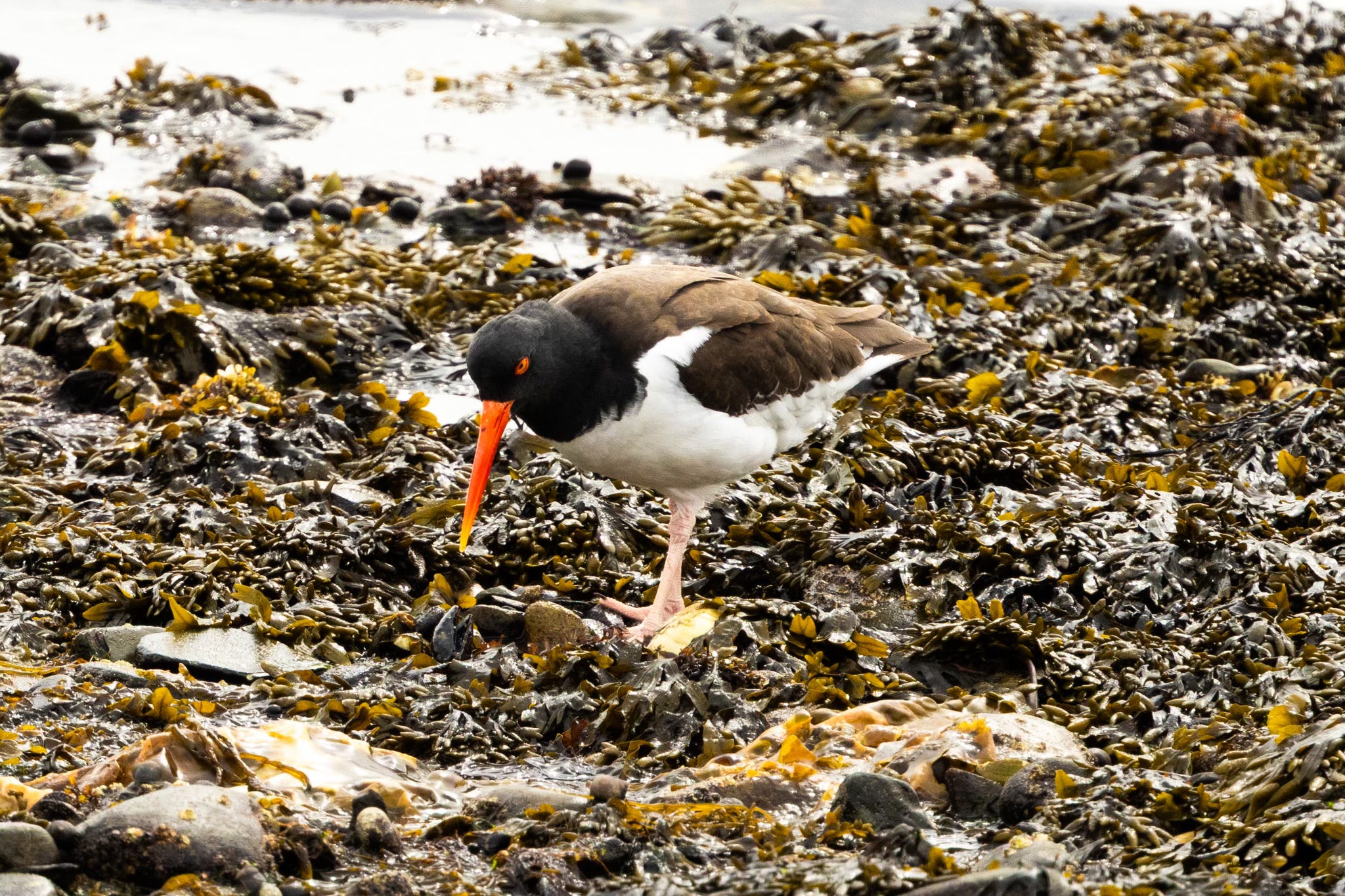
By Hap Ellis, American Oystercatcher - Boston Harbor, MA.
11. NYT Book review: In the late 19th and early 20th centuries, a peculiar craze swept through America. Men — and they were almost always men — tramped through fields and climbed into aeries, raiding nests, pocketing eggs, blowing out embryos and arranging the shells in carefully labeled cabinets. Some claimed scientific motives; many were driven by something harder to explain. Known as oologists, these collectors became so numerous that they helped push several species toward extinction. The obsession wasn’t uniquely American, but the hobby flourished with particular zeal in the United States. The egg craze is one of the many afflictions chronicled in James H. McCommons’s “The Feather Wars,” an exhaustive — and sometimes exhausting — history of the early conservation movement. (via The New York Times)
12. For Tampa Bay area birders and beachgoers, Audubon reminds us coastal birds are already breeding: Beach-nesting and other coastal birds have begun laying eggs along Florida’s coasts and on rooftops in coastal areas. Spring and summer mark critical times of year for these vulnerable species, as they must try to find safe habitats away from human disturbance, storms, and predators to successfully raise their babies. While wading birds nest in coastal trees, sea and shorebirds lay their eggs right on the sand. If they can’t find suitable beach habitat, some birds resort to nesting on large, gravel rooftops. Tampa Bay area threatened species, in particular the American Oystercatcher, Least Tern, and Black Skimmer, perceive people as a threat and will take flight whenever beachgoers or their dogs approach nesting areas too closely. (via Audubon)
13. And for those in Texas, all you need to bird the Lone Star State this spring: Dust off the binoculars and fire up the Merlin, eBird, and Sibley apps: It’s prime time for Texas birding. Late February through May is spring migration, when avian species on the continent head north for the summer. One in three migrants pass through Texas.Spring migration in Texas means the squawking and honking of crane, heron, geese, and ducks thousands of feet overhead. It’s seeing flocks forming and reforming their chevron flight as they ride the southerlies up the Central Flyway to summer homes as distant as Canada, Alaska, and Siberia. This season also means the arrival of songbirds and hummingbirds from Mexico and Central and South America for nesting season. The songbirds’ melodic calls crescendo into a noisy symphony, accompanied by the high-pitched squeaks and chirps of the hummers zipping around. (via Texas Highways)
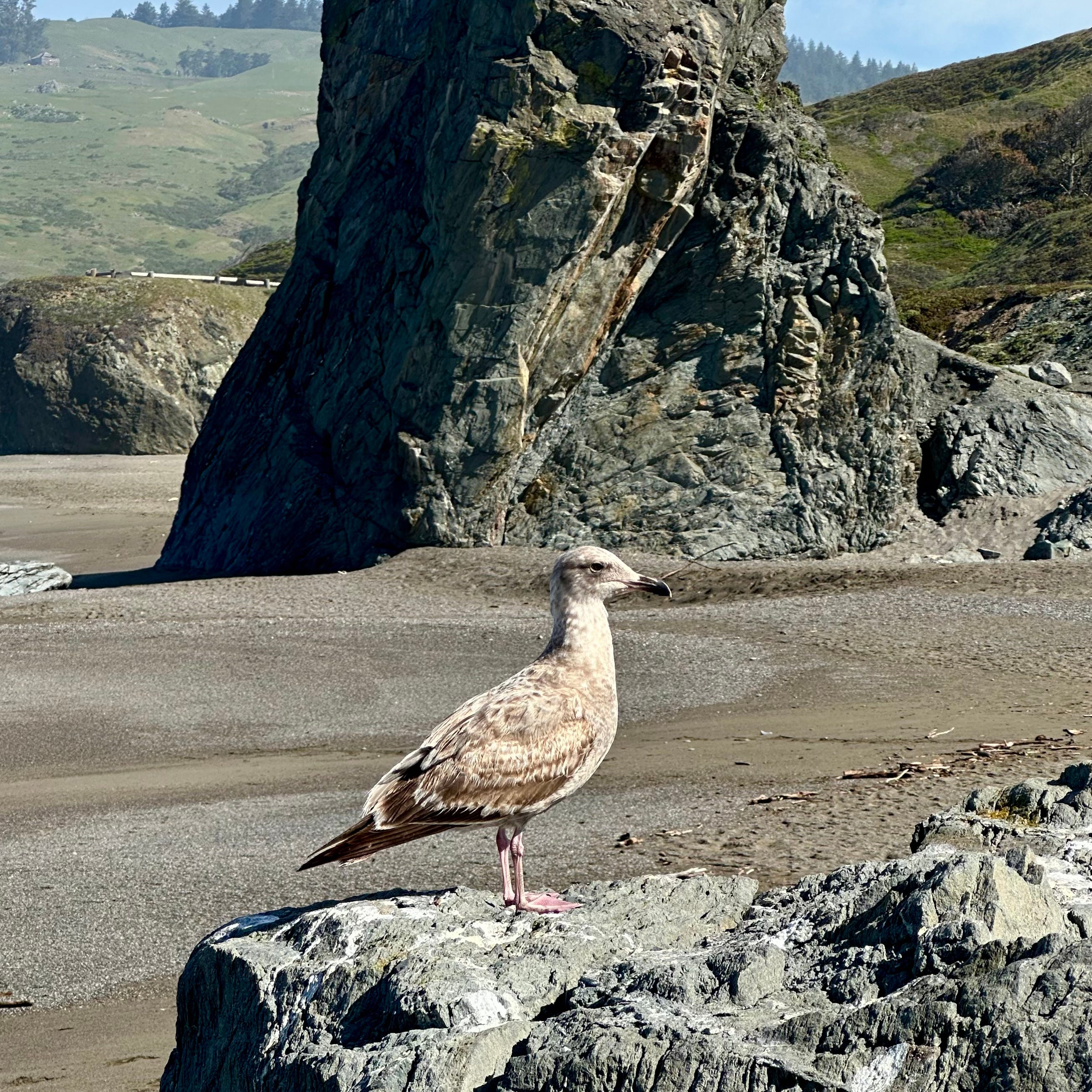
By Lisa Noschese - Western Gull - Goat Rock in Jenner, CA.
14. For backyard birders, some helpful advice: Spring is on the way in the Northern Hemisphere, meaning the birds in our backyards will soon make a lot more noise than before. I, for one, am excited. Birds are obviously great, but as with most subjects, there are all kinds of things we believe about them that have no basis in reality. Many of these ideas are related to our anxiety, as humans, about our interactions with nature—for example, should we feel bad about feeding the birds? Let’s look into what actual research suggests. (via Popular Science)
15. Finally, for that second cup of coffee, more of the best (pictures!) from The Cornell Lab's Macaulay Library: For our 2025 photo essay we’re celebrating wonderful photos in five themes: the lush, flower-filled habitats of birds in Birdlife in Full Bloom; fun companion shots in Double Vision; the rainbow of birds in Colors of the Bird World; cuteness, vulnerability, and the bonds of family in The Next Generation; wet and wild times in Making a Splash; and an exclusive meet-and-greet with some of the world’s least-seen birds in Rarities. In the final section, we say thank you to all the photographers who make the Macaulay Library archive such a uniquely rich resource. (via All About Birds)
* FYI - Cornell's Macaulay Library currently holds more than 84 million photographs and about 3.2 million sound recordings, along with several hundred thousand videos.
Bird Videos of the Week

Cornell Live Bird Cam - Big Red laid her second egg at the Cornell Hawks nest.

Cornell Live Bird Cam - Athena takes a moment to check on her eggs.