
Migration Takes Flight.
Bird News Items
1. No better way to start than with Garret Vin posting this lovely video of blooming cottongrass from northern Alaska:

2. And then keeping with the visual items, a quick must watch X/Twitter video of a very unique bird:

* More on the Club-winged Manakin: Club-winged Manakin - Machaeropterus deliciosus - Birds of the World.
3. "A remarkable year" for a local favorite in Cornwall says the UK's RSPB: Conservationists in Cornwall are hailing the role the daughter of a pioneering pair of choughs for helping their numbers recover after a "remarkable year" as more than 100 choughlets bred successfully for the third successive year. The RSPB said 48 breeding pairs of choughs raised 129 young birds in the county this year - 15 more than in 2024. Choughs are the symbol of Cornwall but the bird became extinct in the county 50 years ago until 2001, when three birds arrived on the The Lizard from Ireland. Hilary Mitchell and Steve Ashby, from Cornwall Birds, said the daughter of the pioneering pair had surpassed their record of 46 young, raising her 48th chick this year. She is based in western Cornwall at an undisclosed location and some of her young are now parents too. (via BBC)
4. Speaking of ongoing recoveries, Maine saw a record number of Piping Plover pairs return this year producing 251 youngsters who fledged (one off the record): The 2025 Coastal Birds Project season has officially reached its end. As of Friday, August 22, all of the Piping Plover chicks have fledged and many are already flying south to their wintering grounds—with some flying as far as the Caribbean! This year, Maine fledged 251 chicks, which is just one bird shy of the record set in 2022. However, we still set a record this year with 174 pairs of Piping Plovers returning to Maine beaches, which is our highest number ever! Just as many of the Piping Plovers and Least Terns return to beaches where they fared well the previous year, we were fortunate to have three returning crew members on our Coastal Birds seasonal staff this year. (via Maine Audubon)
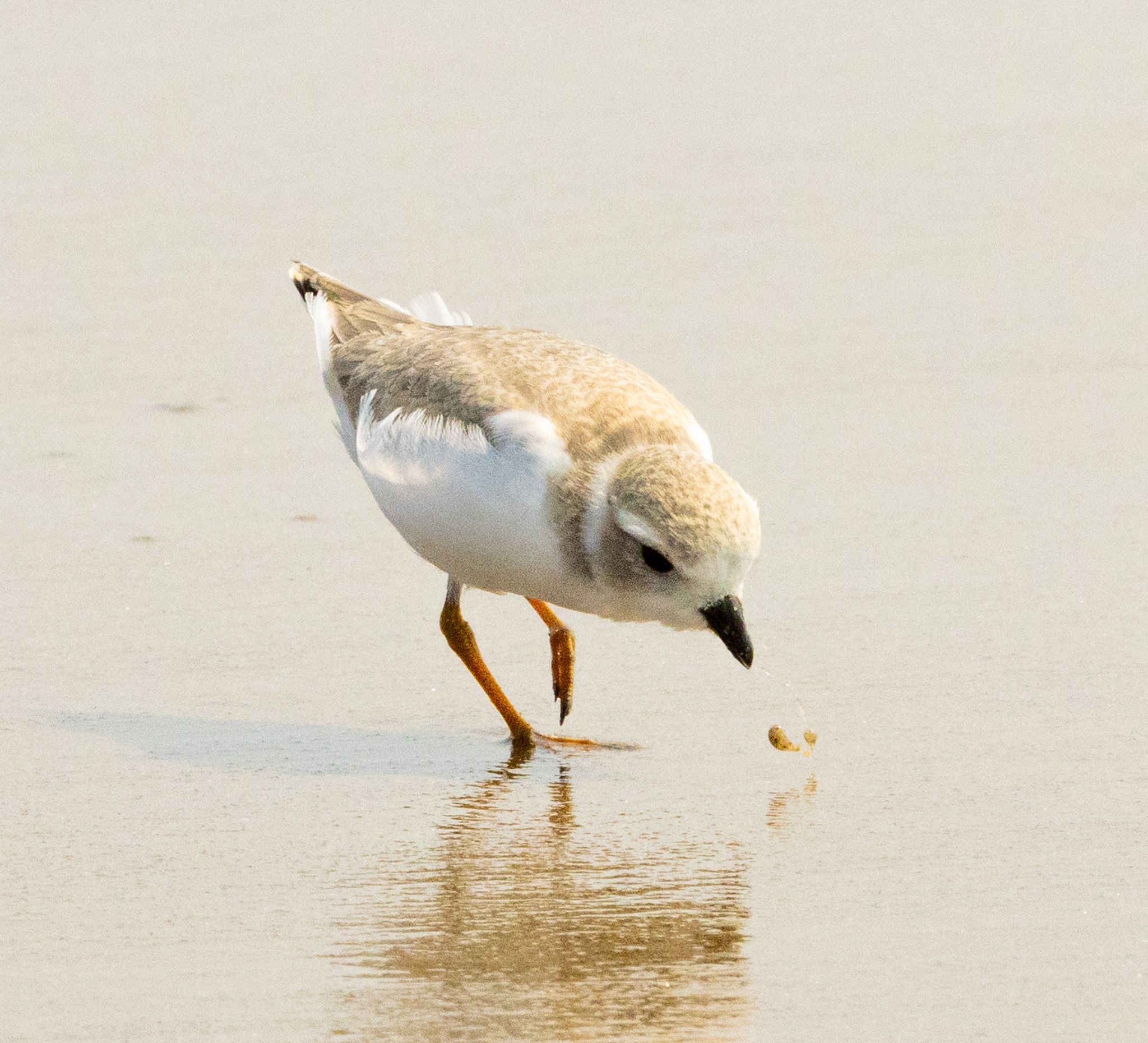
By Hap Ellis, One of the fledged Piping Plovers - Wells Reserve at Laudholm, Wells, ME (mentioned above).
5. Audubon on preserving the Endangerment Finding: This month, the U.S. Environmental Protection Agency (EPA) announced a proposal to reverse its 2009 “Endangerment Finding,” a landmark science-based decision under the Clean Air Act that found greenhouse gas (GHG) emissions pose a serious threat to human health and the environment. That finding, which followed the Supreme Court’s ruling in 2007 that GHGs are “air pollutants” under the Act, serves as the basis for EPA’s regulation of carbon dioxide, methane and other GHGs from key sources like power plants, oil and gas infrastructure, and cars and trucks. In 2022, Congress amended the Act to reaffirm, as the Supreme Court held, that GHGs are “air pollutants” subject to regulation. The National Audubon Society continues to support the Endangerment Finding, which is based on an overwhelming consensus of scientists and public health experts. (via Audubon)
6. We include this item for birders who are unfamiliar with BirdCast - a must for tracking Spring and Fall migration movements: An estimated 101,500 birds crossed Manistee County overnight Monday into Tuesday, as the fall migration surged across Michigan. The estimates come from BirdCast, a project run by the Cornell Lab of Ornithology that uses weather radar to track nightly bird migration across the U.S. At about 11:30 p.m. Monday, BirdCast estimated 29,900 birds over Manistee County. They were moving south-southeast at about 15 mph at an altitude near 3,100 feet. Statewide, the peak flight reached about 3.06 million birds aloft at once. So far this fall, about 4.13 million birds have crossed Michigan in total, according to BirdCast. Most nocturnal flights begin 30 to 45 minutes after sunset, with the heaviest movement typically two to three hours later. (via Mainstee News)
* An estimated 322 million birds were in flight across the U.S. last night, mostly in the central flyway
* How BirdCast Works: Bird migration forecast maps - BirdCast.
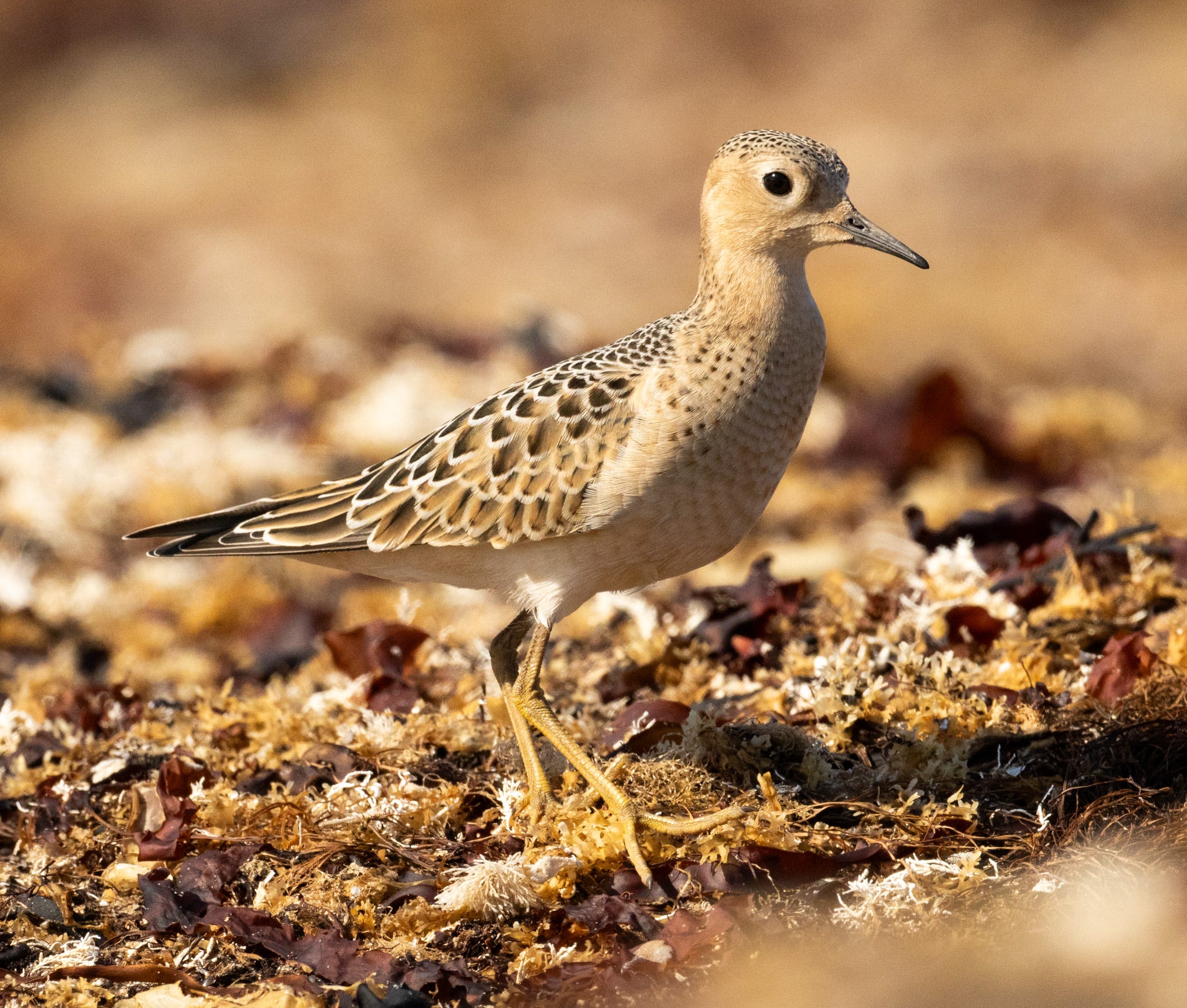
By Hap Ellis, Buff-breasted Sandpiper - Timber Point Trail, Biddeford, ME.
7. Oops! Not loving the Purple Martins so much now in Aggieland: It’s not like anyone was pulling out a ruler and measuring the distance between bird droppings, but if College Station recreation supervisor Laurie Brown were to guess, she’d say they were an inch apart—a speckled, white-and-brown blanket coating a walkway in College Station’s popular Northgate District. “In some cases,” she says, “there was bird poop on top of bird poop.” What was causing this tableau—grackles? Starlings? City workers called Sheldon Nicolle, owner of the local bird-abatement outfit Raptor Enforcement, as Nicolle was familiar with the walkway the birds were said to be occupying. Years ago, Nicolle successfully ousted some noisy grackles and starlings on that tree-lined walkway, and word of a Northgate roost prepared him for a rematch. (via Texas Monthly)
8. A nice piece on urban birding from UK's Country Living: As birding experiences go, David Lindo’s favorite wasn’t so much beyond his wildest dreams as within them. “I loved ring ouzels as a kid,” he says. “They look like blackbirds, but there are only about 6,000 nesting pairs in the UK compared to six million pairs of blackbirds. I thought I’d have to go to the Cairngorms or Dartmoor to see one, but one night, a ring ouzel appeared in my dreams. "The next morning, I went to my local patch in west London. Just as I was leaving, I saw a dark bird fly across the sky and land about 50 feet away. I looked through my binoculars and there, filling the whole view, was a male ring ouzel. It had come to see me.” (via Country Living)
9. BNI Travel tips: No better place to be for Fall migration: Get your binoculars and field guide ready! Fall migration is underway. For some birds, this annual odyssey starts as early as July. AtCorkscrew Swamp Sanctuary, volunteers and visitors reported spotting migratory birds early in August, including Yellow-billed Cuckoo, Ovenbird, and Louisiana Waterthrush. In the Northern Hemisphere, migratory birds fly north in the spring in search of food and nesting habitat. In the fall, they fly south, retreating from the cold temperatures and food shortages that winter brings. (via Audubon)
10. Well, actually, Utah says otherwise - as the Utah Division of Wildlife Resources introduces the Utah Bird Slam: Fall might be known for leaf peeping, but it’s also a great time to watch birds. Billions of birds across North America are beginning their annual migration, including approximately a million that passed through Utah between Tuesday night and Wednesday morning, according to the BirdCast Migration Dashboard. It estimates 14 million birds have passed through the state since Aug. 1, which is slightly below the state’s average for this point in the year. Migration historically peaks between September and October, but nearly 80 million birds tend to pass through the Beehive State between August and November every year on their journey to their winter homes, per BirdCast data. (via KSITV NBC)
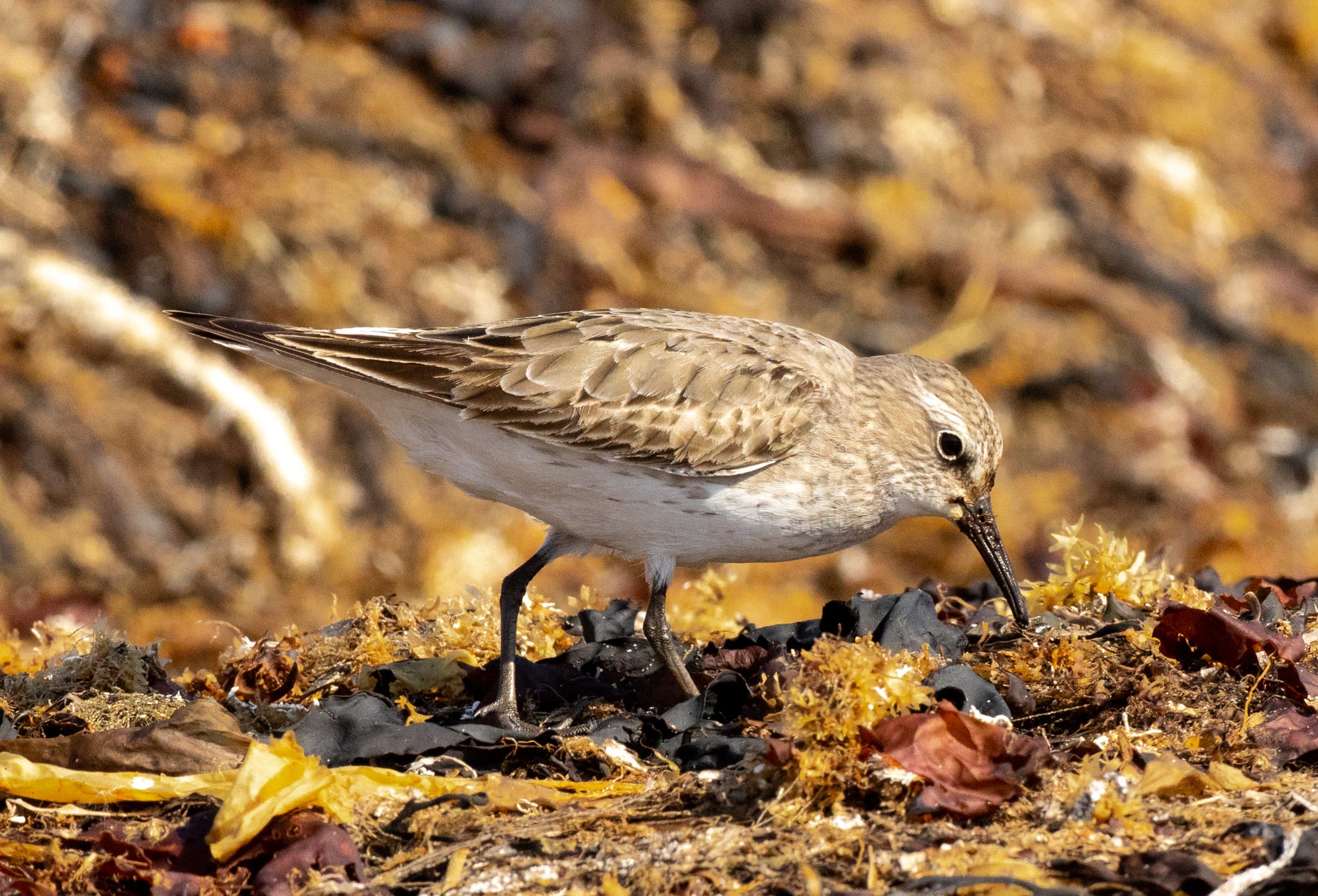
By Hap Ellis, Whiter-rumped Sandpiper - Timber Point Trail, Biddeford, ME.
11. Saving the critically endangered Kakapo in New Zealand: It is easy to imagine how it could happen. A petrel, flying east from the Indian Ocean at the end of the Austral winter, makes landfall at New Zealand’s southern Codfish Island/Whenua Hou. Tired from its long journey, the petrel seeks refuge in the burrow of a green kākāpō: a critically endangered flightless species that is the world’s fattest parrot. If the seabird intrudes when the kākāpō is primed to breed, the male parrot may attempt to mate with the smaller petrel, accidentally smothering it in the process. In this case, there are two unwitting victims. The petrel harbours a deadly agent: H5 avian influenza. Soon after, bird flu begins to rip through the imperilled parrot population, pushing the waddling bird – which numbers fewer than 250 individuals – to extinction. (via The Guardian)
12. Yikes - Not news you'd expect from an island sanctuary for 30,000 seabirds: Sewage is being discharged on an island sanctuary for rare birds. Coquet Island, off the coast of Northumberland, is home to 30,000 puffins as well as arctic, common and Sandwich terns. The site is a protected nature reserve managed by the Royal Society for the Protection of Birds (RSPB) but sewage has recently been spotted leaking onto the island. The RSPB said the septic tank had overflowed because more people were using the system than it was designed to handle while renovation work was being carried out on the island. A spokesperson said: "Last week work began on an essential major renovation of the island's lighthouse and [saw] the arrival of additional work teams using Trinity House. (via BBC)
13. Participatory science (e.g., eBird) yields study results with "unprecedented detail": A new study published today in the journal Frontiers in Ecology and the Environment leveraged participatory science to reveal regional variation in bird responses to fire across the continental United States in unprecedented detail. These results can help refine fire management techniques to bolster bird populations. The researchers analyzed data for six bird species of conservation concern whose habitat needs have a tangible impact on fire management decision-making. They unveiled clear, highly detailed regional variation in the ways that wildfire impacts bird populations. (via Phys Org)
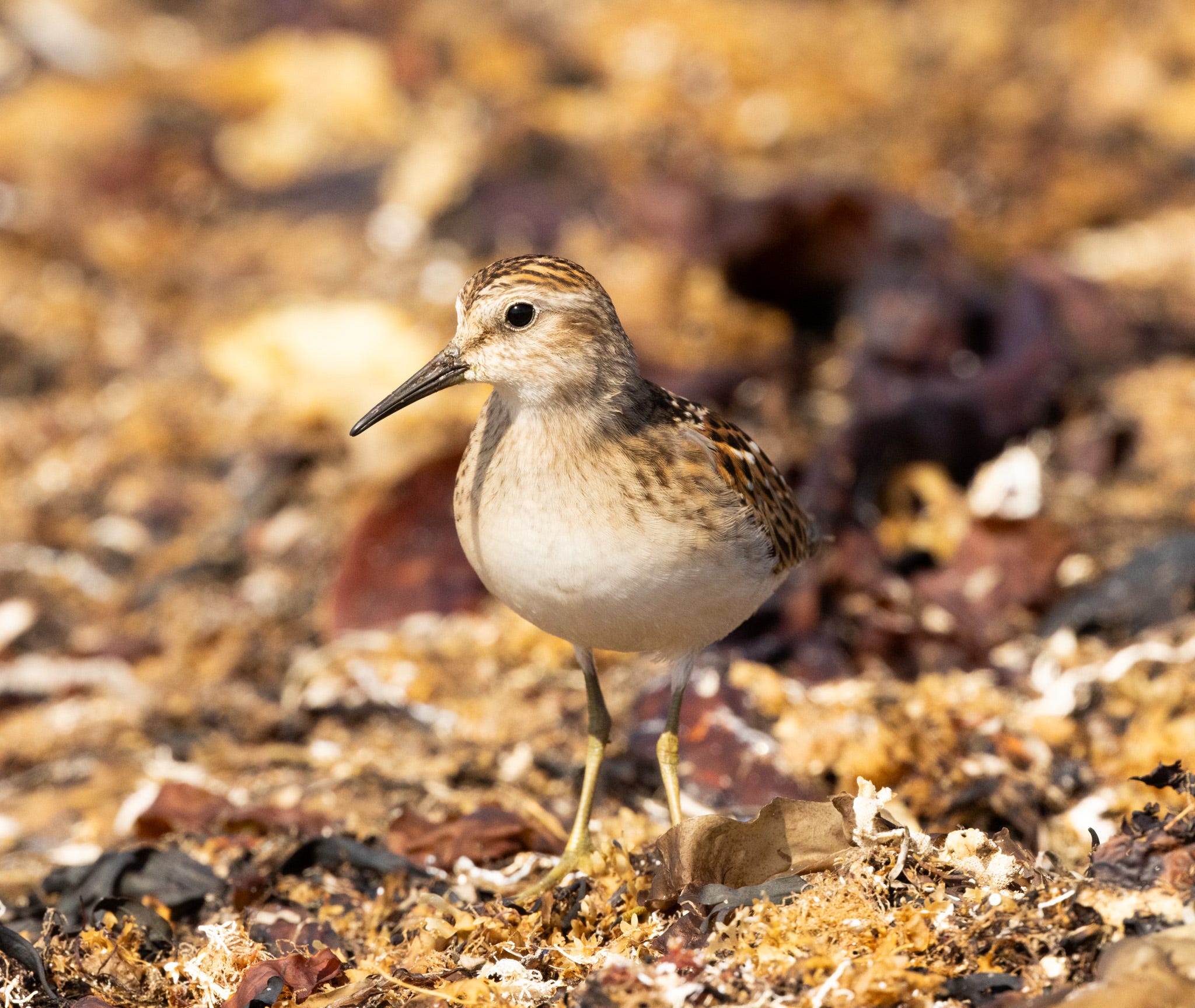
By Hap Ellis, Least Sandpiper - Timber Point Trail, Biddeford, ME.
14. Proof birdwatching is taking over the world?: If you’ve been wanting a telescope for your smartphone that you can use while bird watching or to get a better look at wildlife while hiking, Walmart has a highly-rated one on sale for just $17. The Juyafio Monocular Telescope for Smartphones with Holder & Tripod is just $17 at Walmart (regularly $36.) The high definition telescope is equipped with 40x magnification for a clear and bright view. And it only weighs half a pound, so it’s easy to take with you. The telescope features manual focus, a 60mm objective lens, 22mm ocular lens, and 275 feet field of view. It’s rated IPX7 waterproof and comes with a phone holder, adjustable metal tripod, lens cover, hand strap, cleaning cloth and cloth bag. (via Athon Sports)
15. From fav writer in Maine, birding is like a farm-to-table restaurant: Birding in Maine is like a farm-to-table restaurant. The offerings are always fresh, and the menu changes with each season. When neotropical migrants arrive in spring, it’s a buffet of songbirds competing for mates and territories. You can wander just about anywhere, and the birds will announce who they are and where they are. In autumn, it’s an ala carte menu of experiences. Which dish you choose is up to you — and the season’s menu starts now. Recently, I spent an afternoon on my deck overlooking the lake. In August, common loons congregate, sometimes by the dozens. In early summer, they compete fiercely for territory, but by late summer that aggression gives way to cooperation. Loons diving on a school of fish are more successful when their prey has a harder time getting away. (via Bangor Daily News)
16. Let's end with a link to a very funny, very energetic documentary about two "stoners" who set out to do a "big year" knowing nothing about birds - part Kingbird Highway, part Cheech and Chong as my BNI friend put it. Warning! It is two hours. Put it aside for a rainy Sunday or a train/plane commute- great fun:
Go Birding!

Cornell Live Bird Cam - Owl Alert!

Cornell Live Bird Cam - Watch this fascinating interaction between the Royal Cam chick (background) and a neighboring chick.