
New Bird.
Bird News Items
1. Let’s start with the results of a study on the effects of cheatgrass: Whether it’s counting the different kinds of trees in a forest, frogs in a pond or even bacteria in your gut, diversity often demonstrates ecological health.But new research shows that when invasive species are involved, diversity may sometimes be a short-term illusion that conceals larger ecological problems. Invasive species can diversify bird communities, but only for a short period of time.“Species richness and diversity can be a pretty unreliable measure of ecosystem health,” said Brendan Hobart, a research scientist at the University of Wisconsin-Madison and TWS member who studies how human-caused environmental changes impact the species around us. The finding has implications for conservation, as ecosystem assessments based solely on species diversity may not reveal an adequate picture of environmental sustainability. (via Wildlife)
2. And then on a lighter note, the allure of …cigarette butts?: Darwin’s finches in the Galápagos, house finches in Mexico and song thrushes in New Zealand have all developed a curious habit: They put cigarette butts in their nests. Some songbirds in Britain are even nesting in outdoor ashtrays. A new study adds evidence for why urban birds have picked up this preference, at least in one species: The toxins in tobacco may keep parasites at bay in the nests of blue tits, colorful birds that are found across Europe. (via The New York Times)
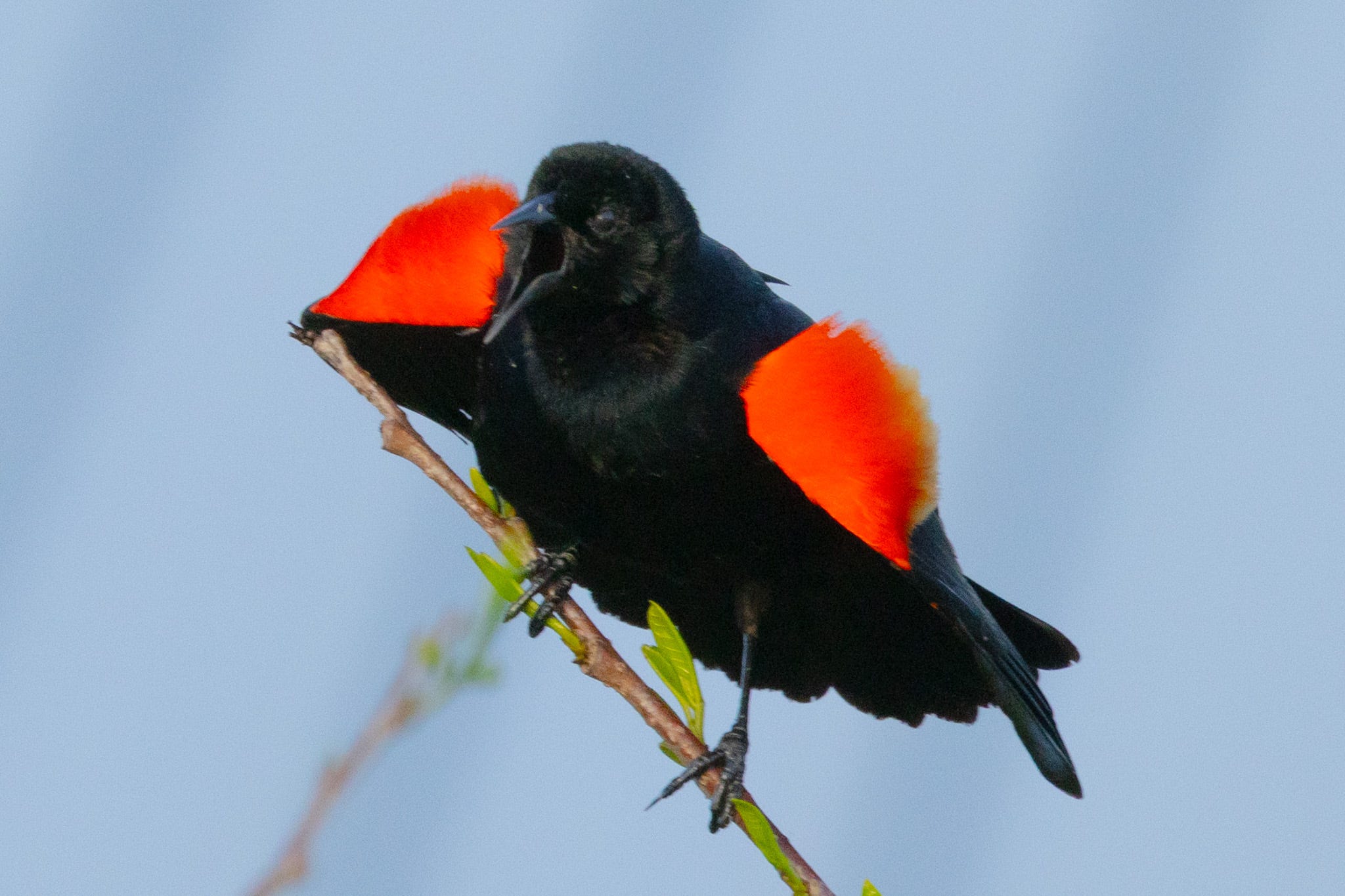
By Hap Ellis, Red-winged Blackbird - Green Cay Nature Center & Wetlands, Boynton Beach, FL
3. More on the importance of the massive Farm Bill we highlighted last week: When the average person thinks about the Farm Bill, they likely think about, well … farms. The Farm Bill, one of the largest spending bills in the United States, covers everything from subsidies to farmers, crop insurance, and agricultural research to rural broadband infrastructure and food and nutrition programs. But the Farm Bill does much more than that: It happens to be the single largest source of conservation funding in the world. (via ABC Birds)
4. Audubon on the upcoming 15th Convention on Migratory Species: Lesser Yellowlegs migrate thousands of kilometers each year from North America to the Brazilian Pantanal, the world’s largest tropical wetland. Along the way, they stop to feed and rest, dependent on habitats conserved by governments and private citizens. But no single country is able to ensure the continued well-being of these and other migratory birds, as well as other migrant species. The health of their populations depends on actions taken by stakeholders in multiple countries. Audubon has long understood this—which is why we work in eleven countries throughout the Americas, and with partners that extend our reach even further, to conserve birds and the habitats on which they depend. (via Audubon)
5. Speaking of nest building, this study connects the spread of wild cotton to nest building in southern Africa: Birds play a larger role in the dispersal of wild cotton than previously assumed. This is shown by a study in the journal Oikos, carried out in southern Africa. Researchers discovered that birds actively collect wild cotton as nesting material and in doing so move seeds over distances of more than a kilometer. Cotton fibers were long seen as something that evolved to disperse seeds by wind, but birds also take them to their nests and in this way help disperse the seeds much further. The research took place in Mbuluzi Game Reserve in Eswatini. In this savannah area, researchers studied wild cotton (Gossypium herbaceum) and the nest-building behavior of two species of mousebirds. These were naturally occurring plants, not commercial cotton fields. (via Phys Org)
6. Returning New Zealand’s rare and extinct birds “to their cultural context”: The first time Fiona Pardington saw a huia bird it was in a Christmas pudding. The artist, then a girl, bit down on a slice of her Aunt Nelly’s cake, only to hit an old silver sixpence bearing an illustration of the extinct species. Pardington spat out the coin and looked at the bird, the male with its long, curved beak and pronounced wattle. She knew little about the huia; its distinctive song, nor its prized tail feathers. As an adult, she learned the bird was sacred to New Zealand’s Māori people, containing great “mana,” or life force. But it was hit hard by habitat loss, which accelerated after the arrival of European settlers, until it died out in the 1900s. Today the artist, who is of Māori and Scottish descent, sees the irony of her first encounter — liberating the bird from a symbol of the culture that caused its demise. The huia, like some other native bird species, have “haunted our history,” she said. (via CNN)
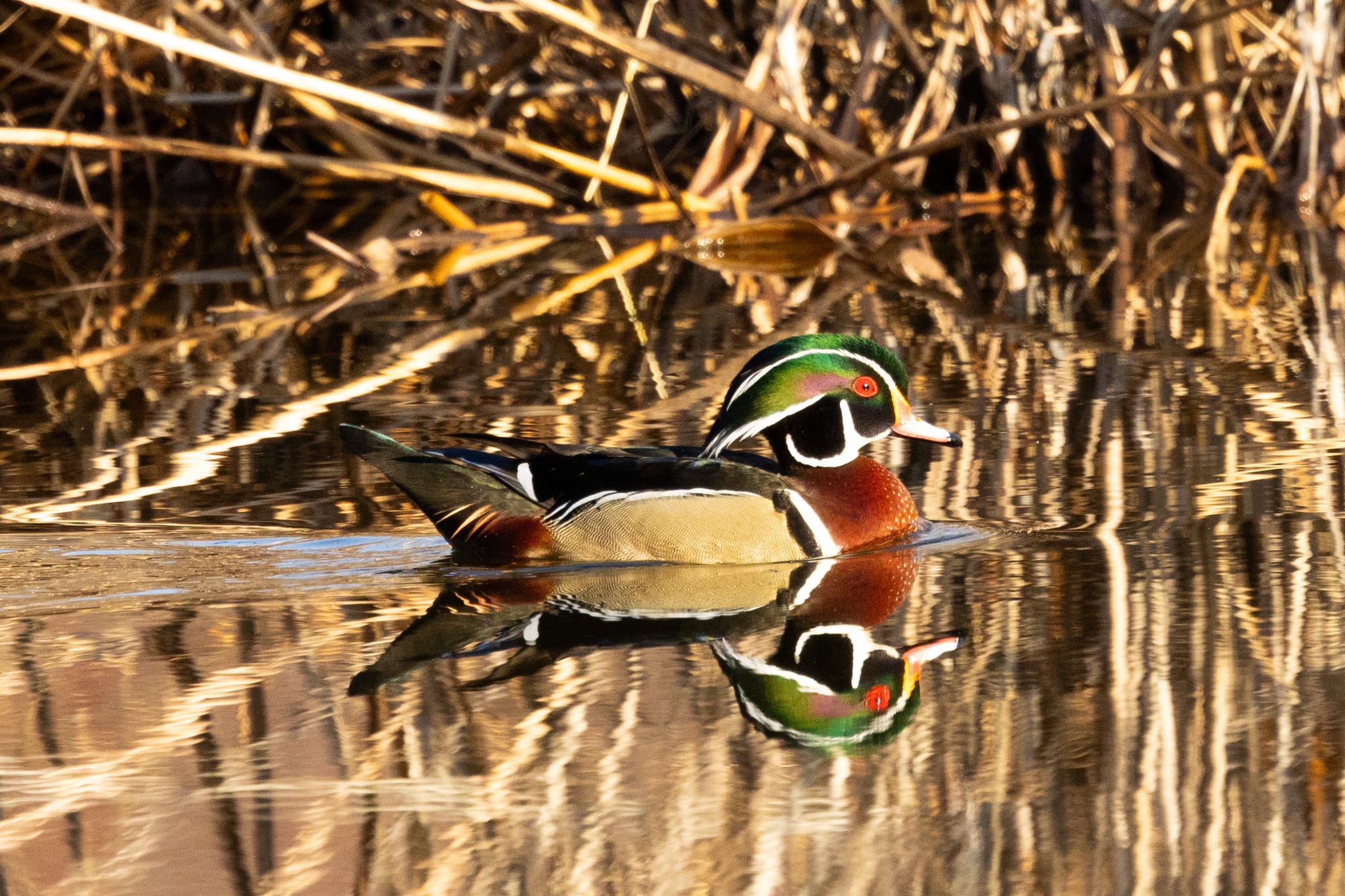
By Hap Ellis, Wood Duck - Arnold Arboretum, Boston, MA.
7. Nest building again (!) - 3D-printed nests to the rescue: Deep in the grounds of a stately palace near Oxford, in the southwest of England, designer Dan Parker is perched on a ladder, struggling to tie an unusual object to an ash tree. With his arms stretched high, Parker clings to something about the size of an electric toaster, with a rippled perimeter that looks like wood carved into waves. The object is light and hollow, with a single circular hole on one side. But it is the outer surface that stands out most: a wall that’s lumpy like cotton wool, yet hard, and, perhaps most notably, distinctly mushroom smelling. Parker’s creation is intended to outdo the typical bird box, which is used all around the world, but often fails to attract target species—or worse, confines them to cold, leaky conditions that can kill chicks. By redesigning the nesting shelter from scratch, he aims to provide a better start to life for cavity-nesting songbirds such as the rare marsh tit. (via National Geographic)
* BNI congratulates Kevin Maroni on his election as Chair of the storied National Geographic Society’s board of trustees
8. A case of “hidden diversity” – a new species discovered in Japan: An international research team including Japan’s Yamashina Institute for Ornithology said Wednesday that it has discovered a new bird species in the Tokara Islands of Kagoshima Prefecture. The new bird, named the Tokara leaf warbler, or Phylloscopus tokaraensis, is the first bird species to be given a scientific name in Japan since 1981, when the Okinawa rail was named Gallirallus okinawae. The team, which also included researchers from Japan’s Forestry and Forest Products Research Institute and the University of Gothenburg in Sweden, found that the Tokara leaf warbler is genetically and morphologically distinct from the Iijima’s leaf warbler, which has long been considered the same species. (via The Japan Times)
9. Hollow hair - “never, ever seen anything like this before”: Platypuses just got weirder. As if a mammal that lays eggs, senses electricity with its bill and fluoresces isn’t enough of a headscratcher, now it appears platypuses also share a feature with birds. Tiny pigment-filled packets in the mammals’ hair are hollow — a trait previously thought to be found only in avian feathers, researchers report March 17 in Biology Letters. Scientists have “never, ever seen anything like this before,” says biologist Jessica Dobson of Ghent University in Belgium. (via Science News)
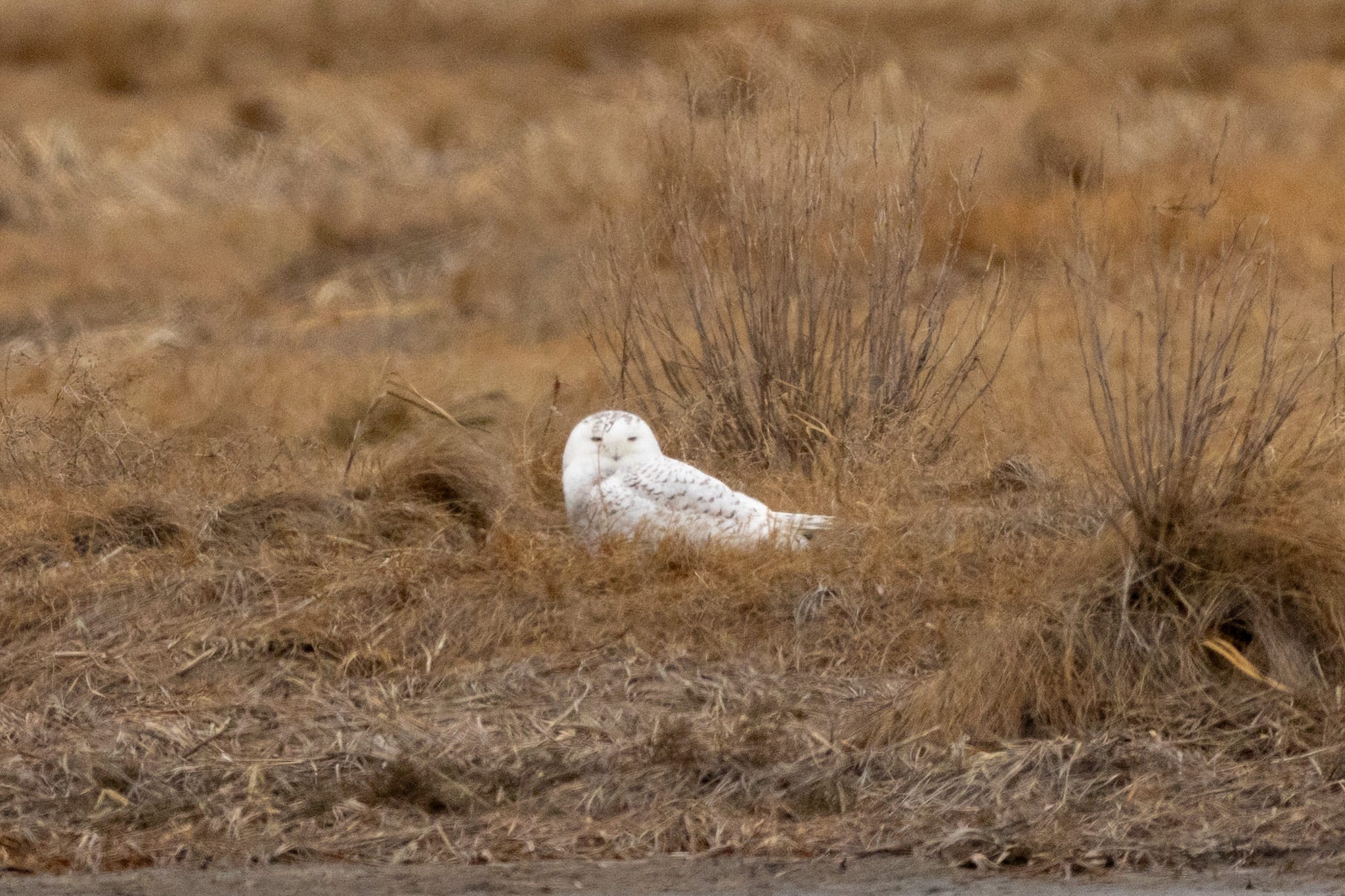
By Hap Ellis, Snowy Owl - Parker River NWR, Newburyport, MA.
10. The BBC reports on a very popular “bird cam” high atop St. Albans Cathedral in Hertfordshire: A cathedral has turned on cameras to allow people to get a bird’s eye view of a family of peregrine falcons for the 2026 nesting season. The birds of prey have nested on the roof of St Albans Cathedral since 2022. Last year, more than 500,000 people tuned in to watch the falcons, which are one of five breeding pairs in Hertfordshire, via a webcam available on the cathedral’s website. Lea Ellis, engagement manager at Herts and Middlesex Trust, said the interest from the public showed the birds had “truly captured hearts”. (via BBC)
11. And there just happened to be an article on the Cornell Lab’s Bird Cams which have reached literally millions of viewers worldwide: With a click of the mouse, people can experience the everyday lives of birds in real time through live cameras run by the Cornell Lab of Ornithology. Launched in 2012, the Cornell Lab Bird Cams have reached millions of viewers around the world, bringing people closer to nature in ways never before possible. The bird cams project operates between five to twelve cameras all year round. Some cameras focus on feeders, while others follow individual birds through an entire breeding season, allowing viewers to witness eggs hatch and chicks grow. Charles Eldermire, live media lead producer at the Cornell Lab of Ornithology, led the project when it started in 2012. He explained that unlike documentaries, live cameras give people access to a more authentic experience with birds. (via Cornell Sun)
12. The Atlantic has a nice photo spread (might be paywalled): Recent images of some of our fine feathered friends at work and at play in the warming Northern Hemisphere. (via The Atlantic)
13. From Poland, “dobra wiadomosc” (good news) for injured birds: When a male bullfinch smashed into Marcin Jarzębski’s apartment window, he took it in but realized it needed expert treatment. So the next morning he brought it to Warsaw’s new emergency room for wild birds. He prepared a shoebox for the tiny, plump bird with a black head, gray back and reddish chest feathers. Then he took it as one of the first patients to the new drop-off center for sick and injured birds at the entrance of the Warsaw Zoo. “The bird stayed with us overnight, but unfortunately it probably has a broken wing so we brought it to the bird hospital,” Jarzębski said. The 24/7 emergency room in the Polish capital is actually a system of automated metal containers — something like a parcel room — where the containers can keep the birds warm in winter. The boxes send an immediate signal to the bird hospital just a few meters away, where veterinarians bring the birds for diagnosing and treatment. (via AP News)
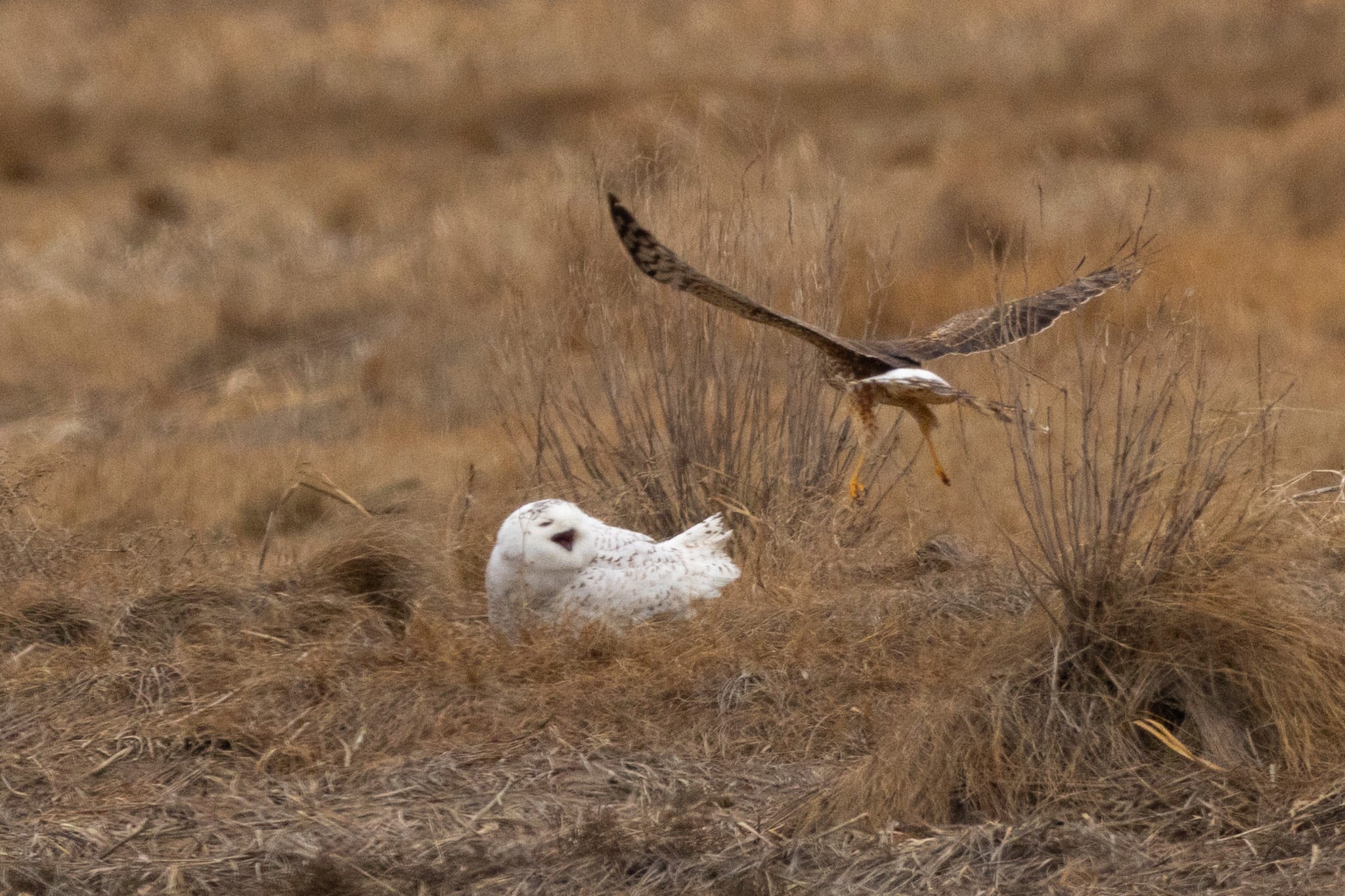
By Hap Ellis, Snowy Owl and Northern Harrier- Parker River NWR, Newburyport, MA.
14. For the arborist (and birder) in you: The cornelian cherry or cornus mas isn’t a cherry tree at all, but rather, in the dogwood family. This low-maintenance tree grows up to be relatively small in stature but packs a four-season punch, with yellow flowers in early spring, bright red summer berries and attractive foliage and bark in fall and winter. The tree is native to regions like Ukraine, Turkey and Georgia and is so-named possibly due to the berries’ resemblance to carnelian gemstones. When the tree’s berries form, birds and another animals (including humans!) can enjoy the sour, pitted fruits. In its native regions, the cornelian cherry is grown commercially for its fruit to be used for medicinal purposes, preserves and juices. The fruits can also be salted and pickled like olives. In summer, the tree produces cherry-like fruits, which the birds usually get first. (via Vermont Public Radio)
15. Daily Kos reports on early Spring migration from the Sacramento Valley: Clear skies and warm weather convinced me that it was a perfect day to visit Colusa National Wildlife Refuge. When I visited Colusa last year the ponds held thousands of Northern Pintails, Shovelors, Widgeons, Snow Geese and White Fronted Geese. The warm weather triggered the migration. While there were some birds at Colusa, the bulk of them have already headed to their summer home. Not a single Pintail could be seen in the refuge. The first pond held dozens of White-Fronted Geese, but only a handful of Northern Shovelors and about a dozen Black-Necked Stilts. Overhead, flocks of White-Fronted Geese headed north bypassing the NWR. Every so often, some of the geese came down for a landing to rest and fuel up before continuing their journey. (via Daily Kos)
16. Finally, 8.257 species, 1.14 million birders, 216 countries - check out the remarkable results from The Cornell Lab’s Great Backyard Bird Count: Few things are as inspiring as watching birds. They busily navigate their daily lives: singing, flocking, calling, feeding, socializing, and surviving. Closely rivaling the wonderment of birds are birders themselves. Birders from all corners of the world came together for the Great Backyard Bird Count, defying the barriers that seek to divide us in our quest to celebrate birds and the natural world. Like nothing else, birds are a unifying force of amazement. Together we found 8,257 species which is 179 more than in 2025. Thank you for participating in GBBC. Please enjoy the impressive results below, knowing you were an important part of this growing wave of bird-enthusiasm. (via BirdCount)
Bird Videos of the Week
Video by Chris Hester, Sandhill Cranes.

Cornell Live Bird Cam - Red-winged Blackbirds are a harbinger of spring around Sapsucker Woods in Ithaca, New York.

Cornell Live Bird Cam - It's an early morning crayfish delivery at the entrance to the Barred Owl’s nest box!