
Rare and Riveting.
Bird News Items
1. Let’s begin with a fun (and detailed) article from a British Columbia magazine, The Tyee, on “hardcore birders”: A big year or big day is when a lister sets out to see as many species as they possibly can in the span of one big year, from Jan. 1 to Jan. 1, or one big day, from midnight to midnight. That means travelling as far as they can, and as fast as they can, to see these birds. Many birders are particularly motivated by the possibility of seeing a rare bird on these missions. In Alberta, birders Ethan Denton, 22, and David Grinevitch, 20, are a part of a new generation of birders doing as much as they can, within reason, to see rare birds, and as many birds as they can. Denton, a bird bander at Wood Buffalo Wildlife Research Institute, holds the record for the biggest Alberta big year, which he set in 2021 when he was only 18. Grinevitch is a University of Alberta student and is, at the time of publication, ranked first in both Alberta and Edmonton on eBird for 2025. Grinevitch is also going for an Edmonton-area big year record this year. (via The Tyee)
2. Healing through birding: Ninety-six million Americans now call themselves bird-watchers. That’s nearly one in three people. What was once the domain of retired dentists with too much time and too many thermoses has become a national pastime. ‘You don’t need equipment to go birding,’ he says. ‘Just walk outside and look or listen for birds. It’s like a treasure hunt — where can I find a new or different one?’ Or, as the bureaucrats insist, a “sport.” (Blame linguistic inflation, but that’s beside the point.) Bird-watching has gone mainstream, and America has fallen head over talons for it. (via The Blaze)

PFF - (Photos from Friends) - By Wayne Boswell, Short-eared Owl - Turkey Point Marsh, southern Ontario.
3. A nature writer at The Berkshire Eagle on woodpeckers this time a year: Taptaptapping comin’ from the woods. November, long thought of as the most dismal month of the year (in competition with February), arrives, and, contrary to the negativity expressed by Thomas Hood, there is lingering warmth. Early morning frost tickles the landscape, but dissipates quickly as the sun rises above the horizon. Colorful leaves no longer flutter on the trees, but have fallen to create russet and sepia scatter rugs on the forest floor. Our feeders are up and are becoming rather active with the stalwart residents. Dark-eyed juncoes and white-throated sparrows are down from the highlands and scurry around under the feeders. Nuthatches and chickadees help themselves to sunflower seeds while the woodpeckers taptaptap away at the suet. (via The Berkshire Eagle)
4. Some birds hybridize to mitigate climate effects says this study in Nature: Climate change is rapidly driving environmental shifts, posing an increasing threat to global biodiversity. Interspecific introgression—in which genetic material is transferred from one species to another following hybridization—may facilitate climate adaptation by introducing new genetic variation, which could mitigate species’ vulnerability to changing conditions. (via Nature)
5. Is beauty a curse? It can be: Birds are some of the most visually stunning animals on Earth. Consider the peacock, with its eye-fetching train of iridescent tail feathers. Or the paradise tanager, a small songbird native to the Amazon rainforest that looks almost as though it flew through a rainbow and the colors stuck. But beauty can turn into a curse, as the old saying goes, and this cosmic joke seems to extend to birds: Good looking fowl, it turns out, are also more frequently trafficked in international markets, according to a recent study published in Biological Conservation. (via Nautilus)
6. Light pollution and bird song: Light pollution makes birds work overtime. Streetlamps, buildings and other human-made sources pollute the night with artificial light. This extra brightness can lead to birds singingnearly an hour longer per day, researchers have found. That number comes from a new study of nearly 600 bird species around the world. How much the singing increased took the researchers by surprise. “We expected some behavioral adjustment to the lights at night,” says Neil Gilbert. But “we didn’t anticipate that it would be this impactful.” Gilbert is an ecologist at the Oklahoma State University in Stillwater. He studies how human actions impact wildlife behavior. (via Science News Explores)
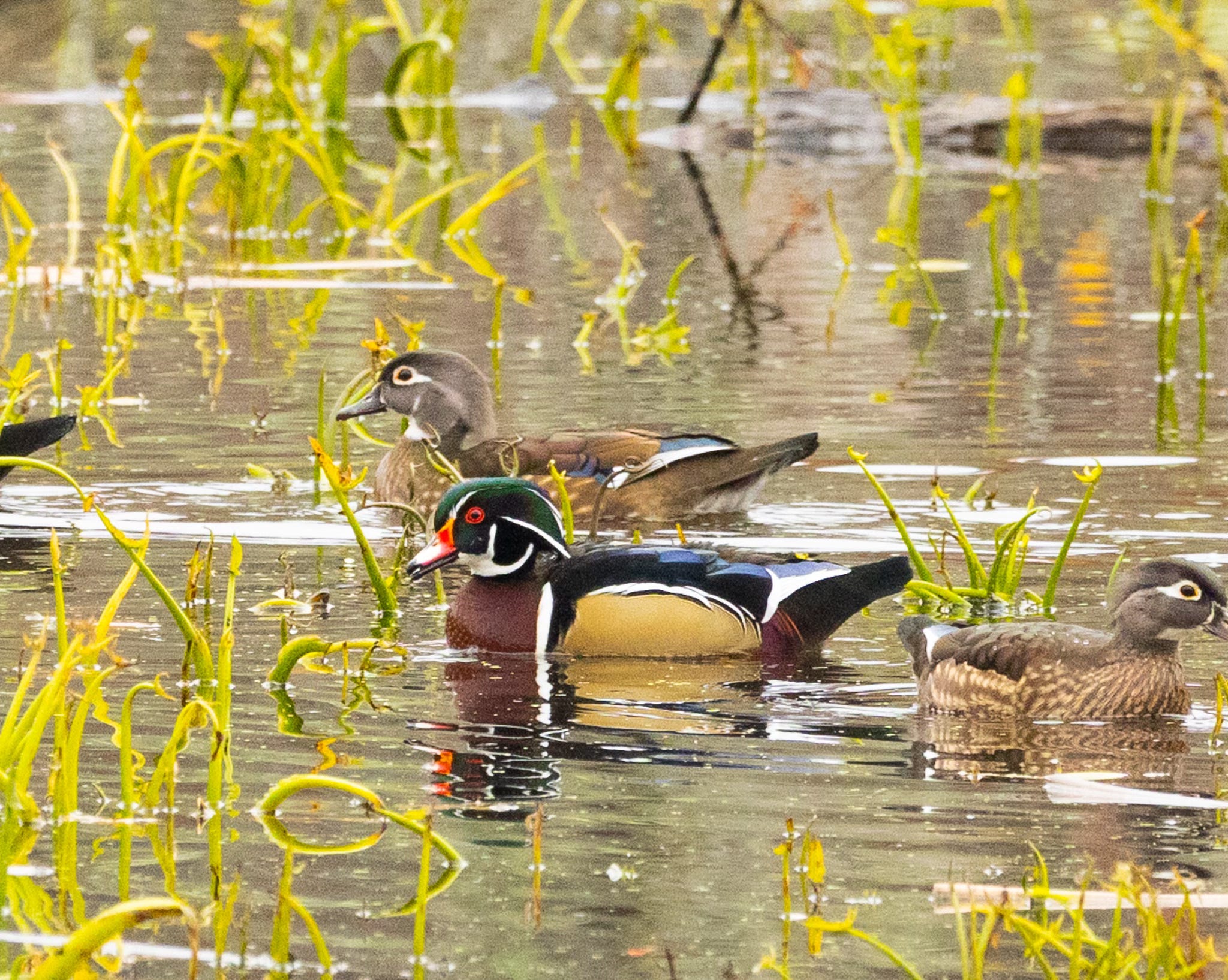
By Hap Ellis, Wood Ducks - Millennium Park, Boston, MA.
7. Oh-oh: A Washington state resident has tested positive for bird flu, marking the first human case confirmed in the U.S. in nine months. The patient, who is an older adult with underlying health conditions, developed symptoms including high fever, confusion and respiratory distress and was hospitalized in early November, according to the Washington State Department of Health. Testing confirmed the patient has H5N5, a strain of bird flu that has previously been reported in animals but never before in humans, according to the Washington State Department of Health. However, officials say the risk to the public is low. (via ABC News)
8. Speaking of avian flu, a young Whooping Crane succumbs to HPAI at Wisconsin’s Horicon NWR: In this week’s episode of the Larry Meiller show on WPR, he talks about the changing seasons with Stan Temple, a wildlife ecologist. Then,Dexter Patterson talks about his latest book, “Birds of the Great Lakes.” Finally,Liz Herzmann gives us an update from Horicon Marsh and shares about the Horicon Marsh Bird Club. (via Wisconsin Public Radio)
* More on the highly endangered Whooping Crane: Whooping Crane - Grus americana (via Birds of the World)
9. Family matters! A new study in PLOS Biology, birds benefit from their sibling relationships: While cooperative relationships with siblings aren’t always the norm,in a study published in peer-reviewed journal Public Library of Science (PLOS) Biology on Oct. 9, 2025, a songbird species’ relationship with their siblings was found to benefit their foraging skills. The great tit, or Parus major, the species the study looks at, makes for a good model species. The bird is well-researched, receives limited parental care and has observable social networks — an important trait for studying social learning. Social learning is any learning through observation, and involves strategies on when, who and what to copy. (via The California Aggie)
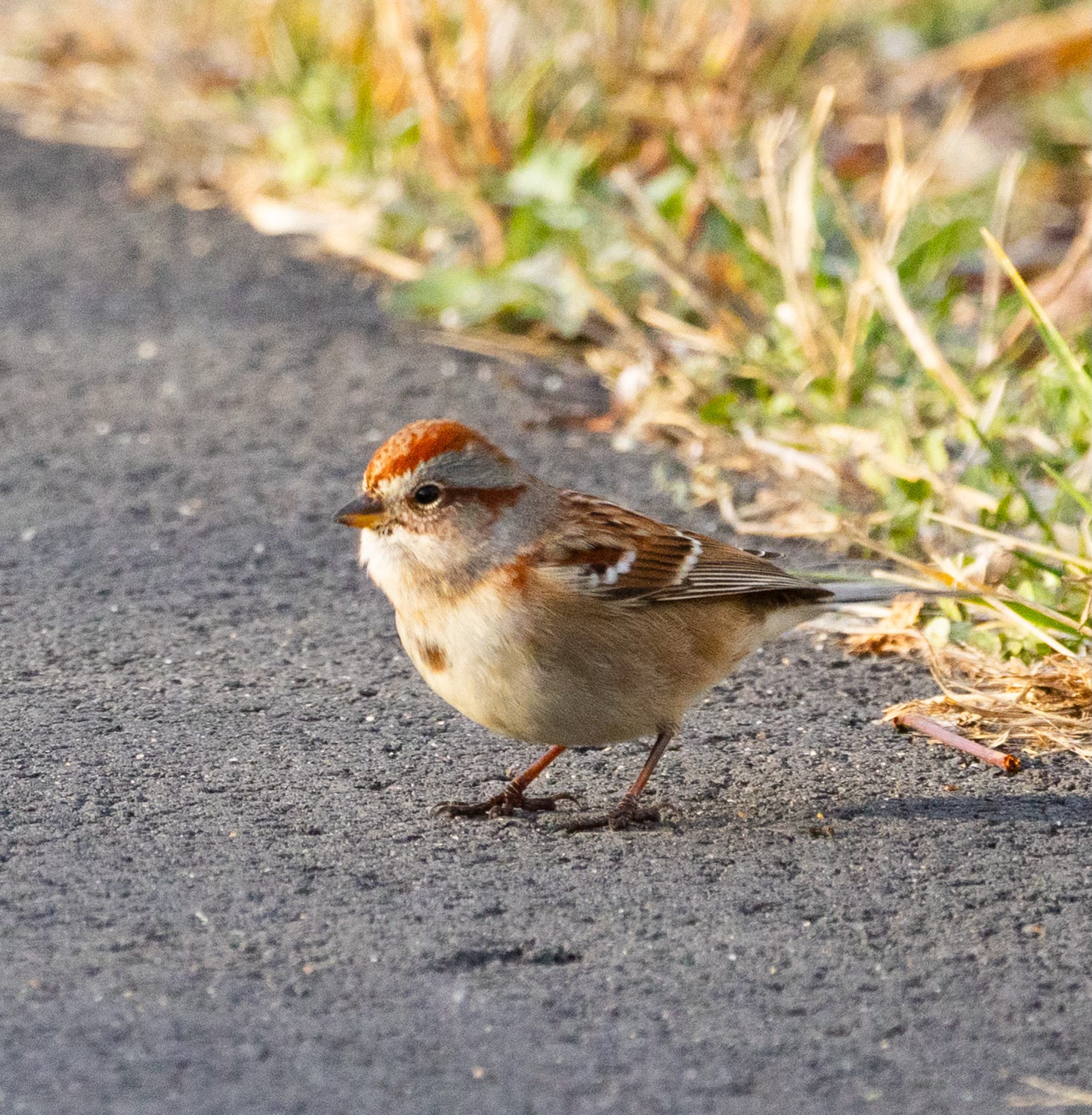
By Hap Ellis, American Tree Sparrow - Millennium Park, Boston, MA.
10. From EurekAlert!, a study regarding Eastern Himalayan birds: Insectivorous birds found in the understorey of the Eastern Himalayas are under threat due to habitat degradation, Researchers at the Centre for Ecological Sciences (CES) studied how changes in forest microclimates after selective logging influence the survival of wild bird populations in the Eaglenest Wildlife Sanctuary, Arunachal Pradesh, over 10 years (2011-2021). (via Eureka Alert)
11. This makes intuitive sense - raise your voice with aggressive gulls: You won’t find us endorsing aggression towards animals very often, however, scientists have discovered that raising your voice to seagulls – especially if you’re male – will make them think twice about stealing your food. It’s simply science. University of Exeter researchers, who sound like they’ve had some battles with seagulls in their time, have found a way to deter the shorebirds from invading your space. And while it may not win you any friends at the beach or in the park, it won’t prompt calls to animal welfare from bystanders. Looking for the best way to deter opportunistic herring gulls (Larus argentatus), the researchers placed a container of fries on the ground to entice the birds, which triggered a series of voice recordings that varied in tone and volume. (via News Atlas)
12. From Dawn Chorus in the Daily Kos, a nice piece on a beautiful raptor, the Northern Harrier: Whatever our “backyard” may be — a feeder on a patio, a neighborhood park, a shoreline trail, or the wild back 40 — birdlife changes every year. Changes can be subtle (a slightly warmer spring) or downright dramatic (a brutal drought). Part of the joy in birding our backyards is observing and discovering these annual contrasts, while reflecting on what may be driving the changes. This past year was one of exceptional change in my backyard (aka “the homestead” in northwest Montana). First, there was some mysterious cyclic climatic event in the Intermountain West that resulted in prolific flowering and fruit set of most native and ornamental plants. Was it a perfect storm of favorable temperatures and precipitation? Perhaps a peaking solar activity cycle? All guessing aside, vegetation grew lush and loaded with flowers, pollinators, and fruits. (via Daily Kos)
13. For bird feeders among us, a nice piece on winter finches: Have you noticed that there is a bumper crop of cones on most of our conifers? The importance of this is that our deciduous trees and conifers, such as pine, hemlock, fir, spruce and alder are key finch trees. That is to say that finches will flock to these trees in large numbers when there is a bumper crop of cones, especially if the cone crop to the north and east of us is poor. The latest general forecast published by The Finch Network (September 2025) indicates that “with mostly very poor crops in the boreal forest from Central Quebec westward to Manitoba, this has the potential of the being the biggest flight year since 2020-2021.” For us, I think this means that we should see large numbers of pine siskins, red crossbills and more than usual of the rarer white-winged crossbill. (via Chinook Observer)
14. UCLA unleashes artists on drab utility boxes: Gray hunks of metal, now awash and alive with color, are making a splash at intersections across the UCLA campus. Traffic signal control cabinets for UCLA, which regulate light timing and sequencing to ensure a safe and efficient flow of vehicles and pedestrians, will now also direct Bruins and visitors’ attention through art. Today, these utility boxes feature memorable paintings of birds, flowers and other imagery. The art project was brought to life by UCLA Transportation, as part of theUCLA Semel Healthy Campus Initiative (HCI) Center BEWell (Built Environment) Pod. (via Newsroom UCLA)
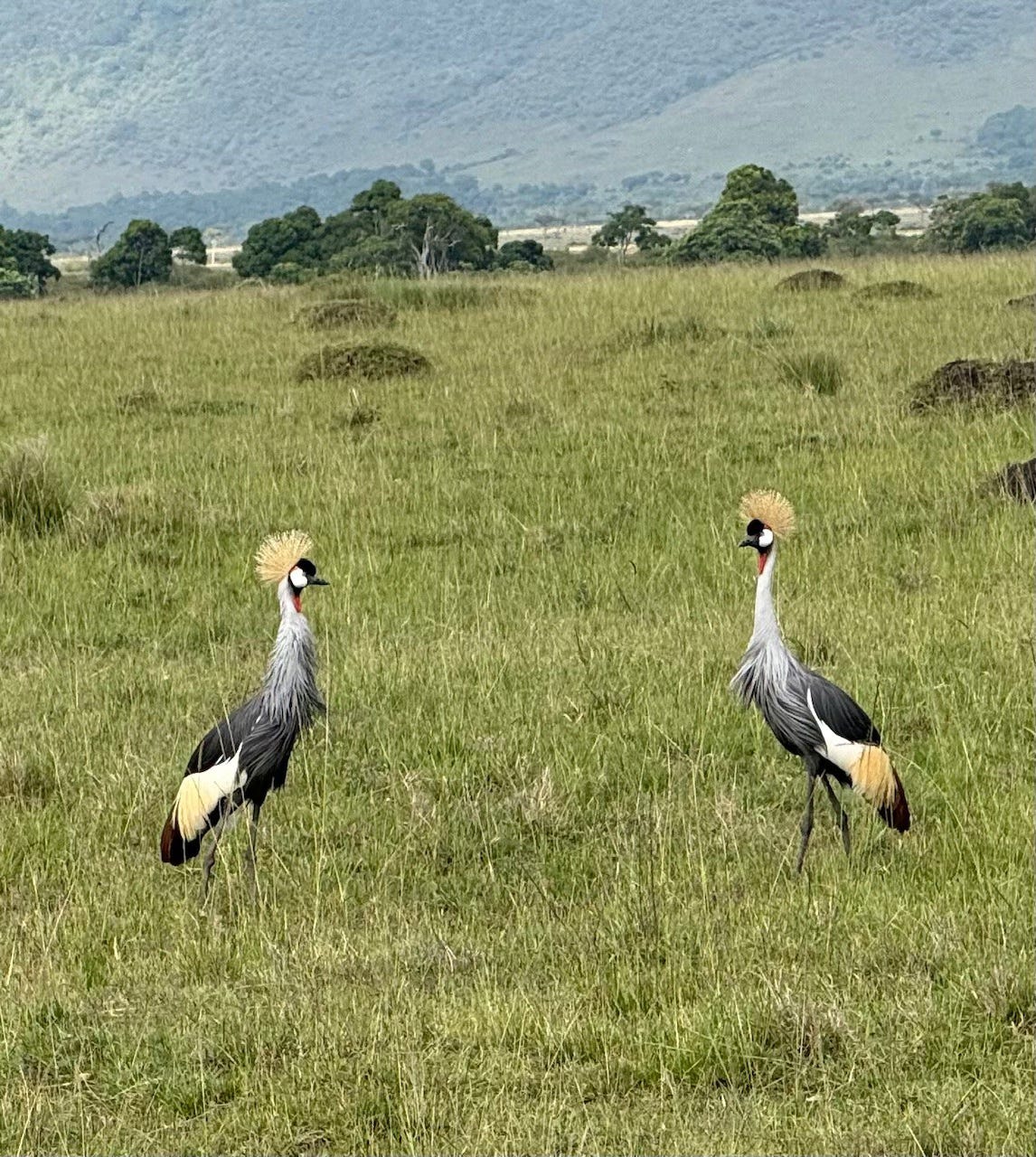
Correction - BNI inexplicably mis-identified these beautiful Grey Crowned Cranes last week. Won’t happen again!!
15. And speaking of secretarybirds, it just happens The Times of India has a good article on this unique bird of prey: Across Africa’s open grasslands, the secretary bird (Sagittarius serpentarius) stands apart from other birds of prey. With crane-like legs and the hunting instincts of an eagle, it stalks the ground to strike snakes, lizards, and small mammals with precision. Scientists have long been intrigued by how these birds use their legs as weapons, but new research published in Current Biology provides the most detailed understanding yet of the mechanics behind their lethal kick. The findings carry implications beyond avian biology, offering insights relevant to robotics, prosthetic design, and evolutionary biomechanics across species. (via Times of India)
* More on the Secretarybird: Secretarybird - Sagittarius serpentarius (via Birds of the World)
16. Get another cup of coffee and we’ll finish in the West Kootenay (Canadian) region where 314 ostriches, avian flu, RFK, Dr. Oz, conspiracy theorists and local police all collide: The police came at dawn. Karen Espersen watched them drive into the valley: more than 40 cruisers in a line. They were on a mission from the government. All of her ostriches must die. Karen and her business partner, Dave Bilinski, were standing in the outdoor pens of their farm in the mountains of Canada’s West Kootenay. The fate of their flock had been taken up by right-wing media, and had become another front in a spiritual war. An angry group of their supporters, with signs and walkie-talkies, gathered on the property. They’d set up a barricade to slow the cops’ advance: several logs laid across the dirt near the turnoff from the highway. The activists had been camping out for months; their numbers sometimes reached into the hundreds. They knew the government was saying that the ostriches had bird flu, but they were convinced that this was cover for some other, bigger scheme. (via The Atlantic)
Videos of the Week
Video by University of Kentucky, “Bird Banding at Raven Run”.

Cornell Live Bird Cam - Male Prothonotary Warbler

Cornell Live Bird Cam - Two owlets finally left their nest at the Lady Bird Johnson Wildflower Center this spring.