
Reflections.
Bird News Items
1. Let's start in India with news about an extremely rare bird and an extremely rich family: Feathers fly in dispute over Ambani zoo's pursuit of rare parrot: This is a story about a bird and a family. But this is no ordinary bird, and this is no ordinary family. Spix's macaw, a vivid-blue parrot with elaborate mating rituals, was declared extinct in the wild in 2019. A captive-breeding program has since seen some of the birds reintroduced to their native habitat in Brazil. For more than two years, officials on three continents have been agitating over why 26 of the creatures ended up at a private zoo in India run by the philanthropic arm of a conglomerate controlled by Asia's richest family, the Ambanis. Indian investigators cleared the sanctuary of any wrongdoing this week. (via Reuters)
2. Is this really a good thing?: Plump and flightless, the dodo disappeared from the forests of its native Mauritius in the 17th century, its fate sealed by hungry sailors and invasive, chick-eating rats.But in a twist that might have astonished even the most fanciful naturalist of the 1600s, it is waddling back into the scientific limelight. Colossal Biosciences, based in Texas, has made what it describes as a pivotal breakthrough in its efforts to resurrect the species — or, at least, to make a passable replica. It has succeeded for the first time in creating pigeon primordial germ cells (PGCs), the biological building blocks from which a new lineage of dodo-like creatures could potentially be fashioned.Ben Lamm, Colossal’s chief executive, said his team was celebrating “a significant advancement for dodo de-extinction”. (via The Times)
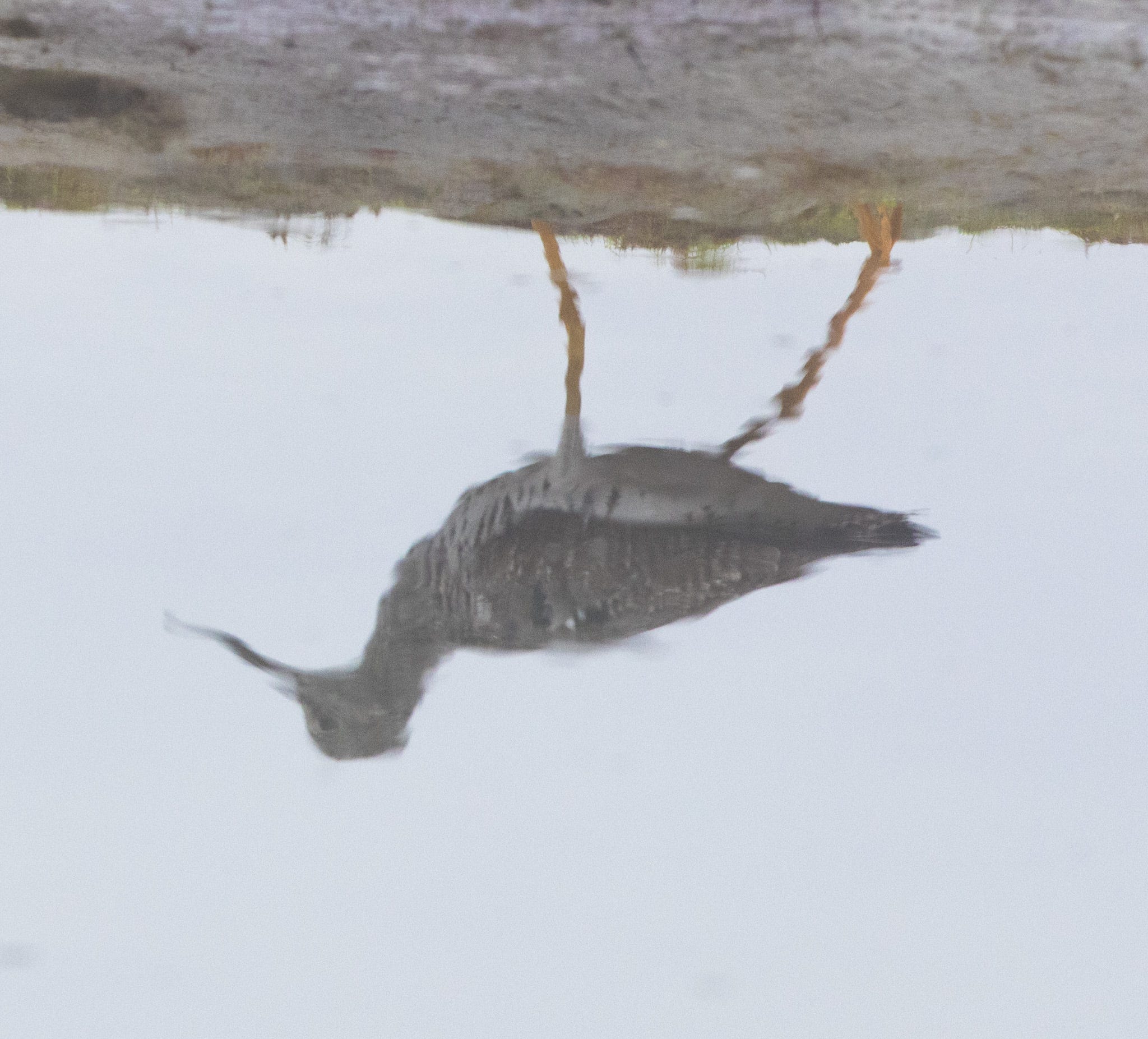
By Hap Ellis, Reflections - Lesser Yellowlegs- Kennebunkport, ME
3. Can fossils help solve a long-standing mystery of bird migration?: Golden autumn sunlight glints through the sedges and shrubs of the tundra in northern Alaska. Winter is approaching, and soon the region will be buried under snow and ice. For the past three months the chatter of the Arctic Tern colony has served as the soundtrack of the summer breeding season. But now, with daylight waning, the terns need to head south. In an instant, the usually noisy birds will fall silent, a behavior known as “dread.” Moments later the entire colony will take to the skies to begin its 25,000-mile journey to Antarctica—the longest known migration of any animal on Earth. (via Scientific American)
4. Fossils, again (!), point to an answer. So, what is the question? - read on: Across the Southern Hemisphere, big birds reign supreme. In Africa, nine-foot-tall ostriches strut about while 60-pound rheas race across South America. Australia is home to two different types of avian behemoths, emus and cassowaries, and New Zealand has five species of kiwi, some of which can weigh as much as a small dog. All of these birds are flightless, and their ancestors arrived after the southern supercontinent Gondwana broke up. Which makes their existence across such a wide swath of Earth puzzling. To shed light on this mystery, Klara Widrig, a Peter Buck postdoctoral researcher at theNational Museum of Natural History, recently examined a remarkably-preserved fossilized breastbone in the museum’s collection that belonged to a species related to modern flightless birds. Her team’s findings reveal that the ancient relatives of ostriches and emus were likely able to fly long distances like egrets and parrots. (via Smithsonian Mag)
5. Two centuries later..."a milestone for Spanish biodiversity" but not everyone is celebrating: The first sea eagle chick to hatch in Spain in nearly two centuries has taken flight into a storm of controversy. Born in the central Castile and León region to a reintroduced pair, the bird is hailed as a triumph for conservation yet condemned by critics who fear damage to fisheries, livestock and rival species. The chick, a male, was born in May. The sea eagle, Europe’s largest eagle, had disappeared from Spain because of hunting between the 18th and 19th centuries. “The recovery of a species is a joy; it’s a milestone for Spanish biodiversity,” said Ernesto Álvarez, head of Grupo de Rehabilitación de la Fauna Autóctona y su Hábitat, a non-profit organisation that is leading the project. (via The Times)
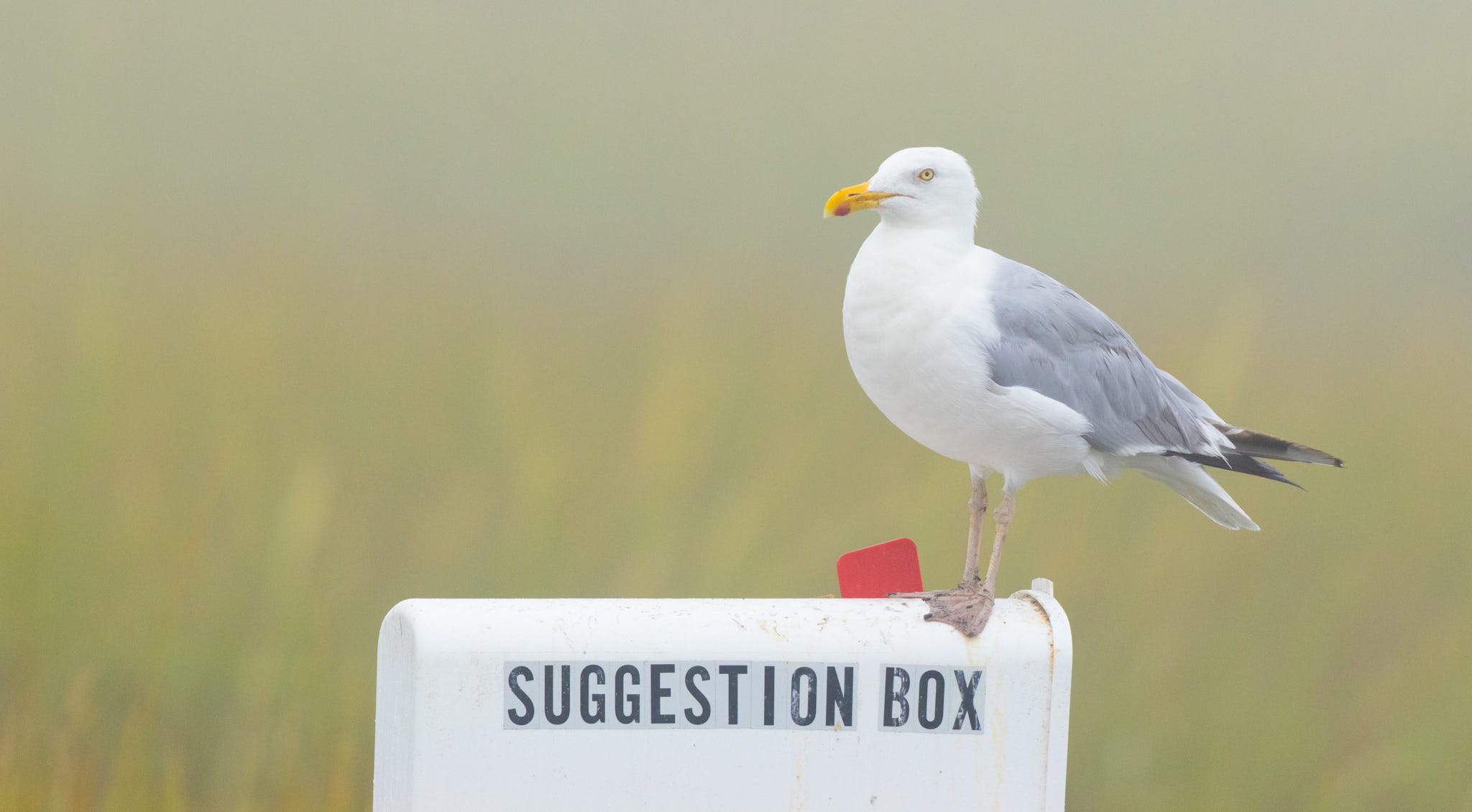
By Hap Ellis, Suggestion Box in Rachel Carson NWR - Parsons Beach, Kennebunk, ME.
6. What it takes...to reduce window collisions: Bird lovers are more motivated to take action to prevent birds from colliding with their windows by messages that emphasize the effectiveness of those measures, while emotional appeals are more persuasive for the general public, a new Cornell study has found. Window collisions are a leading cause of bird mortality, killing more than 1 billion birds annually in the United States and Canada. Nearly half of fatal bird collisions in the U.S., and 90% of those in Canada, occur at residences of three stories or less. In the study, researchers from the Cornell Lab of Ornithology surveyed nearly 5,000 people across the U.S. and Canada to better understand what types of messaging motivates people to prevent bird collisions at their homes. (via Cornell Chronicle)
7. What it takes...in this case, to study avian flu and other disease threats: When Jennifer Barr arrives at work each morning, she goes through half-a-dozen security checkpoints, removes her clothes, and passes through two steel airlocked doors. Once inside, she changes into freshly washed medical scrubs and, if she's heading into the lab, puts on a fully encapsulated suit that connects to a separate air supply — akin to what astronauts are kitted out in. This carefully orchestrated process, involving multiple showers and hair-washes, is because this is no ordinary lab. It is a facility with the highest possible level of biosafety, where scientists handle highly transmissible and potentially lethal pathogens, including Ebola and Hendra virus. (via ABC News)
8. From Audubon, a new study identifies places that provide "triple benefits": Today, the National Audubon Society announced the publication of a newstudy in Scientific Reports that identifies places in the continental United States where conservation efforts would provide a triple benefit to protect bird habitat, naturally store carbon, and improve the well-being of local communities that have been underrepresented in conservation efforts. This novel study represents an important opportunity to direct conservation toward efforts that are likeliest to succeed and secure a healthy future for birds and communities. This new science will guide Audubon's approach to hemispheric bird conservation efforts as the organization celebrates its 120th year in operation. (via Phys Org)
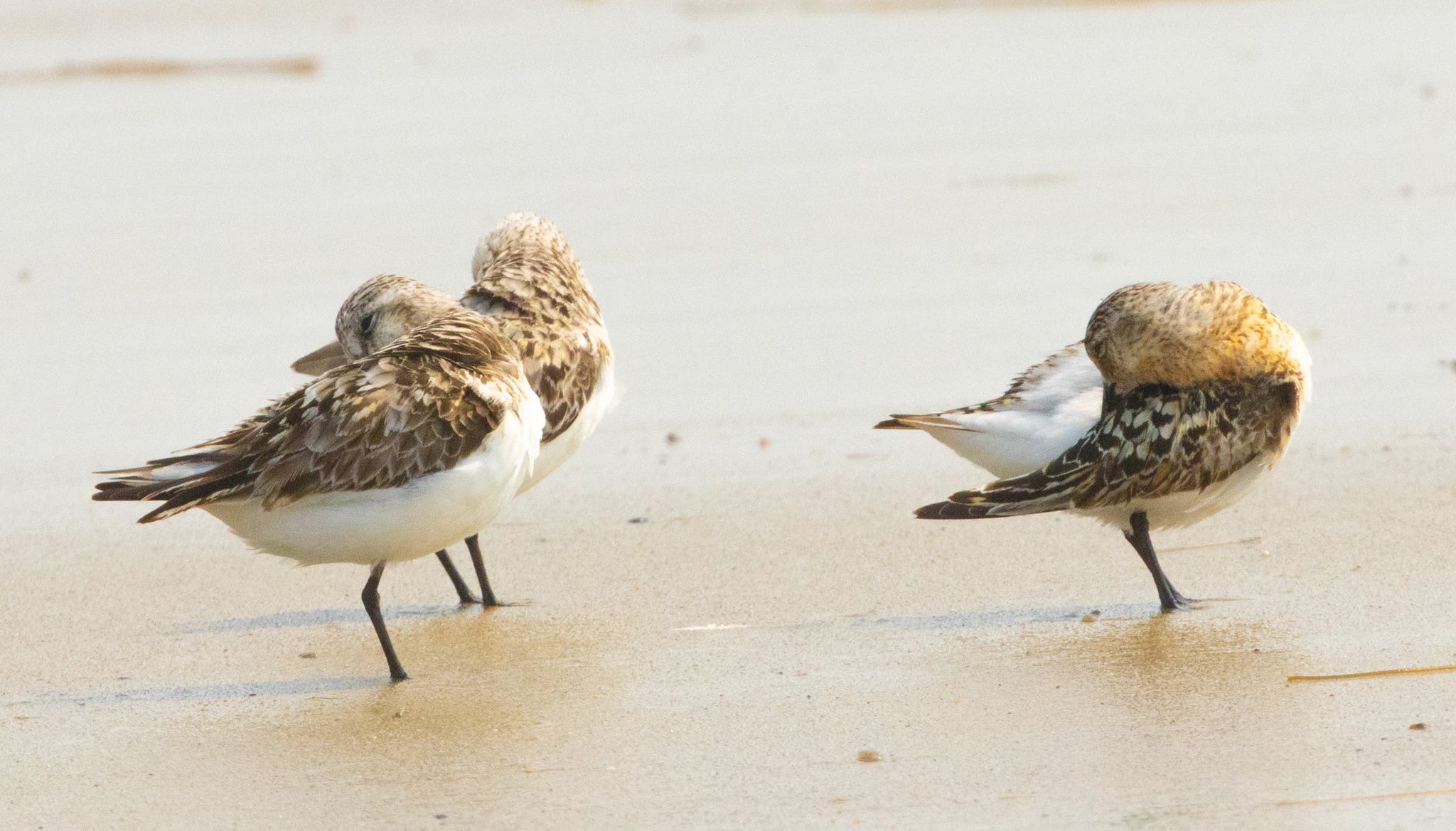
By Hap Ellis, Migrating Sanderlings at rest - Wells Reserve at Laudholm, Wells, ME.
9. An excellent review of "Audubon's Birds of America" at the Houston Museum of Natural Sciences: To enter the Houston Museum of Natural Science’s (HMNS) exhibition Audubon’s Birds of America means stepping into a room already thick with memory. The space once displayed gems and minerals, objects praised for density, opacity, and marketable rarity. Now the cases sit empty, yet the aura lingers: black walls absorbing glare, velvet dimness cloaking the air, red carpet muting every footfall. Repurposing the grotto instead of a neutral white gallery delivers an argument immediately. One kind of rarity — mineral, geological, sparkling — yields to another, avian and pictorial. The logic unfolds at once sly and direct: rarities trade places, and the visitor moves through a chamber still haunted by value. (via Glasstire)
10. A first in Poland - for a very cool bird: Eurasian Scops Owl has bred in Poland for the first time, with a pair nesting in Upper Silesia this summer. The first record came on 25 May, when a local birder heard the territorial song of a male. Despite initial doubts, given the unfavourable spring weather of low temperatures and frequent rain, monitoring efforts revealed increasing evidence of a pair. On 26 June, birders logged both a male and a female in the same territory, raising hopes of nesting. Persistent fieldwork and the use of passive recorders confirmed the presence of the birds even when visual sightings proved elusive. The situation reached a turning point on 19 July, when a thermal-imaging camera helped to reveal the nest site. Subsequent observations confirmed the presence of two chicks, securing the first-ever Polish breeding record of this small migratory owl. Eurasian Scops Owl typically breeds further south in Europe. Its appearance and successful reproduction in Poland may signal shifting patterns in the species' breeding range, influenced by climate and habitat conditions. (via BirdGuides)
* More on the Eurasian Scops-Owl: Eurasian Scops-Owl - Otus scops (via Birds of the World)
11. Check this out - a robot that actually flies like a falcon: Scientists in China have built a falcon-inspired flying robot that can take off like a bird, offering new insights into the mechanics of avian flight and promising advances in bio-inspired aviation. The prototype, called RoboFalcon2.0, mimics the way birds flap, sweep, and fold their wings during takeoff and low-speed flight. Unlike most robotic flyers that rely on fixed-wing propellers or hovering rotors, RoboFalcon2.0 uses a novel flapping-sweeping-folding (FSF) wing motion, which couples lift generation with pitch control. (via Interesting Engineering)
12. Not exactly "breaking news", but for listers out there, maybe worth a look: Biologists at The University of Texas at Austin, who have reported discovering a bird that's the natural result of a green jay and a blue jay's mating, say it may be among the first examples of a hybrid animal that exists because of recent changing patterns in the climate. The two different parent species are separated by 7 million years of evolution, and their ranges didn't overlap as recently as a few decades ago. "We think it's the first observed vertebrate that's hybridized as a result of two species both expanding their ranges due, at least in part, to climate change," said Brian Stokes, a graduate student in ecology, evolution and behavior at UT and first author of the study. Stokes noted that past vertebrate hybrids have resulted from human activity, like the introduction ofinvasive species, or the recent expansion of one species' range into another's—think polar bears and grizzlies—but this case appears to have occurred when shifts in weather patterns spurred the expansion of both parent species. (via Phys Org)
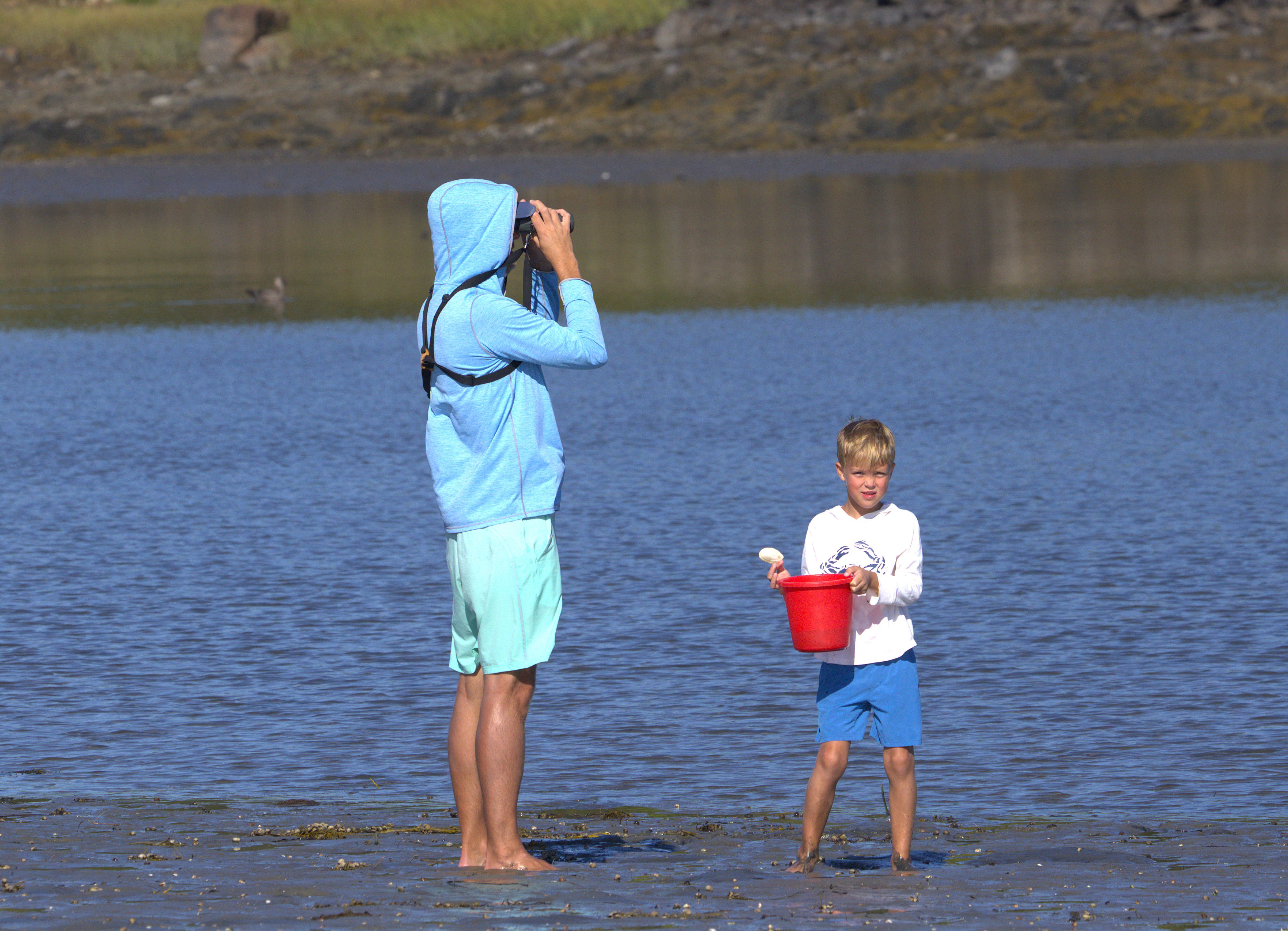
By Hap Ellis, What it takes; Birding with kids - Cape Porpoise, ME.
13. P.E.I. - BNI travel tip if birding in eastern Canada: One of Canada's top birders is on P.E.I. this month. In 2023, Bruce Di Labio did what's called a Big Year and set a new record, observing 480 species. That included two trips to see unique birds that had made their way to the Island. Di Labio says P.E.I. is a 'very good place for birding.’ CBC’s Nancy Russell tells us more. (via CBC)
14. Bird decoys as this artist's "sense of home": The painter Anne Buckwalter, 38, says she doesn’t like clutter, but she makes an exception for bird decoys, which occupy surfaces throughout her house in Durham, Maine. “Anywhere there’s an empty space where a duck could go, there’s probably a duck there,” she says. She acquired many of them from her grandfather, a professional decoy carver and retailer, and her father, a hobbyist carver and collector. Long used by hunters to attract waterfowl, decoys have evolved into a folk art tradition over the past century — one that’s highly regional, since artisans often carve local birds. The objects that adorn American homes are particularly interesting to Buckwalter, who paints domestic interiors and the sexual exploits that take place within them. The work in her recent exhibition at the Farnsworth Art Museum in Rockland, Maine, for example, was inspired by visits to female-owned homesteads in New England. (via The New York Times)
15. Finally, we highlighted the long, but entertaining, "Listers" documentary last week. Slate has an interesting article about it that is worth a read: Birding is having something of a pop-culture moment. Uzo Aduba’s “world’s greatest detective,” from this summer’s Netflix hit The Residence, was a birder, as is Mark Ruffalo’s FBI agent character in the new HBO drama Task. It’s almost as if the pandemic-era surge in birding has finally worked its way through the writers room and onto the screen. But the best birding media of 2025 isn’t on a streaming service. It’s available for free, without ads, on YouTube. There, a documentary made by two hilarious young Midwestern brothers has become the most talked-about birding movie in ages, and is putting a whole new side of the hobby on screen. Even better, it’s finding fans even among non-birders: One of the video’s top comments, with more than 2,000 likes, reads, “You didn’t start your day thinking you would watch a documentary about birdwatching. None of us did. It’s that good.” (via Slate Magazine)
Bird Videos of the Week
Video by PBS News, “How researchers restored a thriving habitat for Atlantic puffins in Maine”.

Cornell Live Bird Cam - Barred Owl Highlights.

Cornell Live Bird Cam - Northern Royal Albatross Cam.