
Seasonal Crescendo.
Bird News Items
1. Let's start in Indonesia with a climb to find a beautiful bird documented only once in the past century: One of Indonesia‘s most elusive birds, the blue-fronted lorikeet, has been dramatically rediscovered on the remote island of Buru after a century of near-total obscurity. Known previously from a single 2014 photographic record and a handful of museum specimens, the dazzlingly colourful parrot was feared lost until a flash of green feathers high on Buru’s highest peak confirmed its continued existence. The small bird, endemic to Buru and found nowhere else on the planet, was spotted in April during a challenging expedition led by an Indonesian mountaineering group. (via Independent Co)
2. A bird worthy of the royal treatment: Asian crested ibises have been revered and reviled at different times throughout Japanese history, but the endangered birds with long, curved bills; red faces and legs; and pink tinged wings are getting the royal treatment once again. On Sunday, the Japanese crown prince and princess attended a ceremony commemorating the release of eight crested ibises into the wild on Honshu, the country’s main island. It had been more than a half-century since the last such wild creature flew freely there, and the royals’ presence at the event signaled just how far these creatures have come in recent decades. Once widespread in Japan and beyond, crested ibises went from being fairly commonplace in the country to being on the verge of extinction. They are now seen as a symbol of successful conservation efforts and of international diplomacy. (via The New York Times)
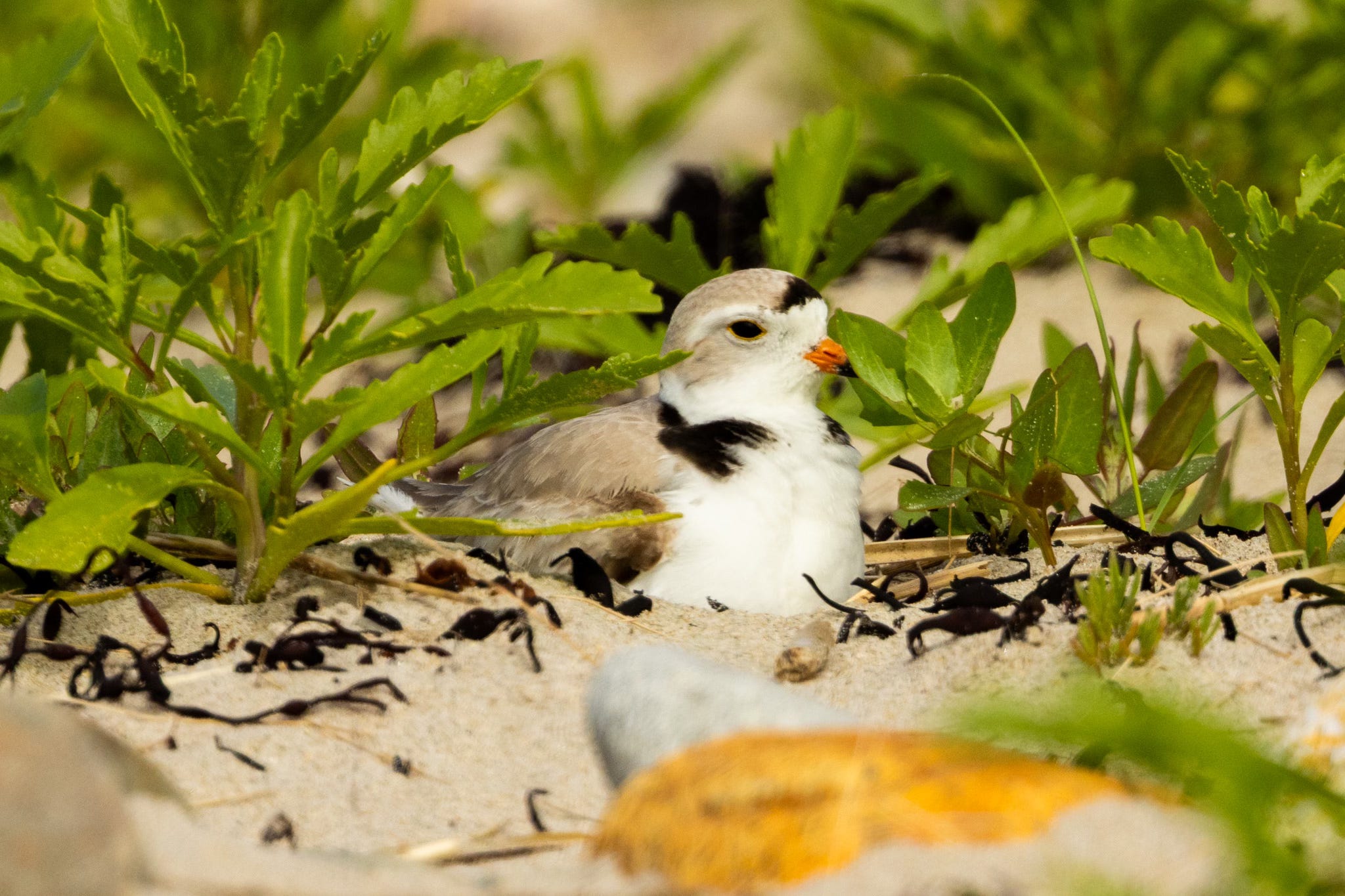
By Hap Ellis, Piping Plover on nest - Wells Reserve at Laudholm, Wells, ME.
3. 80% of Arizona wildlife depend on 2% of its landscape: The deserts of the American Southwest are a hotspot for a diversity of birds found nowhere else in the United States. Gambel’s Quail, Gila Woodpecker, and many more rely on habitats that most think of as hot, harsh, and dry. But, perhaps surprisingly, many waterbirds also call the arid region home for all or part of the year along their migratory journeys. In fact, on an average day during migration,some 250,000 shorebirds can be found in the wetlands of the Colorado River Delta—twice previous estimates. While only 2% of Arizona’s landscape is covered by rivers and wetlands, up to 80% of Arizona wildlife species are dependent on these areas — known as riparian habitats — for breeding, migration, shelter, and seasonal foraging throughout their lifetime. (via Audubon)
4. Black-crowned Night Herons - "the quintessential New Yorker" - are slowly disappearing in New York: Black-crowned night herons, with their muted colors and distinctive white tendrils, are quintessential New Yorkers. “They are fashionable, they stay out late and they love exploring new places,” said Dustin Partridge, the director of conservation and science atNYC Bird Alliance. The birds, about two feet tall, have been spotted in Harlem green spaces, along the East River in Queens and on Manhattan’s Lower East Side, where they are rumored to be aficionados of the local rats. But the popular, stout birds could vanish from New York City in 11 years, going the way of the once-ubiquitous passenger pigeon, according to a new study by NYC Bird Alliance, a nonprofit formerly known as NYC Audubon, and several other groups, including the Cornell Lab of Ornithology and Rutgers University. (via The New York Times)
5. Handcuffs and banknotes in a nest? Must be Bowerbirds: Bowerbirds in an Australian city use a range of human items—from glass and plastic to banknotes and even a pair of handcuffs—to impress females, shows new research in Royal Society Open Science. Male bowerbirds create an intricate tunnel of twigs called a bower, then gather colorful items to show to any females that visit. The new study, by the University of Exeter, compared items collected by bowerbirds in Townsville City and a rural area, both in Queensland, Australia. City birds gathered larger, more colorful decorations—mostly from human sources—than their more understated rural rivals. (via Phys Org)
* Same story from Discover Wildlife: Male great bowerbirds create intricate tear-shaped tunnels of twigs called bowers, which can be up to a metre long and half a metre tall. At one end, males place a collection of locally sourced, colourful items, which they then display to visiting females. Research in Royal Society Open Science shows that males living in urban areas use a wide range of items which they scavenge from humans. “Glass, plastic and wire were common choices, but we also found items including a pair of handcuffs, medicine jars at bowers near a hospital, and fluorescent mouth guards from a site near an Australian Rules football ground,” says Caitlin Evans from the University of Exeter, who studied the birds. (via Discover Wildlife)
6. They're back on the bridge - and not just any bridge: Nest boxes for the peregrines have been installed on both the American and Canadian sides of the bridge since 2010, placed at locations that demonstrated past nesting activity. In 2025, the resident pair of peregrine falcons hatched three chicks in the box on the U.S. side of the bridge. Over the years, the site has been a great success, hatching 47 falcon chicks since International Bridge Administration or IBA staff started counting the birds, Michigan DOT noted in a statement. Several years ago, the IBA added a video camera trained on the nest box, dubbed the “FalCam.” The popular live video stream – available at www.saultbridge.com/falcam-canadian-nest-box/ – offers bird watchers a close-up look at the seasonal activities of the falcons, which are also known as “raptors.” The best time to view the birds is when they’re nesting in the spring. (via Ashto Journal)
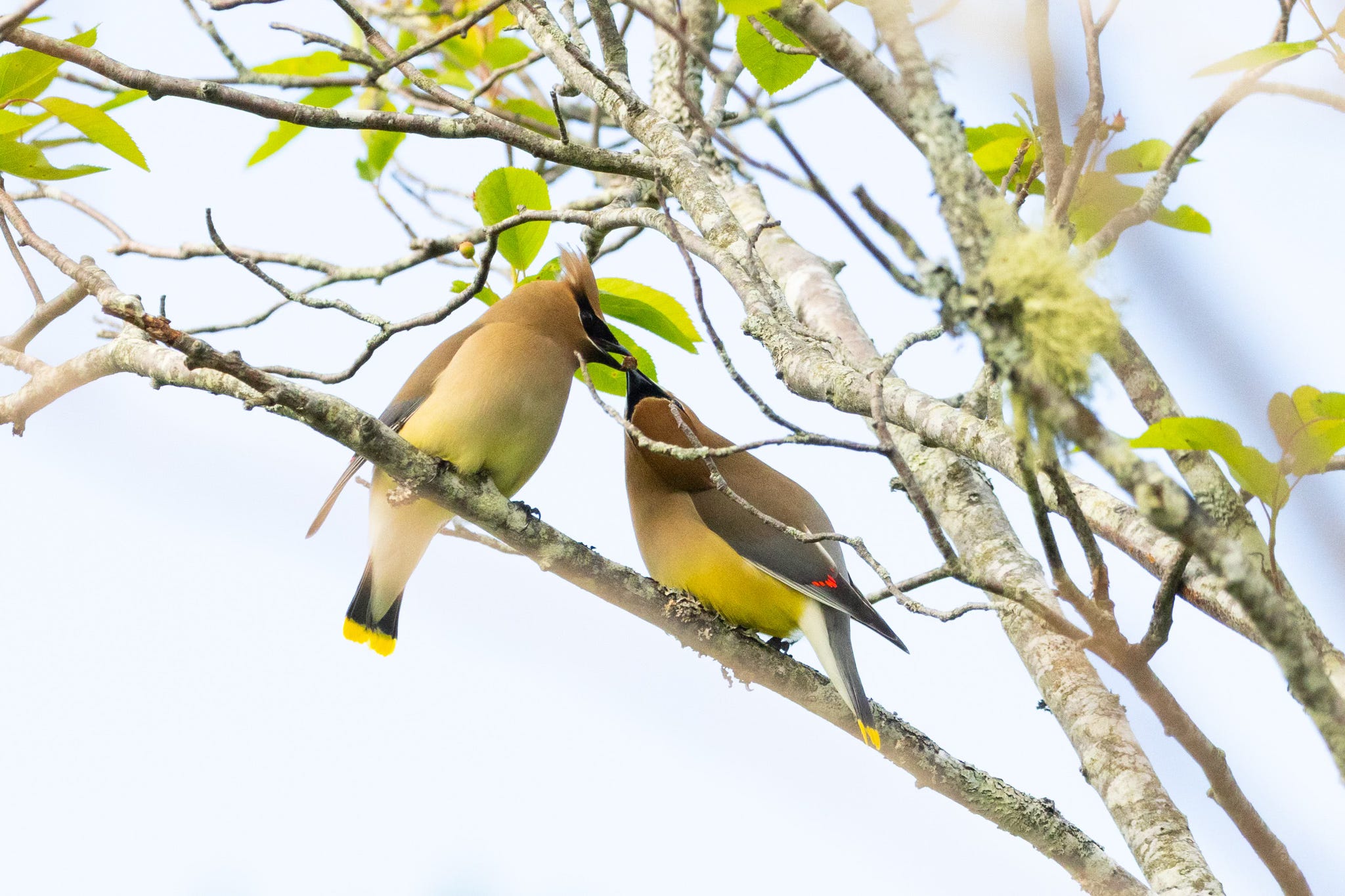
By Hap Ellis, Cedar Waxwings - Wells Reserve at Laudholm, Wells, ME.
7. Concerning news in Seattle: Bad news for Seattle birdwatchers: The Emerald City’s bird communities are in trouble. Average bird counts across Seattle dropped by 21% from 2005 to 2023, according to a new study from Birds Connect Seattle. The nonprofit’s “Neighborhood Bird Project” volunteers have been studying birds for decades at eight Seattle sites, including Golden Gardens Park, Seward Park, and the Washington Park Arboretum. Titled “Fewer and Fewer,” the study also finds that the city’s bird species diversity — or the total number of species present across those eight sites — fell 18% within the same time period. In addition, over half of the city’s bird species are in decline. (via KUOW News)
8. Tips on finding more birds: Birding during migration means ample opportunities to rack up lifers; add to county, state, and patch lists; score the earliest or latest arrivals of species; and clock in record high counts. There are endless methods for finding birds that come with years of experience and experimentation. I’ve used a few favorite techniques to help me find 185 species, including rarities like Painted Bunting and Connecticut Warbler, in Brooklyn Bridge Park—a narrow, 1.3-mile stretch of urban waterfront in New York City that attracts nearly 5 million human visitors each year. By varying the way you scan for birds and strategize for birding, you’ll score lifers and rarities and gain a front-row seat to the spectacle of migration. Add in a little tech support from eBird and the Merlin Bird ID app, and you’ll take your birding enjoyment to a new level. (via All About Birds)
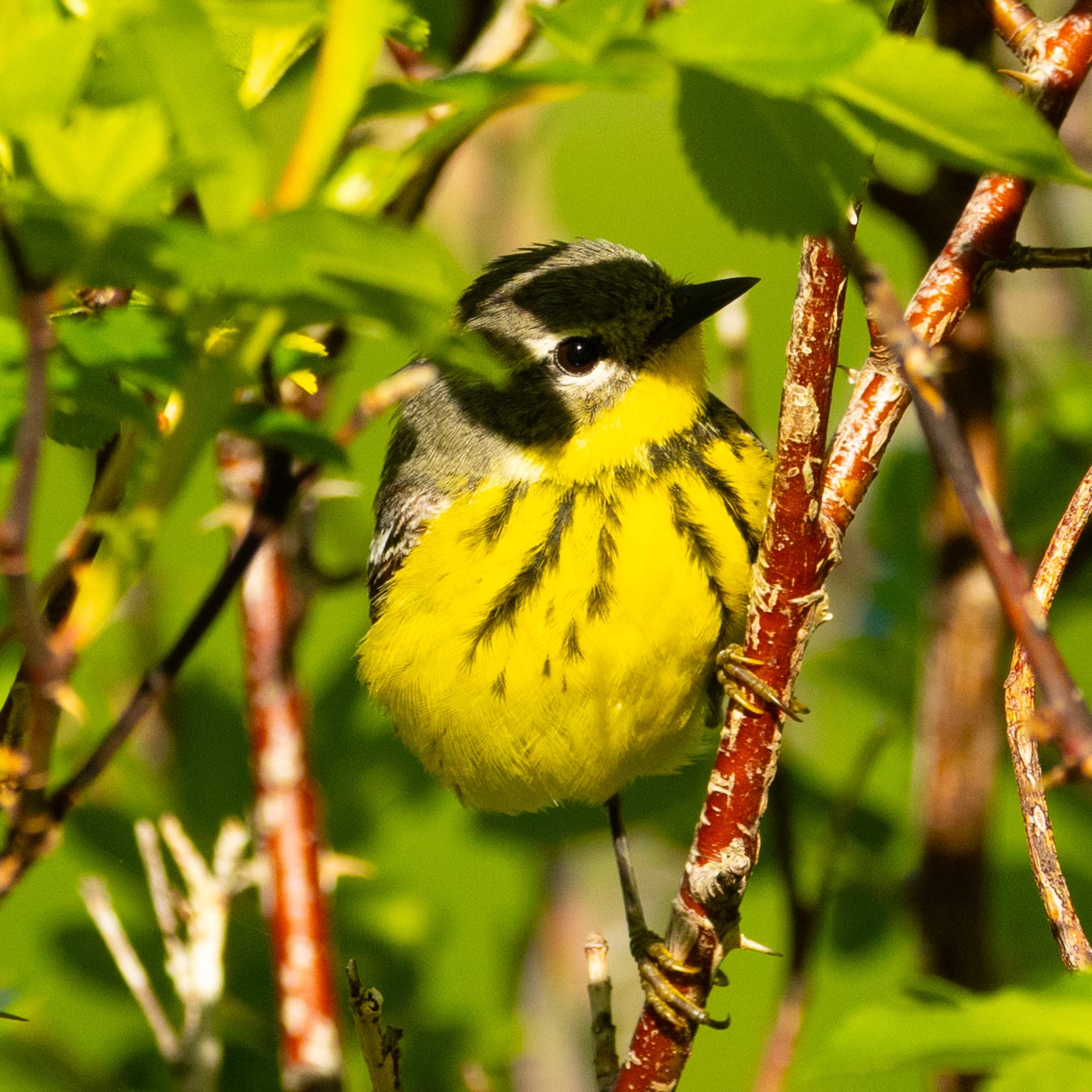
By Hap Ellis, Magnolia Warbler – Timber Point Trail, Biddeford, ME.
9. A walk in the Jasper Ridge Biological Preserve with Stanford students: On a foggy May morning at Jasper Ridge Biological Preserve (’Ootchamin ‘Ooyakma), the early birds got the birds. The early birds in this case were Stanford students in ecologist Rodolfo Dirzo’s ornithology course. These students traipsed through the muddy forests at dawn in the hopes of catching birds for an ongoing monitoring project with the San Francisco Bay Bird Observatory (SFBBO). The course teaches students about the ecological pressures that shaped the evolution and anatomy of today’s bird species, and by the end of it they are able to identify around 70 different birds in California. (via Stanford Report)
10. When in Iowa: the University of Iowa touts its Museum of Natural History's specimen collection: Trove of birds in the University of Iowa Museum of Natural History can no longer take flight—but it still holds the secrets to past worlds in motion. With more than 31,000 avians, eggs, and nests, the museum’s ornithological collection features nearly all native Iowa species and seasonal visitors. This includes about 1,000 birds on display in the Hageboeck Hall of Birds as well as those in the century-old Laysan Island Cyclorama, a 360-degree view of a bird sanctuary on an outpost of the Hawaiian atoll. The museum’s specimens, which staff also catalogue in an international database, benefit students, scholars, and artists alike. Visitors can use the collection to explore everything from Earth’s shifting seasons and vanishing habitats to evolving avian forms. (via Iowa Magazine)
11. For your drivetime pleasure, courtesy of the NYT: Once thought of as a quirky pursuit for retirees, bird-watching has exploded in popularity in recent years. Surveys show that nearly 1 in 3 Americans now partake, with a notable spike among younger generations thanks in part to tech innovations like the Merlin Bird ID app, which takes the guesswork out of birdsong identification. These seven podcasts can help beginners to build a birding habit or regulars enhance an existing one, whether offering expert advice on equipment and logistics, digestible facts about the more than 11,000 species of bird worldwide, or stories about the psychological benefits of tuning into the winged world. (via The New York Times)
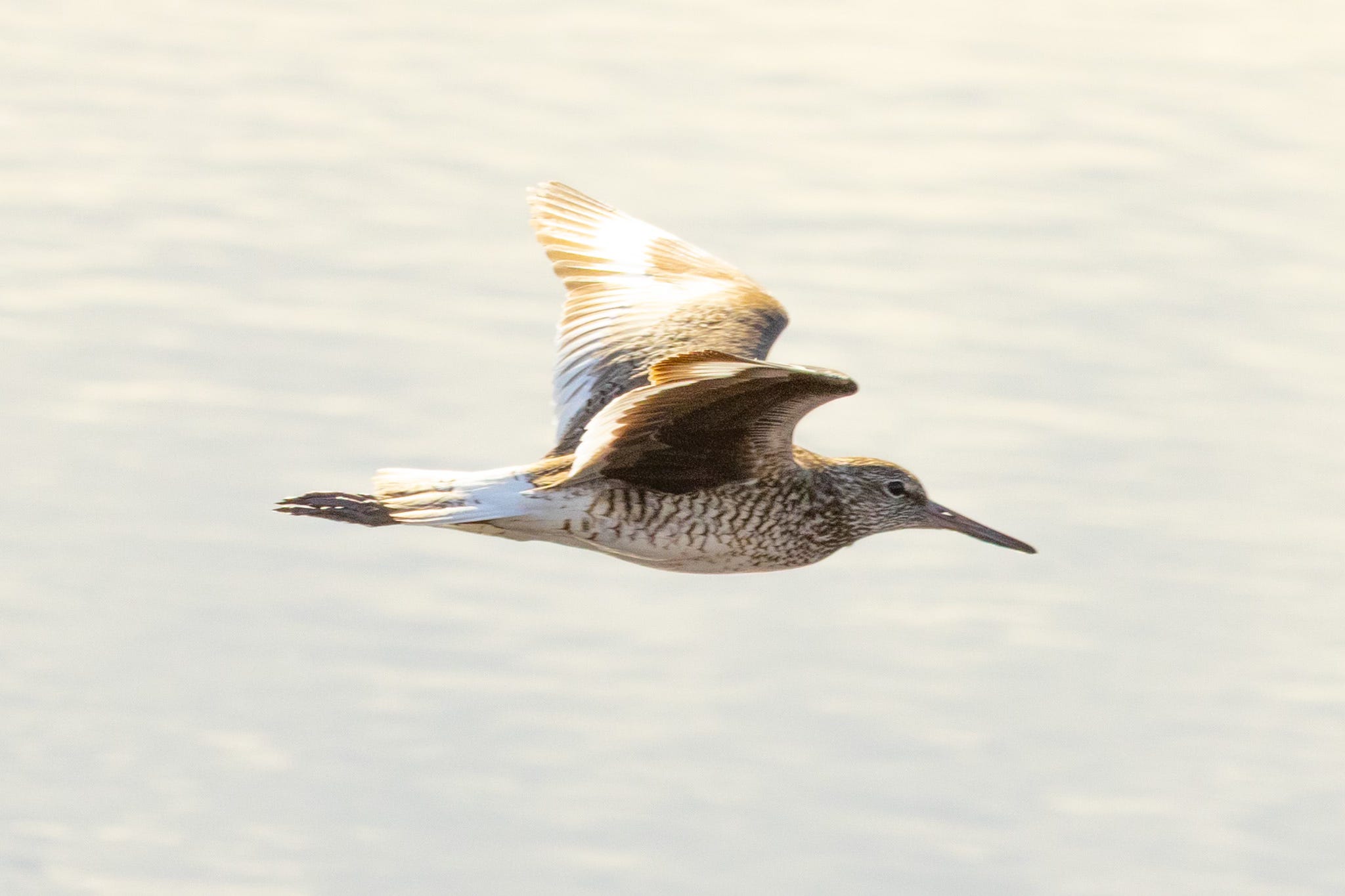
By Hap Ellis, Willet - Wells Reserve at Laudholm, Wells, ME.
12. Fifty-five chicks in two years - one prodigious pair of Orange-fronted Parakeets: Two critically endangered parakeets have been hailed as “super breeders” in New Zealand after the pair produced 55 chicks in two years — increasing the population by more than 10 percent. The native kākāriki karaka, or orange-fronted parakeet, was declared extinct in 1919 and 1965, only to be rediscovered both times in the depths of mountainous valley areas. It is the country’s rarest parakeet. Now, there are only about 450 left in the wild and in captivity. Conservationists are doing all they can to prevent the bird from going extinct a third time by creating predator-free sanctuaries and running breeding programs. (via The New York Times)
13. Helpful hint for backyard birders: If you want to keep backyard birds happy this summer, you might have considered investing in a bird bath – but dust baths are the often-overlooked detail that is just as important. While birds drink and bathe from fresh water sources like bird baths, they also clean themselves off in patches of dirt and dust. This is what helps them to keep their feathers healthy by removing excess oils, as well as mites and lice. So, before you remove every inch of dry or dirty ground in your yard, spare a thought for backyard birds and try creating a dust bath instead. This week, we reveal exactly how to do it, and why it’s so important – especially in the months ahead. (via Homes & Gardens)
14. Finally:

Bird Videos of the Week
Video by BBC News, “Catching the People Illegally Killing Britain’s Birds of Prey”.

Cornell Live Bird Cam - The American Kestrel chicks will soon be fledglings.

Cornell Live Bird Cam - Meet Clark the Osprey!