
Secretive Raptors.
Bird News Items
1. Let's start in Alaska with a "puzzling sound" - a fun read: Wilson’s snipe breed across all of Alaska and nearly all of Canada. Common snipe only breed in some western regions of Alaska and the Aleutian Islands. The two were considered the same species until 2003. “It’s narrower on this bird,” Jack said of the Wilson’s outer tail feathers. “It’s subtle, but you can see the common snipe as opposed to the Wilson’s snipe has a broader outer tail feather.” It’s so subtle that you’d need some calipers to discern the difference. But what actually happens to make the winnowing sound? Wind rushes over a diving snipe’s outer tail feathers, vibrating them rapidly like the reed of a musical instrument. Those vibrations push and pull the surrounding air, creating pressure waves that we interpret as sound — the haunting winnowing. (via University of Alaska Fairbanks Geophysical Institute)
2. Not since the Normans stormed the beaches in 1066: Twas a grim February teatime in West Wickham, south London, when I saw my first parakeet. About six of them, in fact. I looked up from doing the dishes, through the window overlooking the garden, and there they were, where no medium-sized members of the genus Psittacula should be. Half a dozen slashes of the most vivid green imaginable against the brown bleakness of late winter in suburbia. Wholly improbable, wholly mesmerising, wholly wonderful. This was 25 years ago and I’ve been a fan ever since. They have become a far more common sight since then, of course, as the title of Chris Packham’s latest documentary, Invasion of the Parakeets, suggests. There are now an estimated 15,000 pairs in the UK – the largest population in Europe. (via The Guardian, Channel 4)
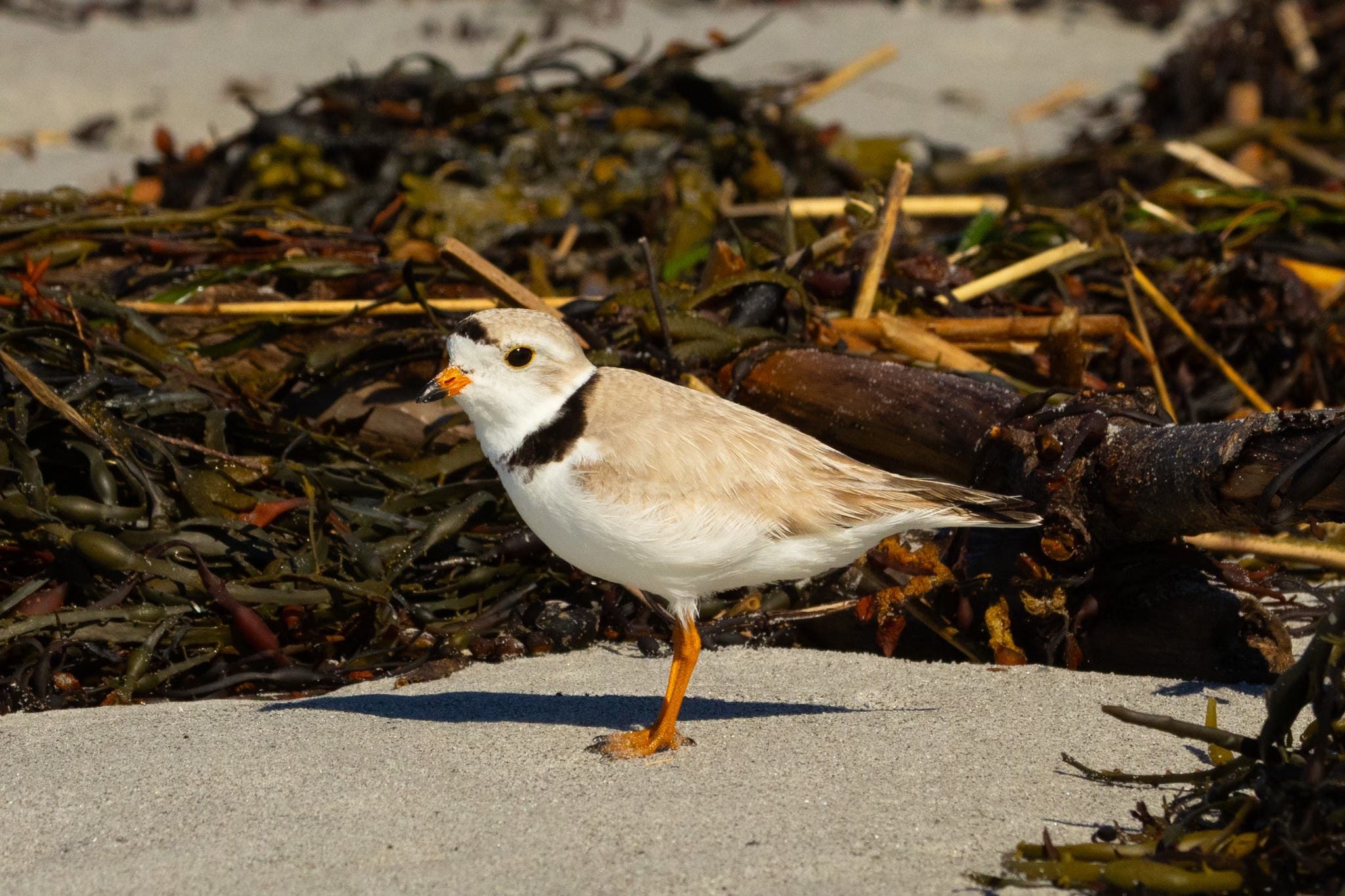
By Hap Ellis, Anxious parent (Piping Plover) - Goose Rocks Beach, Biddeford, ME.
3. Can you connect birds and the World Cup? The NYT did!: Bird-watching and football have often felt like distinct hobbies. I spent much of the week before the World Cup trying to spot a Dartford Warbler deep in rural Cornwall, liable to be shouted at by men wearing khaki shorts if a twig accidentally snapped. (Unsuccessful, thanks for asking, but I did see my ‘lifer’ Great Northern Diver). Fast-forward 72 hours, and I was in the noise and fervor of Guadalajara’s Estadio Akron, watching South Korean fans drink tequila with their Mexican compadres, chasing a fitness update on Feyenoord’s Hwang In-beom, and making a mental note to check the identity of a tiny yellow songbird seen near the hotdog stand on the shuttle bus home. Granted, sometimes both birds and footballers can be hard to get hold of — while watching both involves a lot of sitting, staring, and waiting. (via NYTimes)
4. An "ancient version of the Merlin app": At an outdoor concert in Cali, Colombia, Esteban Valdivia is selecting his next instrument from what looks like a museum display. There’s an Incan deer skull, a Carchi syrinx, a flute made from the hollow quills of a condor. In all there are three dozen replicas of artifacts from ancient American civilizations that Valdivia, a classically trained flautist with a master’s degree in history and anthropology, has spent more than two decades mastering. But the object he picks up is one that he doesn’t play at all, strictly speaking: It is an instrument that plays itself. “This is one of the most incredible objects,” Valdivia says, holding up a two-chambered clay bottle decorated with a bird perched on a tiny house. It’s a replica of an artifact from the Chorrera culture on the Ecuadorean coast, circa 1500 BCE. Valdivia believes that this bottle isn’t just decorated with a bird; its sound is a deliberate imitation of the Gartered Violaceous Trogon’s call. (via Audubon Magazine)
5. Tattooing every FL species? Read on: The Gulf Coast city of St. Petersburg is a place where art and nature blend together to create a whole vibe: The Dalí Museum overlooks mangrove-lined waters, bird-themed murals dot the streets of downtown, the Florida Wildlife Corridor-led Wild Space Gallery hosts nature-themed art exhibits. Just outside of downtown at Tootsie’s Tattoo, artist Harley Babst (a.k.a. Grouchy Goblin Ink) is adding to the city’s art-and-nature reputation with a project of her own that’s getting a lot of attention. In April, Babst launched her tattoo bird guide project with a goal of tattooing every bird species found in Florida. After a feature in the local lifestyle newspaper, the project has exploded, with more than 45 requests in a matter of weeks. Babst also appeared on the local news to talk about the project. (via Audubon)
6. Jeffrey Wells on birds, sleep and micro-naps: We all know that there are species that vocalize primarily at night (owls, whip-poor-wills). But there are a few species that, while mostly day time singers, will also sing at night. Mockingbirds are one of the better-known species that sometimes do this. Years ago, we stepped out of a car at night at Mom and Dad Childs former home in Winthrop, Maine, and were shocked to hear a yellow-breasted chat singing away in the overgrown field nearby! Yellow-breasted chats are known to do this in their normal breeding range in the southern US, but they’re not even supposed to be here in Maine at all during the breeding season! In contrast, the song sparrow we heard at midnight didn’t seem to be actively singing like it does in the daylight hours. We had to wonder if its outburst was the avian equivalent of a human talking in their sleep, or even sleepwalking. (via Penobscot Pilot)
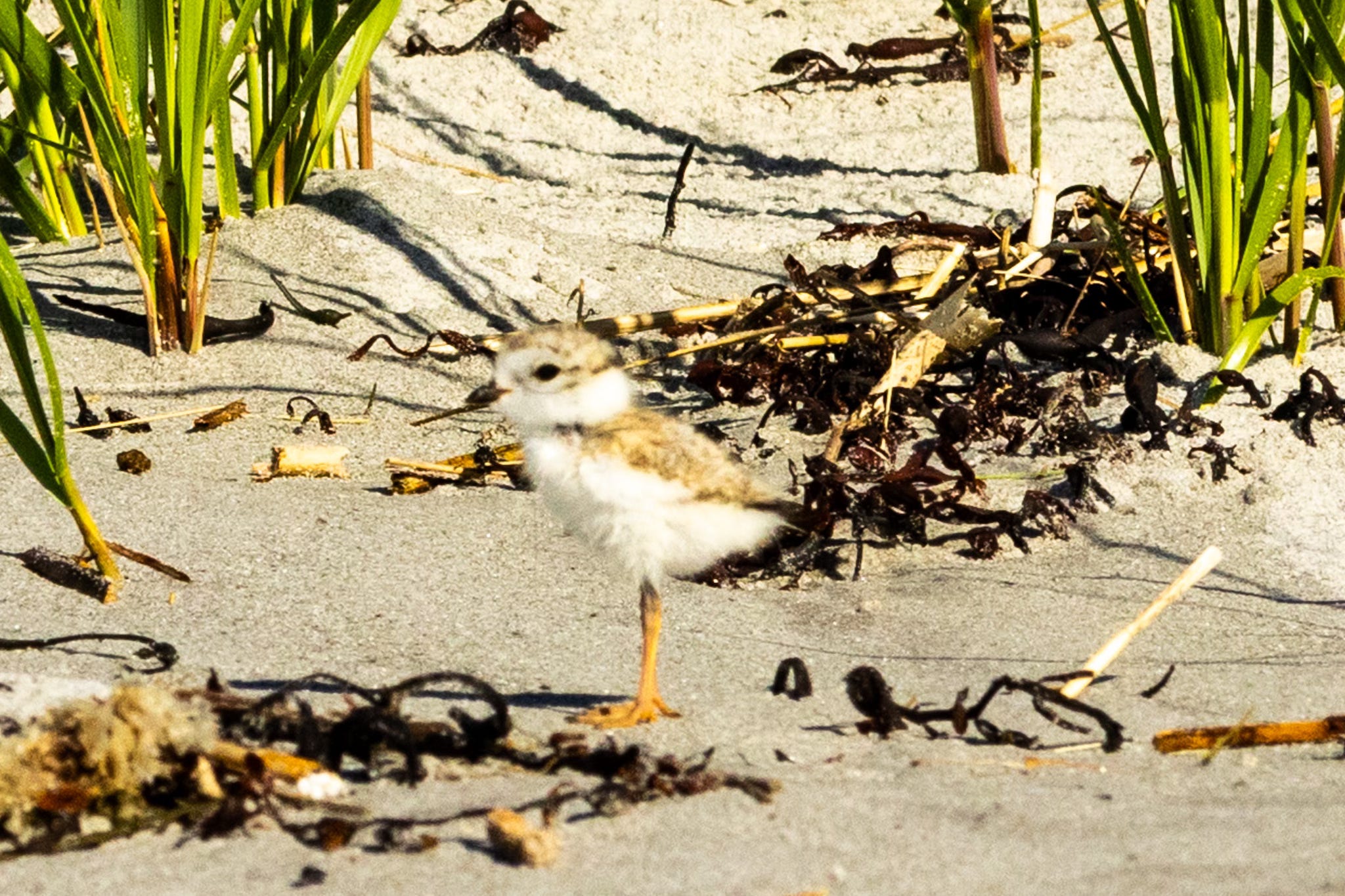
By Hap Ellis, Its newly hatched chick (Piping Plover) - Goose Rocks Beach, Biddeford, ME.
7. Which Cerulean Warbler? Using AI to go one step beyond Merlin: The research does not center on a specific bird species but on a specific bird. The project focuses on the cerulean warbler, a small blue bird whose numbers have fallen over time. While apps are already available to locate a specific species, this project aims to enhance that capability. “Scientists already have programs, and apps exist that can tell the phone user when they are hearing a cerulean warbler,” McNeil said. “We want to know which cerulean warbler is singing. We don’t just want to identify whether it is a cerulean warbler; we want to know which cerulean warbler it is.” That distinction could open a new path for conservation research. (via Phys Org)
8. A travel guide to America's prairies: It’s hard to imagine North America without grasslands. From the Great Plains to the Chihuahuan Desert, patchworks of grasses, wildflowers, and sedges carpet vast landscapes, laying the literal groundwork for unique communities of plants, animals, and people. People write off the prairie as “flyover country,” says Alison Holloran, former executive director of Audubon Rockies. Despite its vitality, this majestic ecosystem is in trouble. Development, agriculture, and invasive species have destroyed more than 300 million acres of prairie on the plains since European colonization. Today, native grasslands cover less than 40 percent of their historic span. These devastating habitat losses spell havoc for grassland birds, which have seen a 43 percent decline since 1970, the most of any avian group in North America. All is not lost, however. Thanks to preservation, restoration, and sheer immensity, extraordinary horizon-spanning prairies persist. To get a sense of the plains of yesteryear and a vision of a grassland-friendly future, try visiting these oases. (via Audubon)
9. Live streaming a very secretive raptor in Sussex: A live stream of a nesting pair of honey buzzards is offering a rare glimpse into one of the UK’s most secretive birds of prey. The birds, which have laid two eggs in Sussex woodland, are being filmed around the clock as they incubate them and prepare for the arrival of chicks. Experts say it is the first time such detailed nesting behaviour has been captured for the species, which migrates from West Africa in May. “It’s phenomenal, it is such an intimate glimpse in to this secretive bird. We are already learning so much about their lives,” said Ash Walmsley, who is leading the project. Very little is known about the unusual species, which feeds on wasp larvae, as they are often misidentified. (via The BBC)
* More on the European Honey-buzzard here: European Honey-buzzard - Pernis apivorus -(via Birds of the World)
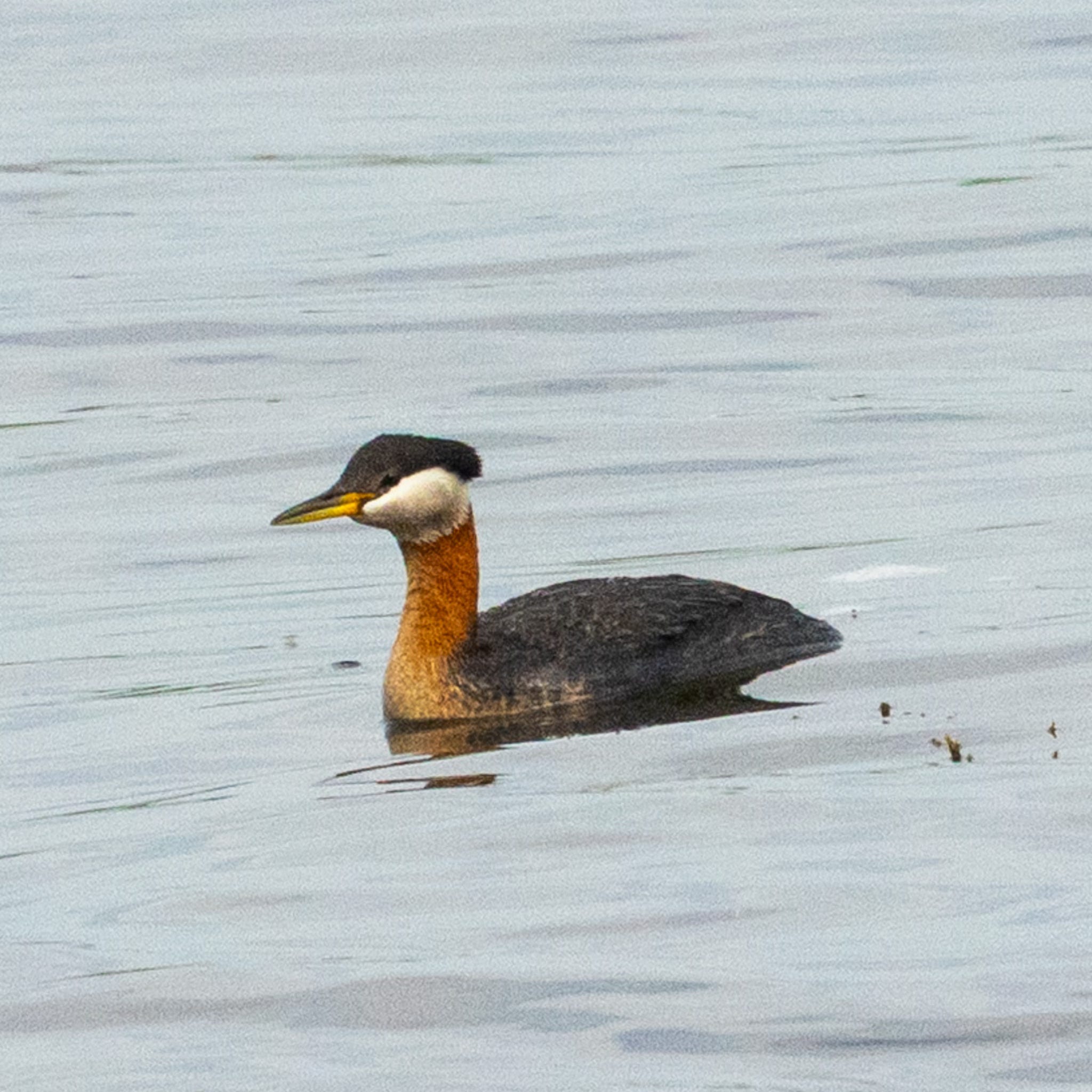
By Hap Ellis, Red-necked Grebe - Biddeford Pool, ME.
10. The Hollandse Kust now an SPA: The Hollandse Kust slots neatly into an emerging mosaic of protected areas. It connects the SPA Voordelta in the south and the SPA North Sea Coastal Zone in the north. At approximately 100,000 hectares (1,000 km²), an area slightly larger than all of Berlin and fills a long-standing gap. With this addition, the entire Dutch coastal zone will soon be protected under the EU Birds Directive. Later this year, the Dutch Parliament will publish a draft designation decision defining both the boundaries of the area and the species for which it is being designated. A management plan will follow, including conservation measures to prevent disturbance and habitat deterioration. Human activities will only be permitted if it can be demonstrated with certainty that they will have no significant negative effects on species the area is designed to protect. (via Birdlife)
11. Terrible news - H5N1 hammers remote Antarctic islands: Bird flu has killed thousands of southern elephant seal pups on remote Antarctic islands belonging to Australia, new research has shown. Heard and McDonald Islands, about 4,000 km (2,485 miles) south-west of Australia, are home to over one million breeding seabirds and seals. Scientists, using data from last October and this January, estimate about 13,000 baby seals from a group of 17,000 on Heard Island were killed by the H5N1 strain of bird flu since last August, more than 75% of the entire group. They also found higher than expected deaths in penguin populations. Australia is the only continent with no cases of the H5N1 strain which has spread among birds worldwide and affected some mammals. (via The BBC)
12. More (bad) avian flu news: Egg production in Wisconsin is less than half of what it was a year ago, reflecting a major decline in the number of laying hens in the state. That’s according to the latest data collected by the U.S. Department of Agriculture. Wisconsin produced 91.7 million eggs in April, the latest month available. That’s down 57 percent from the same month in 2025. The data shows there were 3.69 million laying hens in the state. It’s 56 percent lower than the previous April, when Wisconsin had 8.3 million birds. The state’s total laying hens fell dramatically last September, after Daybreak Foods’ farm in Jefferson County was hit by avian influenza and culled more than 3 million birds. (via Wisconsin Public Radio)
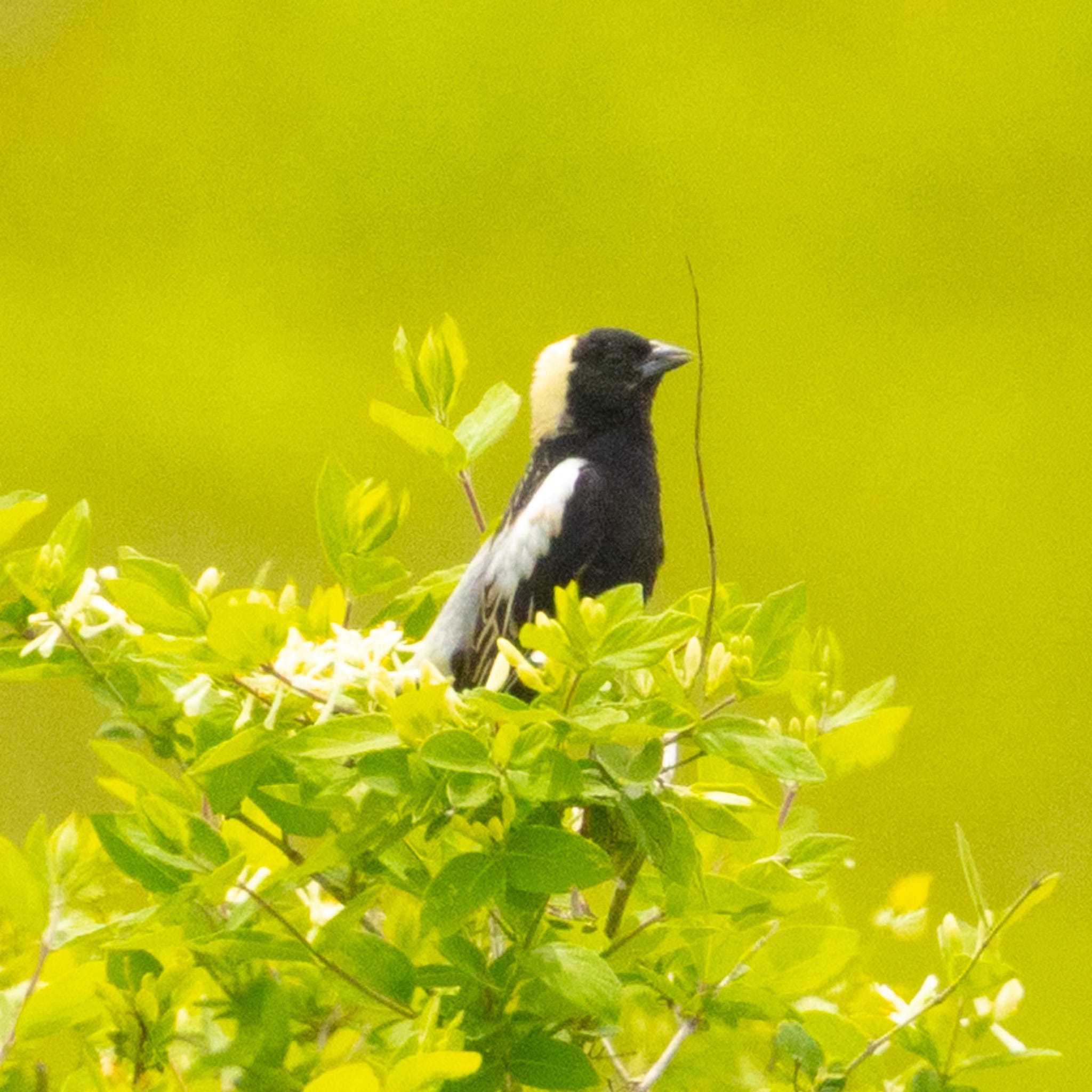
By Hap Ellis, Bobolink - Wells Reserve at Laudholm - Wells, ME.
13. In our search through digital lifestyle publications, we came across InsideHook and its "Take It From A Woman" column this week: One early spring, around three years ago, I found myself in an empty bar in Salt Lake City, Utah, with my dad. We had been skiing all day at Park City with my aunt and uncle, but had decided on a nightcap just the two of us. Taking a seat at the bar, we ordered two shots of whiskey and a couple of cocktails. After chatting with our bartender about the backwards alcohol laws the state enforced, our conversation somehow shifted to birding. I asked my dad, a longtime birder, what his birding White Whale was. He told me he’d already seen it — a golden eagle. The large and impressive birds of prey are found in the Northern Hemisphere, identified by their mostly dark brown feathers and golden nape, hence the name. While kayaking in the Hoover Dam, one of these birds had swooped down to the water, right in front of my dad’s kayak. He recounted the story, still with an air of both disbelief and wonder in his voice. (via Inside Hook)
14. Rare Bird Alert - There's off course and then there's WAY off course: An exotic visitor flew quietly into Kansas City recently, and no, it was not a World Cup tourist. As Frank Morris of member station KCUR reports, a Caribbean seabird landed in his very landlocked city, attracting flocks of birders and other curious observers, looking for a glimpse of the brown booby. The brown booby sighting set off urgent posts and rare bird alert emails. Birders came flocking to see what, from a distance, could be a big, brown duck. When it takes off, you can see the white under the wings and across the belly, and there’s a little blue around the eyes. (via National Public Radio)
15. As July 4th approaches hopefully we'll see more stories like this: With the well-being of protected bird species in mind, the Safety Harbor City Commission voted to change locations for one of the Tampa Bay area’s most popular July Fourth fireworks shows. The display will return to its original location, Waterfront Park, despite it being under repair. The commission voted earlier this year to move the celebration to Safety Harbor City Park because Waterfront Park is still undergoing repairs of damage sustained during the 2024 hurricanes. According to Mayor Joe Ayoub, it wasn’t long after the commission voted to change locations that wildlife enthusiasts alerted the city about the impact of the decision. People were concerned the noise from the fireworks would disrupt birds nesting near Safety Harbor City Park, Ayoub said, and scare them into leaving their babies vulnerable and alone. According to Pinellas County, the islands “support a variety of nesting species, including anhingas, herons and egrets,” which are all protected in Florida. (via St. Pete Catalyst)
16. Finally, if you have time, you'll get a kick out of this video: In many cultures, peacocks are considered symbols of good fortune, beauty and power. In Arcadia, California, however, many locals view these birds as a nuisance. In the late 19th century, a handful of peafowl were brought to the area from India. Today, hundreds of their descendants roam the streets, splitting residents over how the population of striking yet pesky creatures should be managed. In Our Neighbors, The Peacocks, this debate plays out on the streets and in the homes of pristine suburbia in Los Angeles County. (via Aeon)
Bird Videos of the Week
Video by Virginia Tech, “Experiential learning isn’t just “for the birds’”.

Cornell Live Bird Cam - Motmot glamour shot!

Cornell Live Bird Cam - Fledgling Season.