
Shared Skies.
Bird News Items
1. Let's start Down Under with a search for one mighty big bird: There can be few more imposing sights in nature than an adult cassowary. Standing nearly 2m tall and weighing up to 50kg, it is no mystery why these large, flightless birds, found in north-eastern Australia and Papua New Guinea, have long conjured up comparisons to prehistoric dinosaurs. As a boy, I always dreamed of seeing one in the wild but, growing up in the 1980s, Australia seemed unimaginably exotic and far away. The opportunity for that childhood dream to become reality landed in February 2023, when I was offered a work trip to Australia. Finally, I had my chance to seek cassowaries in the wild – and I jumped at it. (via Discover Wildlife)
2. BBC takes a look at Red-tailed Hawks in NYC's Central Park: Pigeons, check. Blackbirds, check. Blue tits, check. Hawks? Surely not! You’d be forgiven for thinking that large birds of prey would avoid one of the busiest spots in New York, but red-tailed hawks (Buteo jamaicensis) have made themselves right at home in the huge park frequented by locals and tourists alike. Central Park includes 843 acres of parkland and is the most visited urban park in the US, with around 42 million people visiting annually. The park is also home to many species of flora and fauna, with certain areas – such as The Ramble – attracting hundreds of species of birds. The red-tailed hawk is a common bird of prey in America, but it wasn’t until the 1990s that it began to be recorded in Central Park. (via Discover Wildlife)
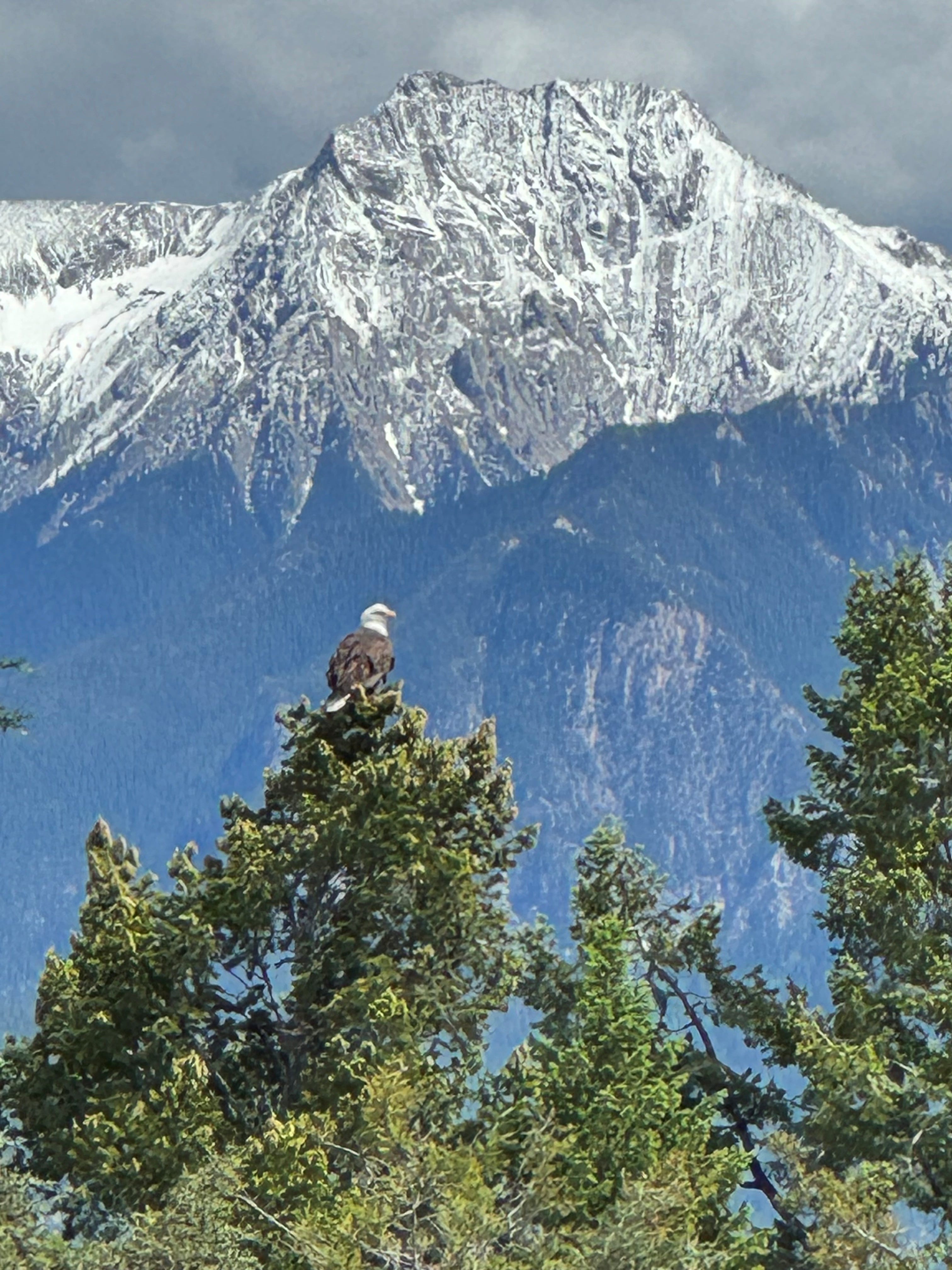
Photos From Friends: Cindy Rand, Bald Eagle - Chisel Peak, Lake Windermere, British Columbia.
3. "An almost unimaginable abundance has been lost." - 'The Book of Birds" review in the WSJ: Imagine a world without birds. Just now, a jet-black, golden-eyed currawong flew low past my study window, changing the view. Yet, as Robert Macfarlane and Jackie Morris tell us in “The Book of Birds: A Field Guide to Wonder and Loss,” “a great thinning of the skies is under way.” During the past 50 years in North America alone, the bird population has declined by some three billion. “Dawns and springs are quieter; the air emptier. An ancient avian orchestra is falling silent. An almost unimaginable abundance has been lost.” You’ve never read a bird book like this one, written and illustrated in a spirit of determined awareness, augmenting facts with spirited play. (via The Wall Street Journal)
4. From BirdLife International, "shared skies, shared responsibility": Several declining bird species have been hunted traditionally for centuries, but habitat loss, wetland degradation, pollution, climate change, and changing agricultural practices are the major drivers. While hunting is often not the primary cause of decline, in depleted populations, even small additional mortality can prevent recovery. Reducing avoidable harvest is an essential short-term measure while habitat restoration takes effect. Recovery is also a legal obligation: under Article 7 of the EU Birds Directive, hunting of listed species must be sustainable and may not jeopardise conservation efforts across their range. At the centre of this effort is the European Commission’s Task Force on the Recovery of Birds (TFRB), which brings together EU countries, scientists, and stakeholders to coordinate conservation measures for declining migratory game bird species. (via Birdlife)
5. Albania not for sale!!: If the real estate dreams of a billionaire political family come true, an island in one of Europe’s poorest countries will become a luxury hotel complex, sweeping up stretches of the wildlife-rich nature reserve that sits across the water. No public consultation has taken place, but there are signs the idea is on the way to becoming reality. Albania has been rocked by nearly two weeks of fierce protests after fences and heavy machinery came to a sensitive wetland and preparatory work began on the tourism vision of Ivanka Trump and her husband, Jared Kushner. Marshes, dunes, lagoons and salt pans stretch across the dynamic delta of the free-flowing Vjosa River, which was declared Europe’s first wild river national park in 2023. It sits on a major migratory corridor, hosting about 12% of the country’s wintering waterbirds, and is home to Eurasian otters, loggerhead sea turtles, bottlenose dolphins and Albanian water frogs. Flamingos add bright shocks of pink to striking blue shallows. (via The Guardian)
6. A paean to "Tammie Norries" (aka, puffins): All my life I have been obsessed by black and white birds. Magpies are my tormentors, my morning omens of whether my day will be worthwhile or miserable. Penguins are my salvation. When I’m a little melancholy, I pop along to London Zoo to read them poetry. In my experience, they enjoy The Wasteland. There is another black and white bird that I have long found appealing: the puffin. My attempts to spot them, however, have been in vain. On a school geography field trip to the far north, I managed to see Iceland’s ugliest dog but no puffins. There seemed to be a family curse. My uncle was once booked a birthday trip to Puffin Island, off Anglesey, only to discover they’d all flown away. But then I blagged a trip to Shetland. (via The Spectator)
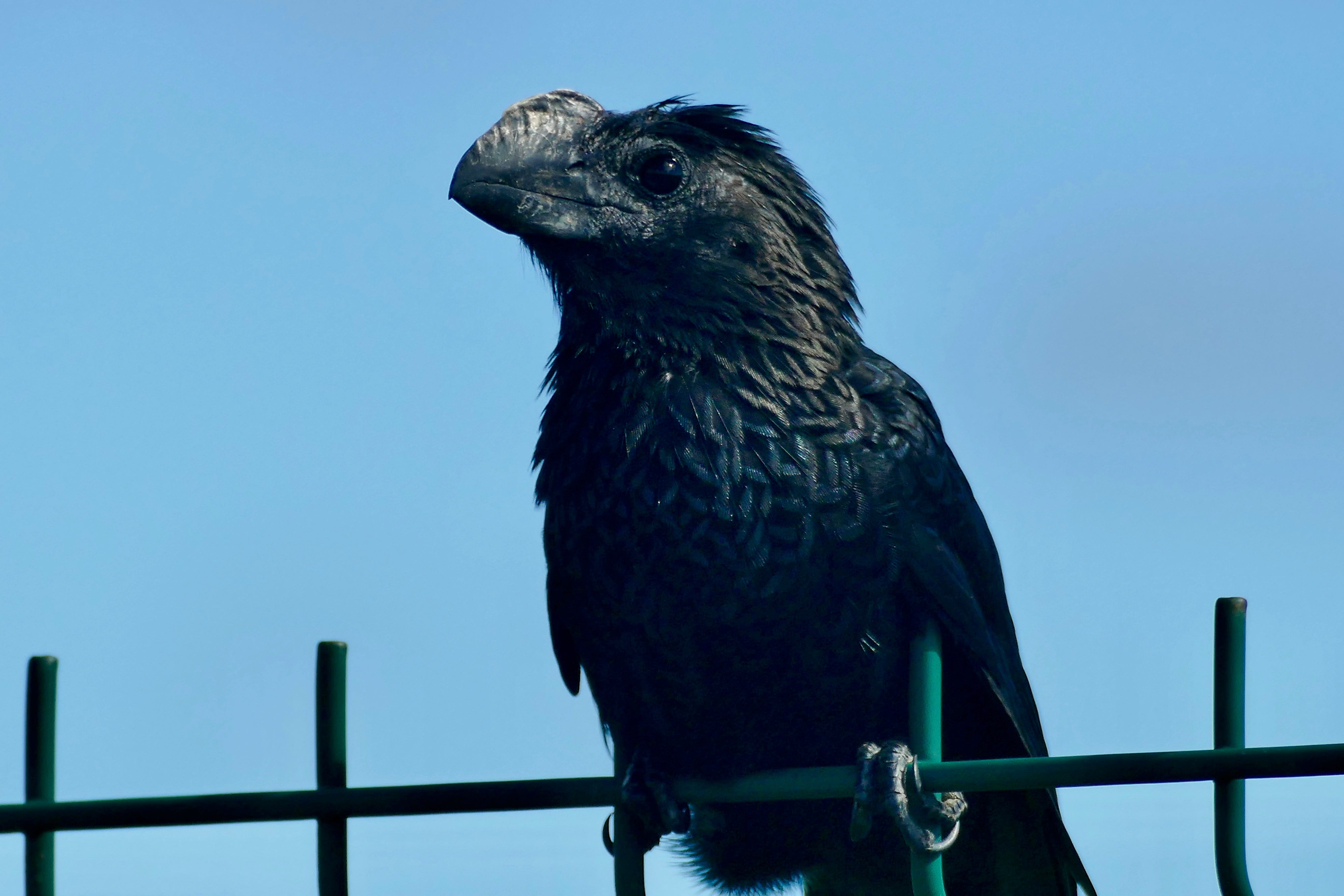
Photos From Friends: Chris Ellis, Smooth-billed Ani, French Guiana.
7. The dinosaur equivalent to a "person of interest": For years, a mysterious predator haunted the fossil beds of Changma Basin in northwest China. The site is known for a stunning aviary of fossilized birds, including some of the earliest known specimens from the group that gave rise to modern birds. But these specimens often turned up as broken fragments, including pellets that looked suspiciously like those coughed up by modern predatory birds, such as hawks and owls. Something, it seemed, was hunting these early birds. Now, paleontologists believe they may have identified the culprit: a new genus and species of carnivorous dinosaur. (via Science Alert)
8. Trade-offs for this tiny petrel- crosswinds v food: You might think birds skimming over the ocean wouldn’t seek wind unless it was pushing them in the right direction, but NASA-funded researchers have learned that storm petrels find stiff crosswinds worth the slowdown, in return for the clues and cues the gusts carry. In a paper published by the Royal Society’s Biology Letters May 13, researchers from Woods Hole Oceanographic Institution (WHOI) and the Italian Institute for Environmental Protection and Research (ISPRA) found that Mediterranean storm petrels actively sought out crosswinds, which carried odors the birds used to navigate toward prey. The birds were effectively trading the extra energy needed to fly in a crosswind for the information it blows toward them. (via NASA)
* More on the European Storm-Petrel: European Storm-Petrel - Hydrobates pelagicus (via Birds of the World)
9. Twitchers delight!: It is a tropical bird typically encountered between west Africa and India, but last week a western reef heron arrived in north Wales in what is believed to be the first ever sighting in the UK. The heron was first spotted in Foryd Bay at the weekend before flying to nearby Caernarfon harbour where it fed among the boats. While the sighting has excited birdwatchers nationwide, experts said it also demonstrated how changing climate conditions have altered the bird’s range. “The fact that they are getting here in the first place, and then surviving, is likely to be because of increasingly mild winters,” said Nick Moran, training manager at the British Trust for Ornithology (BTO). (via The Guardian)
* More on the Western Reef-Heron from BOW: Western Reef-Heron - Egretta gularis (via Birds of the World)
10. "Magnifique...": It is peak tourist season at Westminster Abbey, and crowds bustle around its 13th-century gothic cloisters. They point at notable names, buried everywhere, including Charles Dickens, Sir Isaac Newton and more than 30 kings and queens. But this Thursday in the middle of May, the visitors only have eyes for one celebrity: Minerva. “Magnifique,” says a French woman with her son, while others gasp, point and snap away on their phones. Minerva is an 11-year-old gyrfalcon and she has no idea what ruckus she has caused. Her eyes are covered by a cerise pink hood topped with a theatrical plume to keep her calm and focused on her job. “That’s where the word ‘hoodwink’ comes from,” says her handler Wayne Davis, 63, from Avian Environmental. “Shakespeare used it and he made it a popular way of saying to deceive someone.” (via The Times)
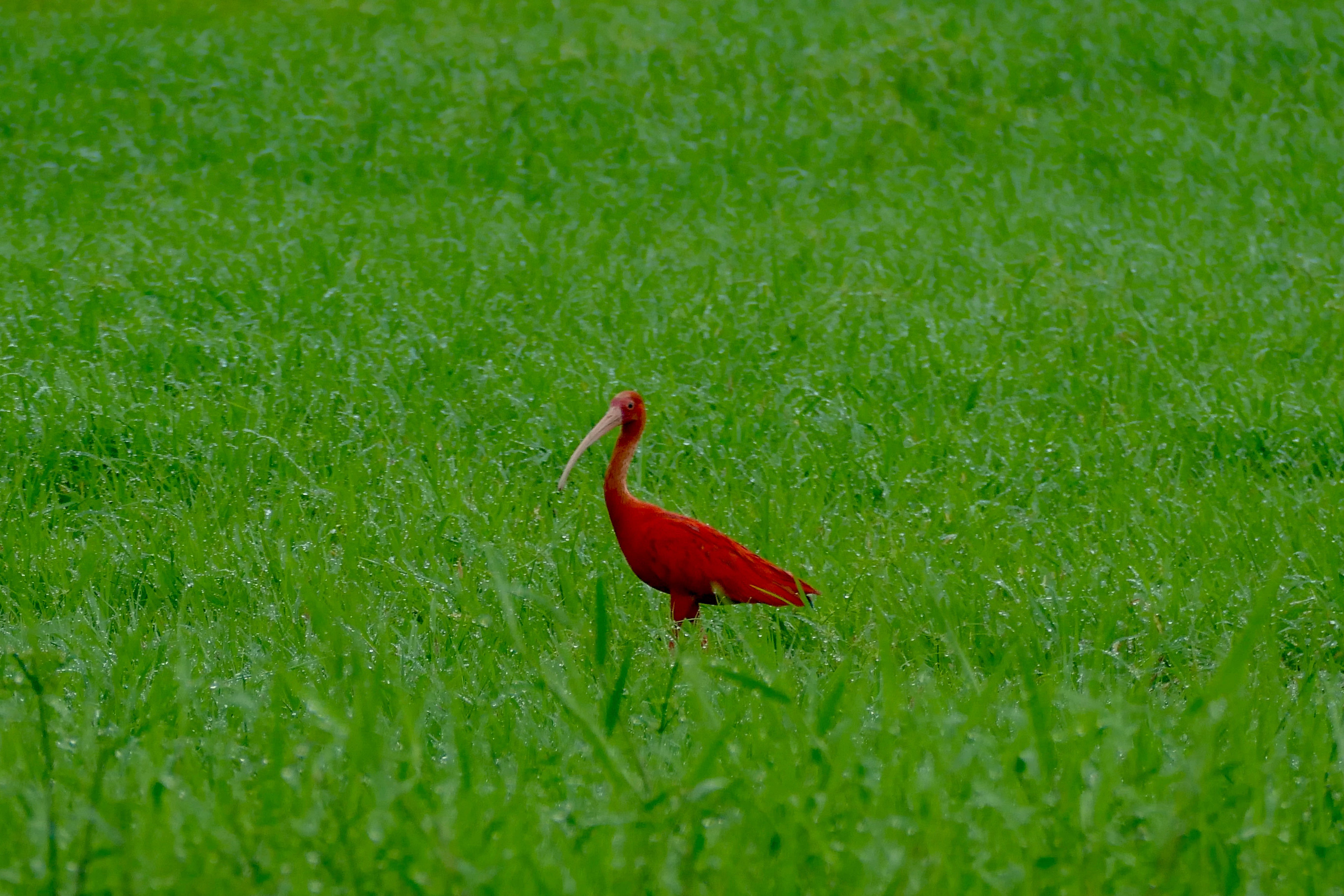
Photos From Friends: Chris Ellis, Scarlet Ibis, French Guiana.
11. Birds in flocks - Defying Newton's third law: Birds in flocks, bacteria and cells: In many collective systems, individual elements respond to only part of their surroundings, seemingly defying Newton’s third law of motion—action equals reaction. These exceptions are known as nonreciprocal interactions. A Dresden physics team working with Roderich Moessner, a founding member of the Würzburg–Dresden Cluster of Excellence ctd.qmat, has now developed a theory that makes it possible to describe these interactions efficiently and simulate them far more precisely. (via Phys Org)
12. Birds and wind turbines (again!): Wind turbines generate climate-friendly electricity, but they can pose a danger to migratory birds. A study led by the Swiss Federal Institute for Forest, Snow and Landscape Research (WSL) published in Nature Sustainability shows that weather radar data could be used to reduce the risk of collisions with only a minimal impact on electricity production: by strategically shutting down turbines when particularly large numbers of birds are in flight. How many birds collide with wind turbines? In the continental United States, the annual figure is estimated to be between 140,000 and 330,000. However, there are no estimates for Europe, particularly for migratory birds during their nighttime migrations. Some measures are already in place, such as shutting down turbines during periods of heavy migration—on a single autumn night, an estimated 188 million birds may be on the move simultaneously in Europe. (via Phys Org)
13. Good observations on the Cornell Lab's remarkable Merlin app: For 22 years, I’ve had the honor of kicking off the Downeast Spring Birding Festival with a talk on how to identify birds by sound. During this year’s Q&A, somebody asked: “How many people in the audience use Merlin?” Almost every hand shot up. Merlin is the bird identification app from the Cornell Lab of Ornithology. Download it onto a smartphone, and you’ve got a free bird expert in your pocket. It can identify many birds by sight and sound. It can also misidentify them. To be fair, Merlin doesn’t actually identify birds. It suggests potential identifications. I played with Merlin this week, trying to figure out why some of its guesses miss the mark. Since the weather was ideal for recording bird songs, I ventured outdoors at daybreak for five straight mornings. (via Bangor Daily News)
* Note too that the Lab's eBird team encourages users to not include a bird on an eBird checklist if you didn't actually hear it or see it for yourself.
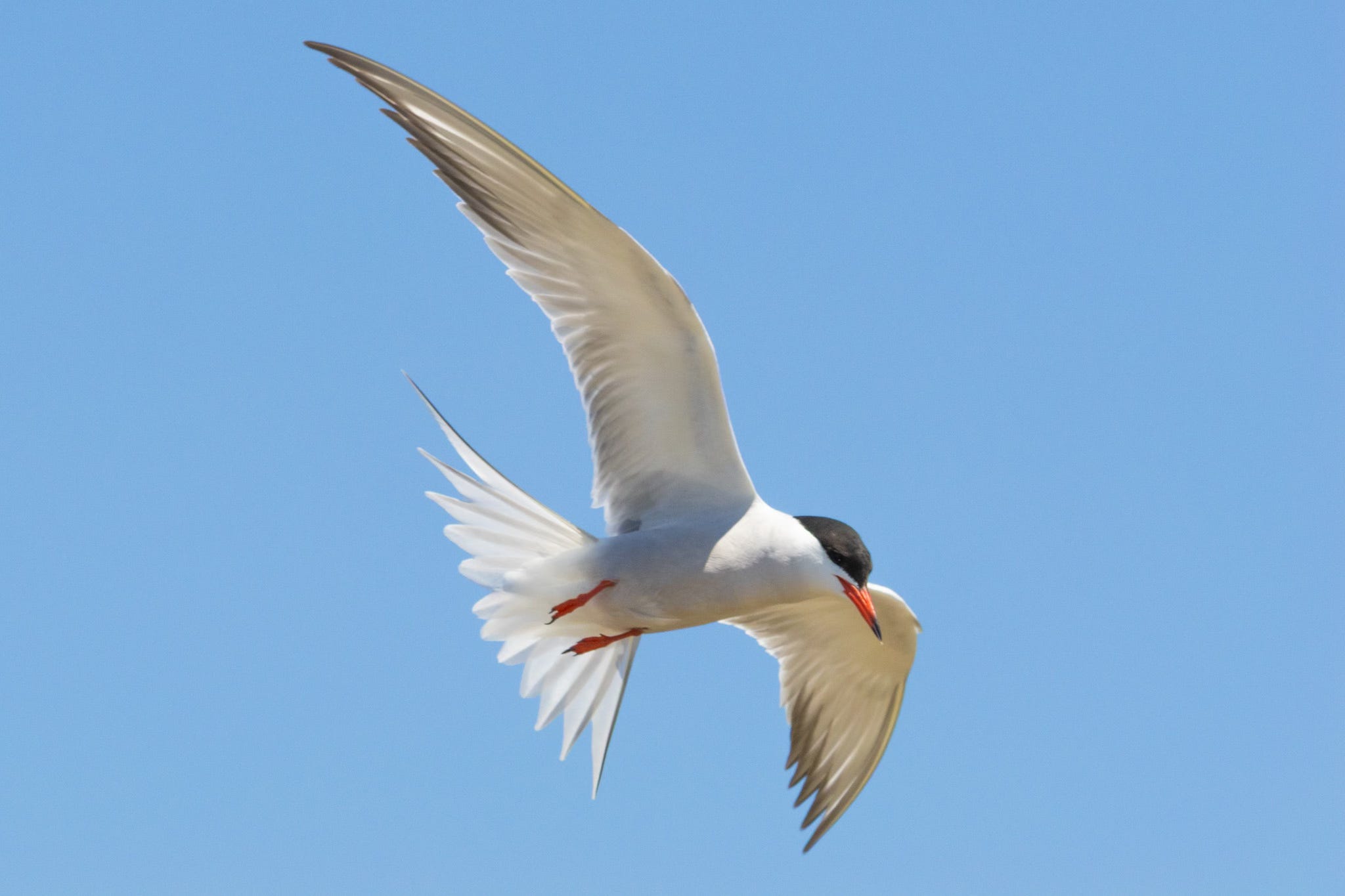
By Hap Ellis, Common Tern - Biddeford Pool, ME.
14. No surprise - the backyard birding business is booming: Since the Covid-19 pandemic, interest in bird-watching has ballooned and drawn a younger demographic in the United States, boosting the sales of feeding hardware. Finches, warblers and other birds perch on feeders, birdbaths and bird houses in the yards of 59 million American households, according to the U.S. Fish and Wildlife Service. Nonetheless, Americans spend $4 billion a year on bird food alone. Demand for feeders and water suppliers could increase to $2.9 billion in 2035 from $2 billion in 2025, according to an estimate by Future Market Insights, a market research firm. (via The New York Times)
15. Pranks and pink flamingos: The use of pink plastic flamingos to signify graduations stems from a popular high school and college tradition known as “flamingo flocking” or “yard flocking.” Originally born from a legendary 1979 university prank, this whimsical practice has evolved into a staple fundraising campaign and celebratory milestone marker across the United States. As a victory stunt by the Pail and Shovel Party, which had won the student-government election, leaders Jim Mallon ’79 and vice president Leon Varjian x’83 purchased 1,008 plastic flamingos and planted them all on the hill. Why 1,008? The birds were sold by the dozen, and Varjian wanted to be able to say they had planted more than 1,000. “The smallest number divisible by 12 that’s over 1,000 is 1,008,” the late Varjian said in an interview. The “prank” continues today through Fill the Hill, an annual fundraising event that helps the UW address critical needs. The tradition took on a more poignant meaning during the COVID-19 pandemic. In 2020, schools like South Portland High School in Maine used hundreds of pink flamingos to physically fill empty football fields. Each bird represented a missing student at the canceled commencement ceremony, permanently cementing the flamingo as an emotional stand-in for a graduate. (via UW Madison & WMTW News)
16. Finally, Let's go! The Yakutat Tern Festival "re-terns": Some Southeast Alaskans may have only stopped in Yakutat on the “milk run” flight to Anchorage. But just beyond the tarmac lies a birders paradise. From black legged kittiwake’s nesting on the jagged edges of seaside cliffs, to a posse of surf scoters, riding the ocean waves in a v-formation as they forage for mussels off of the rocks below. But there is one bird in particular that has motivated a pack of over a dozen visitors across the country to wander through beach dunes early on a Saturday morning, armed with binoculars and zoom camera lenses: the Aleutian tern. Nate Catterson is the volunteer guide leading the trip. He began birding over a decade ago to learn more about his surrounding environment. Since then, he has worked to help track the migration of Aleutian terns, traveling as far as Indonesia. Yakutat is key to that research, since the village is home to the southernmost breeding colony of Aleutian terns. And they are not the only terns that make a pit stop here, with Catterson pointing out an Arctic tern landing a few feet ahead of the group. (via KCAW News)
* More on the beautiful Aleutian Tern: Aleutian Tern - Onychoprion aleuticus (via Birds of the World)
Go Birding!
Bird Videos of the Week
Video by Rick Andrews Wildlife, “Cantankerous Canada Goose”.

Cornell Live Bird Cam - Time for a nibble! An adorable Gray-headed Chachalaca chick stops by the Panama Fruit Feeder Cam.

Cornell Live Bird Cam - First feeding for the chick on the Hellgate Osprey Cam! Iris feeds her adorable chick.
Fabulous photos and amazing information.. Tragic that we've lost so many birds, so quickly