
Squawk Talk.
Bird News Items
1. Let's begin with this guest essay from the NY Times -"Even a grieving heart knows how to float.": I have a kind of game I play with grief, imagining the birds I see are the people I’ve lost. When my identical twin brothers died unexpectedly — one to heart failure 20 years ago, one to suicide more recently — words deserted me in those first days of grief. I found, though, that if I could get out the door with my camera and into a landscape that called to me, I thankfully could still photograph. For me, that landscape is South Dakota, where I moved with my father, mother and younger sister when I was 15 years old and where my parents lived for more than 50 years. (via The New York Times)
2. Beautiful photos from Audubon: Birds rarely stay still. A sudden wingbeat, a fleeting interaction, or a flash of color can disappear in seconds. Capturing those moments requires patience, careful observation, and a deep connection with the natural world. In recognition of International Women’s Day, we celebrate the photographers who, through their lenses, have revealed the beauty, behavior, and complexity of birds across diverse ecosystems. Their images transform fleeting moments into visual stories that invite us to look more closely at the natural world. Their photographs go beyond aesthetics. They help us understand bird behavior, the habitats birds depend on, and the challenges they face on a constantly changing planet. In doing so, photography becomes a powerful tool for education, science, and conservation. (via Audubon Americas)
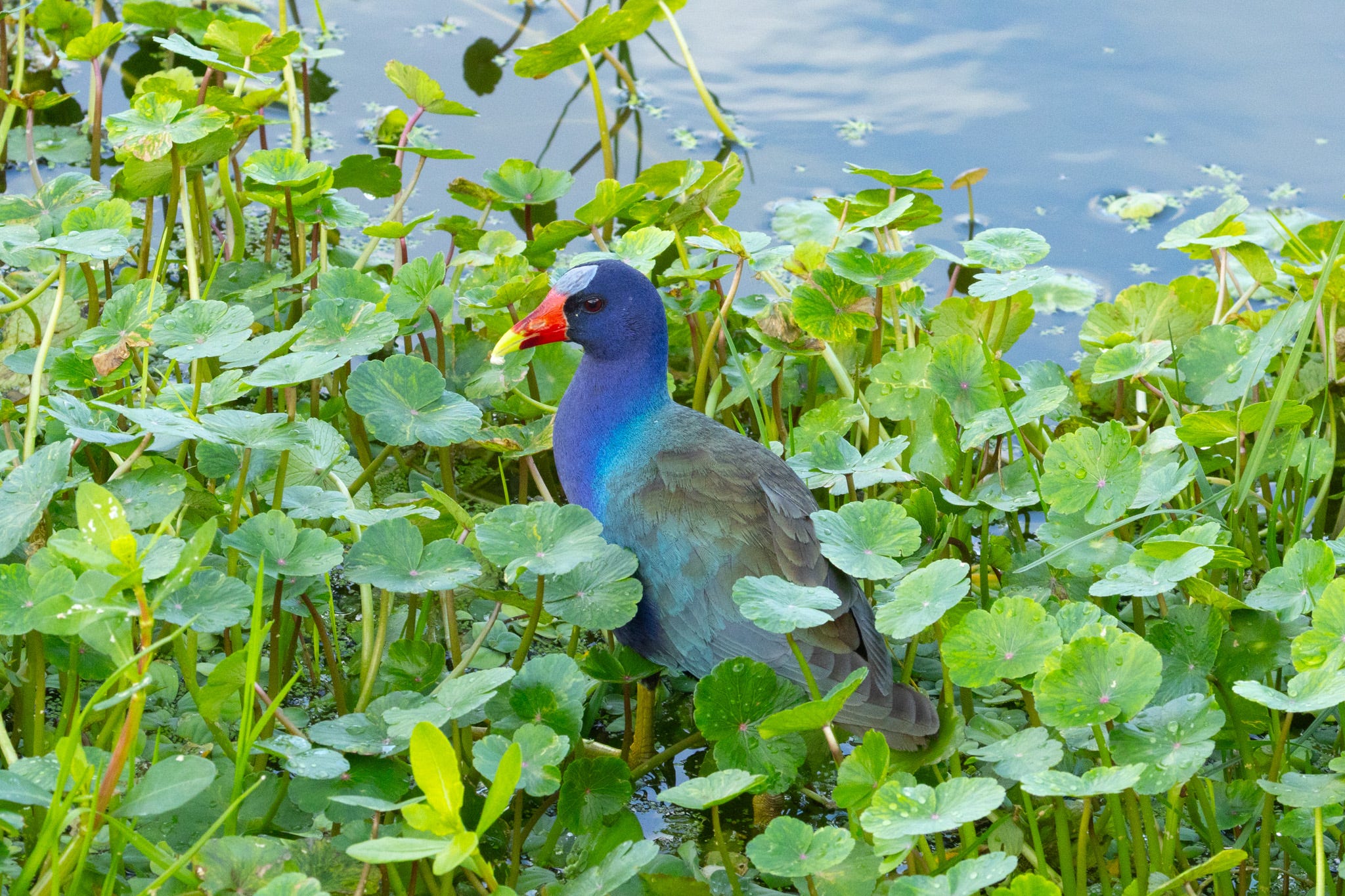
By Hap Ellis, Purple Gallinule - Green Cay Nature Center & Wetlands, Boynton Beach, FL.
3. It's all about "...integrat(ing) you into their 'flock'": In 1995, a California parakeet earned the Guinness World Record for having the largest human vocabulary among birds. “Puck the Budgie” had learned an astounding 1,728 words before passing away at the young age of five in late 1994. Puck even formed original phrases, such as “that’s what it’s all about” and “I love everyone,” showcasing a high cognitive ability that makes these tiny avians some of the smartest birds that you can keep as pets. But while birds like Puck could chat away in words we can understand, others tweet, quack, cheep, and trill to communicate. Why do some birds talk like humans, and others converse in languages all their own? We turned to Timothy Wright, an associate professor of biology at New Mexico State University whose research focuses on the function and evolution of vocal communication in parrots, to find out. (via Popular Science)
4. Audubon on the importance of the Farm, Food and National Security Act of 2026 (otherwise known as "The Farm Bill"): As the U.S. House Committee on Agriculture advances the Farm, Food, and National Security Act of 2026 (Farm Bill), it is worth remembering that the legislation represents the nation’s largest investment in voluntary conservation on private lands. That makes it a crucial tool for addressing habitat loss and helping birds recover. But many conservation incentive programs for farmers, ranchers, and foresters are still not strong enough to meet growing demand. A modernized Farm Bill can address this head on, by improving existing programs, formalizing others, and reducing barriers for working landowners. (via Audubon)
5. One look at six "essential" books about birds: A few years ago, more or less on a whim, I started following a group of scientists who were studying a small seabird on an island off the coast of Washington State. The bird, called the rhinoceros auklet, was gray and had a funny little horn sprouting from the base of its bill—hence its common name. I loved the way their story, so seemingly modest, joined with other stories about climate change, the fate of the world’s oceans, and the history of land, people, colonial power, and Indigenous resilience. People have been writing about birds for almost as long as they have been writing anything. One anonymous Old English poet, for example, called the sea “the gannet’s bath” (referring to the large expert divers of the North Atlantic), and after reading that I have not looked at it in any other way. While working on my auklet tale, Seabirds as Sentinels, I turned to these essential books about birds. (via LitHub)
6. The importance of prairie dogs (!) to our grassland birds: Last fall, I fell in love with prairie dogs on the American Prairie in Montana even though the hype for America’s Great Plains pointed me to bison. As impressive as North America’s largest land mammal is, the pipsqueak of the prairie piqued my interest and stole my heart, and I’m not the only one. Andy Boyce arrived on the American Prairie in 2018 as one of the Smithsonian’s first folks hired onto their Great Plains Science Program. Like me, he arrived in Montana thinking of bison. Boyce is a research ecologist with Smithsonian’s National Zoo and Conservation Biology Institute. He published papers on interactions between bison and birds but soon gravitated to the black-tailed prairie dog. Boyce likes an underdog and said, “I was just incredulous at how important prairie dogs were, while simultaneously being one of the most persecuted animals on the Great Plains.” (via Creators)
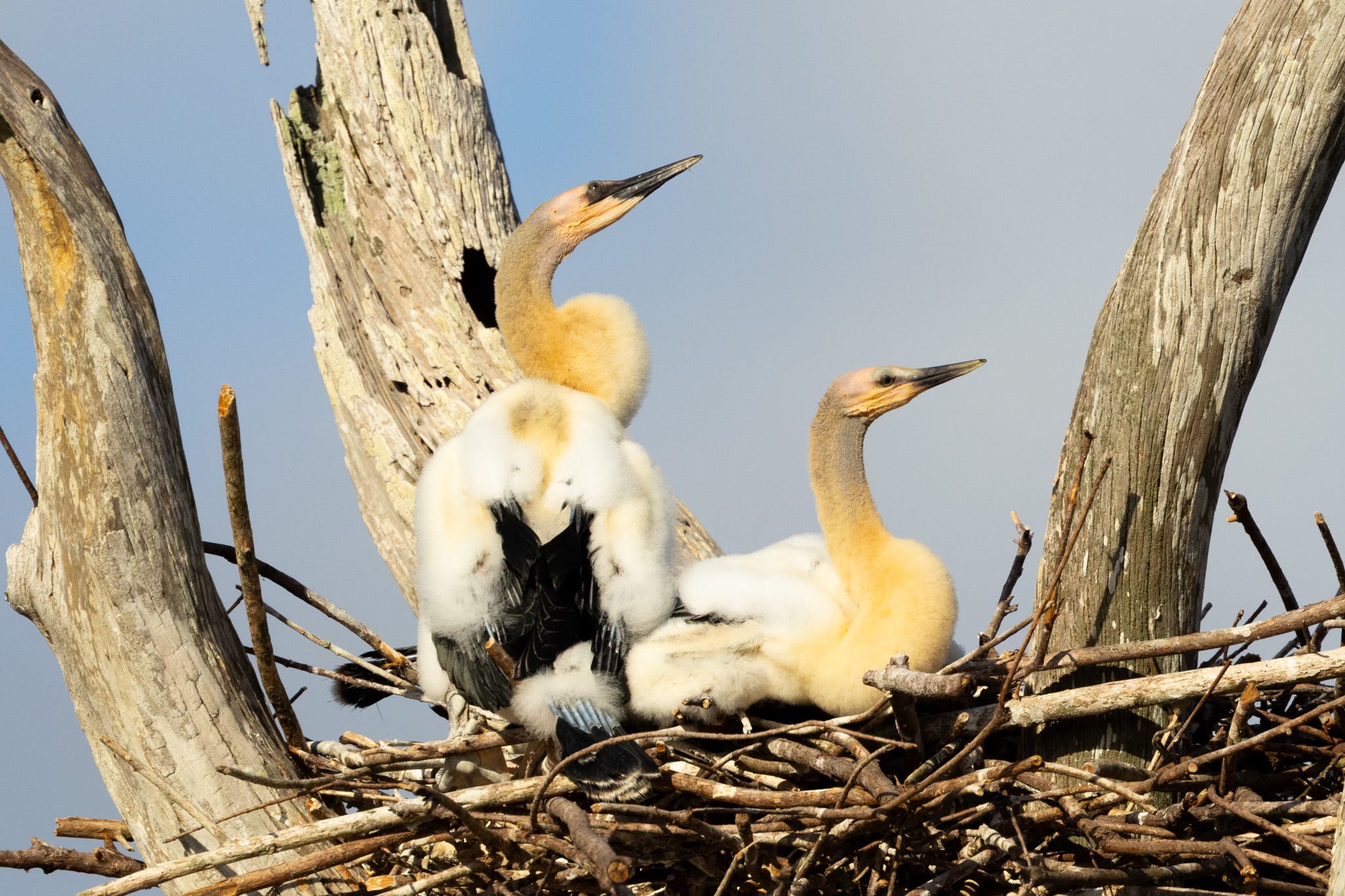
By Hap Ellis, Young Anhinga - Green Cay Nature Center & Wetlands, Boynton Beach, FL.
7. An interesting look at birding Vietnam (spoiler alert - not that many species): Subash and I were in shock. We had spent two days cruising Vietnam’s Ha Long Bay aboard a small ship and overnighting among 2,000 immense limestone towers eroded by the sea. The bay is designated a UNESCO World Heritage site for its “marine-invaded tower karst” geography and its diversity of wildlife. Yet my fellow traveler and I had logged just five black kites, graceful raptors of Southeast Asia. Amazingly, there wasn’t a gull or cormorant in sight. While our tour was not a nature-focused trip, we took every opportunity to look for birds in each likely spot, carrying binoculars and using the Merlin app to identify unfamiliar birds. We had noted just 25 species, well below expectations. (via Harpswell Naturalist)
8. From Down Under - "100,000 people have tuned in" - you can too: On an island in New Zealand’s remote south, one of the world’s strangest and rarest parrots – the kākāpō – is caring for her tiny chick as fans from across the globe watch on. Through the black and white lens of a hidden camera, a fluffy orb with a kazoo-like squeak jostles for food from its mother’s beak. The mother, Rakiura, is attentive – scooping her chick under her large green wings, fending off an intruding bird, and periodically tidying her nest. Since New Zealand’s Department of Conservation launched its live stream in mid-January, more than 100,000 people have tuned in to watch Rakiura during breeding season. (via The Guardian)
9. Insights on climate effects on migration from Montana: Have you had any unexpected bird sightings this winter? Maybe you saw birds in unexpected places or times. Or maybe birds you expected never showed up. You’re not alone. Bird researchers – and an observant listener – have noticed, too. That listener wants to know: What do we know about how climate change is impacting birds, both in and out of Montana? (via Montana Public Radio)
10. Speaking of migration - "They will get here by hook or by crook." Migration and war in the Middle East: The spring migration is entering its peak, with millions of birds expected to arrive in Israel to nest and breed despite incoming missile fire from Iran, according to the Keren Kayemeth LeIsrael-Jewish National Fund’s chief ornithologist. Yaron Charka explained that in spring, “the birds rush to get to their nesting sites to secure the best spots.” Timing is everything, he continued, because the chicks have to hatch when food supply is at its peak. While research from 2022 indicated that greater spotted eagles avoided danger over Ukraine during the war, Charka said detours in Israel caused by the ongoing war with Iran would likely be short — but could leave the birds exhausted and not in the best state to find a partner and lay eggs. (via Times of Israel)
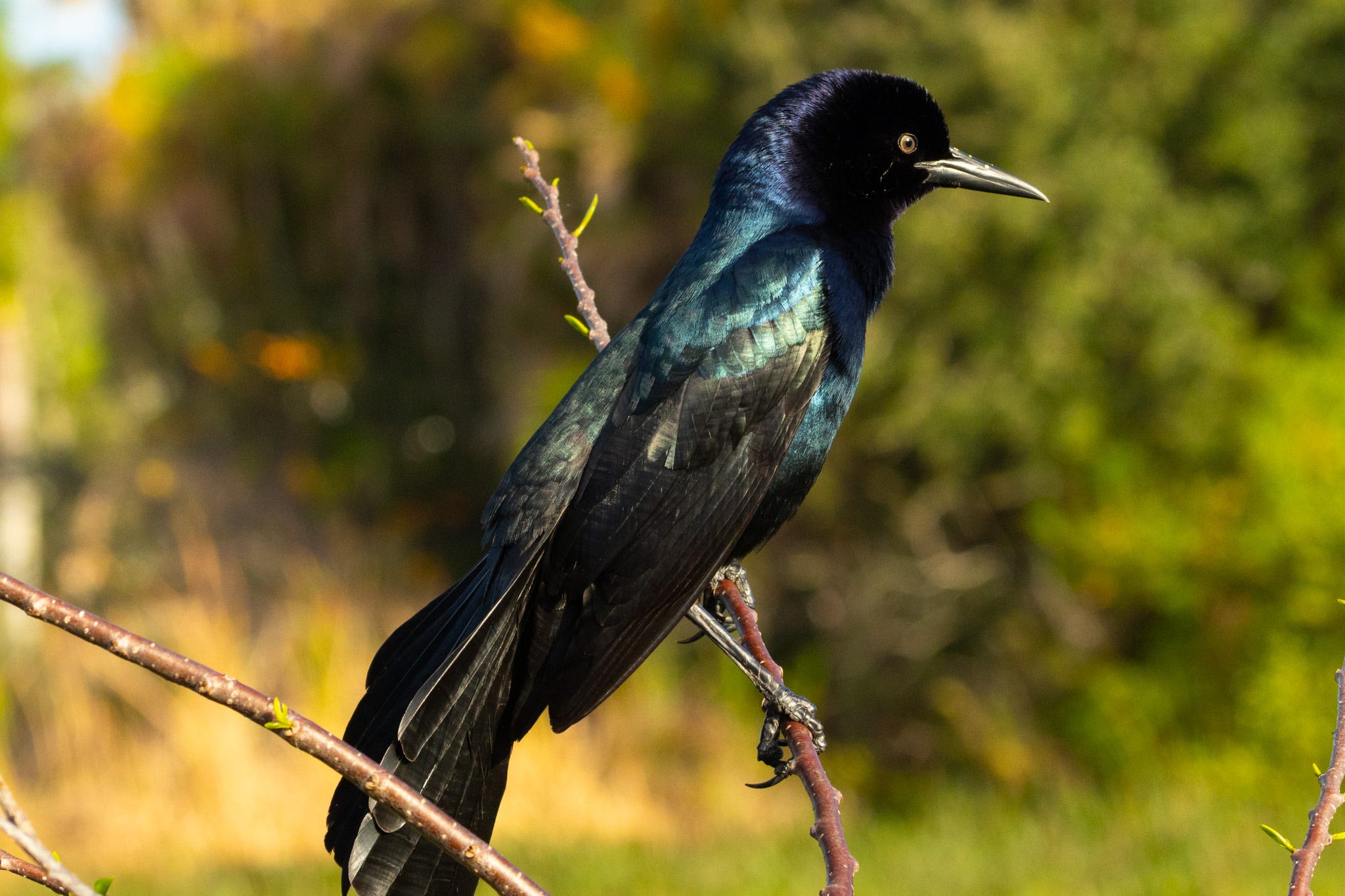
By Hap Ellis, Boat-tailed Grackle - Green Cay Nature Center & Wetlands, Boynton Beach, FL.
11. What it takes - restoring life to a section of the Colorado River that flows through the Cocopah reservation in SW Arizona: Where Arizona, California and the Republic of Mexico meet, the lower Colorado River transitions into its delta and dries up before finding its way to the Gulf of California as it had done a century ago. It is here that a new habitat restoration effort is taking shape on the Cocopah Indian Tribe’s Reservation— to bring back the native vegetation and wildlife that once thrived along this vital desert waterway. This section of the Colorado River underwent profound changes over the past century due to the dams and diversions that significantly altered the river’s flow. For the Cocopah people with ancestral ties to the Colorado River since time immemorial, these changes have not only impacted the landscape, but also their culture and ability to sustain their traditional ways of life. (via Audubon)
12. Preaching to the choir - we've birded this "nirvana": We’re not just singing the warbler’s praise when we say this: Kim Kaufman gets excited about birds. The longtime executive director of Ohio’s largest birding group, the Black Swamp Bird Observatory, couldn’t suppress her enthusiasm for the Biggest Week in American Birding and other things bird-related when she delivered her keynote luncheon speech Monday to the Rotary Club of Toledo. The event was in the Huntington Center Aquarium. Ms. Kaufman began her talk by calling northwest Ohio “the gateway to birding nirvana,” reaping praise particularly upon the world-renowned Magee Marsh Wildlife Area in Ottawa County. She said her group strives to encourage more youths to explore birding and nature in general. (via Toledo Blade)
13. Then there is the "Serengeti of the South"... Birding tips for the Lone Star State: Texas has plenty of famous wildlife stops, but the Great Texas Birding Trail is at its best when you treat it like a biodiversity puzzle instead of a checklist. You are not just searching for a single rare bird; you are seeking the habitat features that attract dozens of species to the same area, often within a short walk from your car. That is why a “Biodiversity Deep-Dive” works so well in two places that feel completely different on the map. At Brazos Bend State Park, freshwater lakes and bottomland hardwoods stack on top of each other, which is exactly how you get dense wildlife viewing in a relatively compact space. (via A-Z Animals)
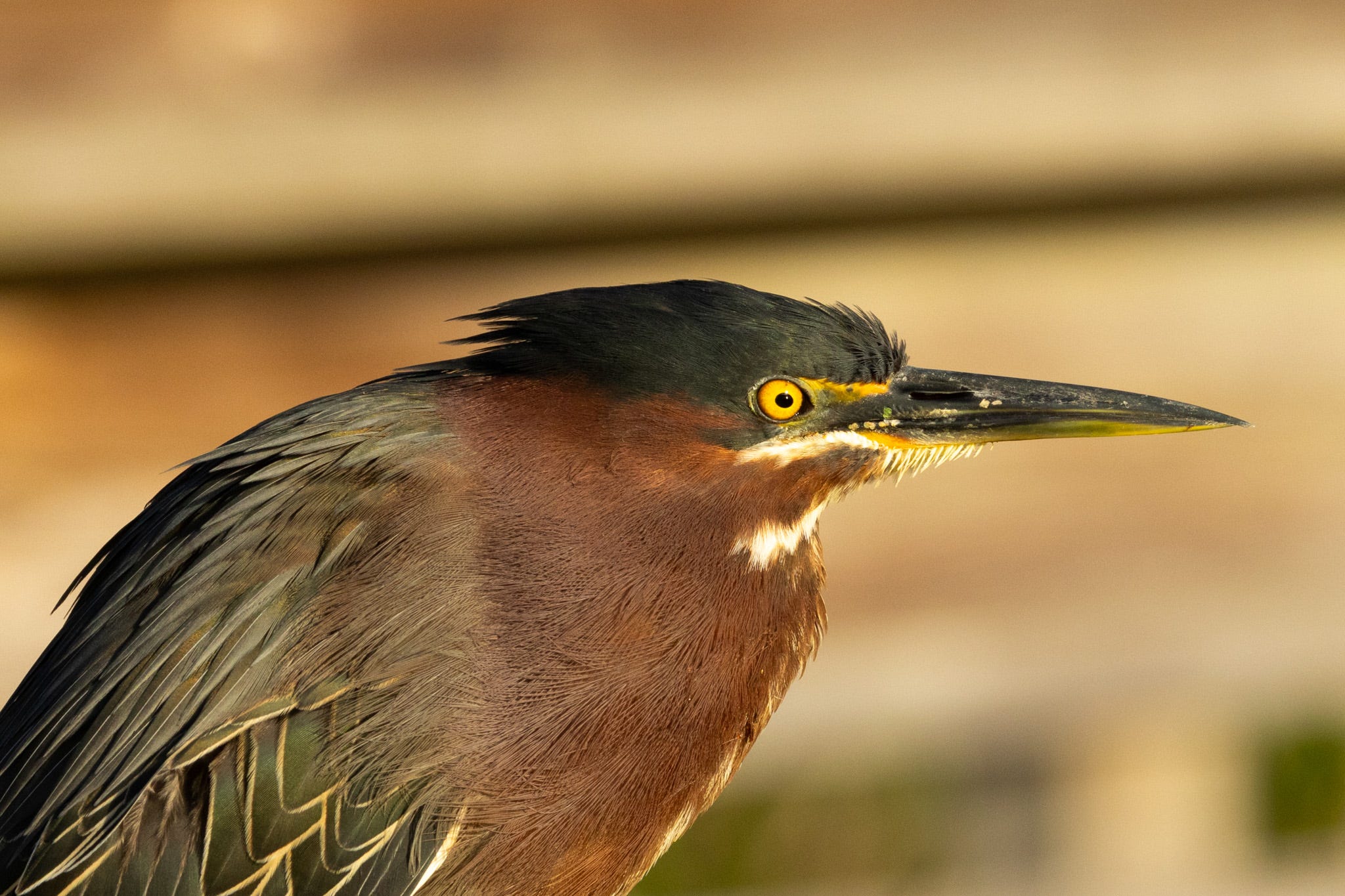
By Hap Ellis, Green Heron- Green Cay Nature Center & Wetlands, Boynton Beach, FL.
14. This week's Rare Bird Alert - Red-flanked Bluetail: Barbara Saffir clipped a camouflage vest around her chest, hung her heavy, long-lens camera and binoculars around her neck, and stepped in her knee-high, red galoshes through wet leaves and mud under a dense early morningfog on the edge of the Potomac River. The red-flanked bluetail has appeared at a park near the Potomac River, marking only the second time the species has been seen east of the Rockies. (via The Washington Post)
* Check out the bluetail's normal range: Red-flanked Bluetail - Tarsiger cyanurus - Birds of the World.
15. From the Las Vegas - what was this guy thinking?: A Canadian tourist accused of stealing and torturing a flamingo at a Las Vegas Strip hotel must remain in the area as his criminal proceedings play out, a judge said Monday. Mitchell Fairbarn, 33, of Ontario, Canada, faces four counts of felony animal abuse for allegedly injuring a bird at the Flamingo Las Vegas Hotel & Casino on March 3. Police reviewed surveillance footage, which they said showed Fairbarn entering the bird habitat and grabbing a bird named “Peachy,” documents said. Fairbarn also allegedly injured other animals in the process, including “pinning down” a second bird and “not letting it escape.” The video then shows Fairbarn returning to a hotel room with the animal, police said. Fairbarn allegedly admitted to police that he trespassed into the bird habitat after seeing a flamingo in distress. He told police he “popped” the bird’s wing into place. (via ABC News 8 Now)
16. And finally, let's wind up with chewinks, snowflakes and titlarks - A fun (and quick) look at some of the old bird names from a 1919 Bird Guide: Many months ago, or maybe it was years at this point, I promised to do a column on old bird names. Quite frankly, I forgot about it and never got around to doing the column. I can’t even remember what inspired me to consider such a column, but I must have been writing about a bird with a relatively new name, and thought it would be a good idea to look at other somewhat recent bird name changes. Perhaps I wrote about a long-tailed duck and recalled the old name of oldsquaw. Regardless of the impetus, here’s that column I promised so long ago. (via Keene Sentinel)
Bird Videos of the Week
Video by WBZ News Boston, “Adorable owl rescued from driveway in Medford, MA”

Cornell Live Bird Cam - Great Horned Owls.

Cornell Live Bird Cam - Pine Grosbeaks and Redpolls arrive together at the Ontario FeederWatch Cam.
