
Stopover Season.
Bird News Items
1. Let's begin with a look at evolution happening right before our eyes: Tiny birds on remote Scottish islands are undergoing a dramatic evolutionary transformation. Scientists studying four isolated populations of British Wrens discovered that some island birds have grown astonishingly large — with the biggest St Kilda Wrens weighing more than twice as much as the smallest mainland birds. The research suggests these wrens are evolving independently, developing unique songs, appearances, and genetics that may eventually turn them into entirely new species. (via Science Daily)
2. A "physical basis for what looks like a 'gut feeling' in bird navigation": Scientists in Germany have found a surprising solution to one of biology’s big mysteries — how birds and other animals sense Earth’s magnetic field to help them navigate accurately for thousands of miles. The team from Germany’s University of Bonn and Max Planck Institute of Animal Behaviour discovered that pigeons have iron-rich immune cells in their liver, which detect geomagnetism. (via Financial Times)
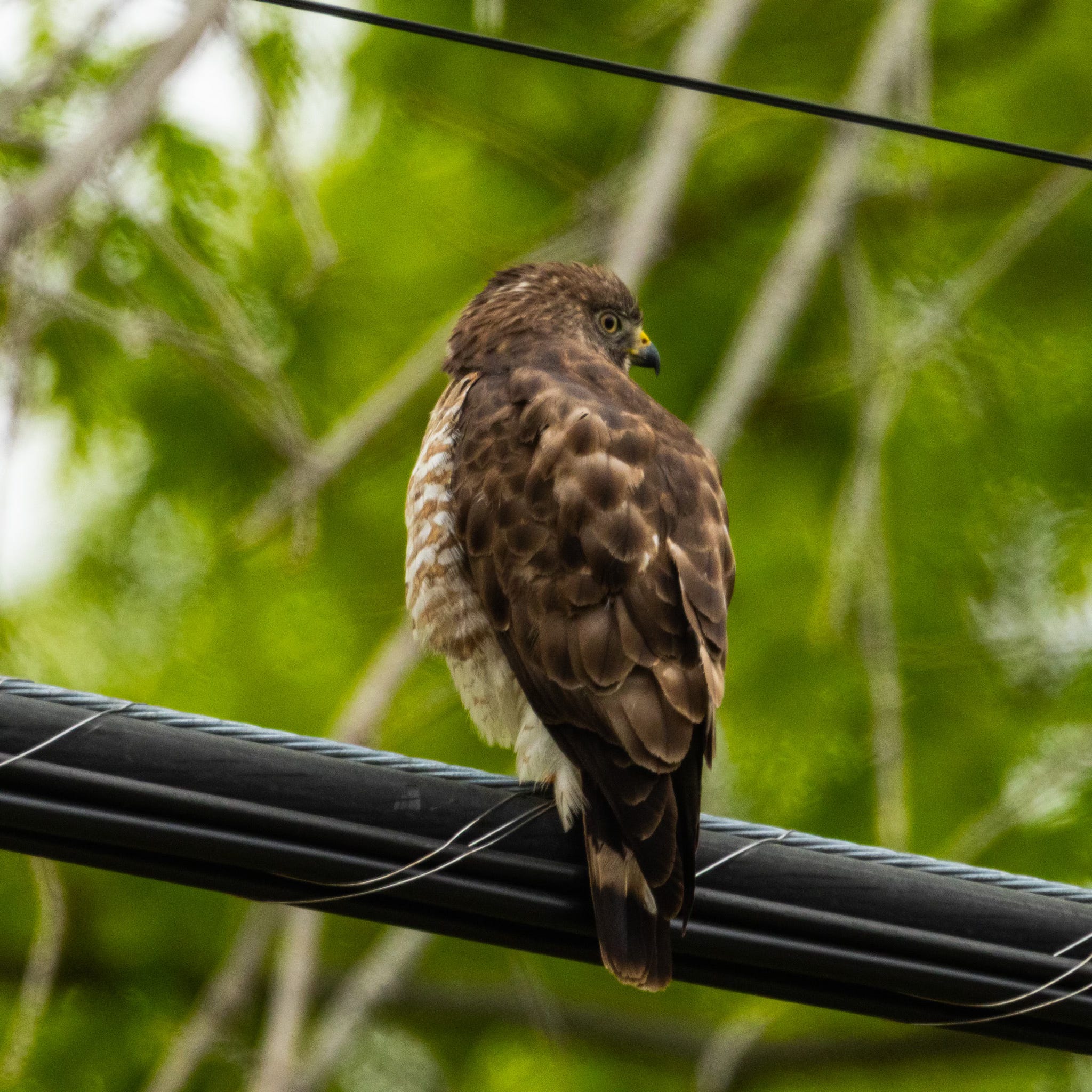
By Hap Ellis, Broad-winged Hawk - Kennebunkport, ME.
3. No more feathers for fashion - The Migratory Bird Treaty Act of 1918 revisited: Millions of birds were hunted each year for fashion, meat markets, sport, and trade, pushing some species toward collapse and silencing once-abundant flocks across North America. Out of this crisis came one of the most important conservation laws in United States history: the Migratory Bird Treaty Act of 1918 (MBTA). Passed more than a century ago, the law was one of the first federal environmental laws of its kind. It helped transform the way Americans thought about wildlife and remains a cornerstone of bird conservation today. In 1918, the MBTA began as a treaty between the United States and Great Britain, which represented Canada at the time. These countries were later joined by Mexico, Japan, and Russia. The MBTA’s purpose was simple but groundbreaking: to protect migratory birds that crossed borders and could not be safeguarded by individual states alone. (via CMNH)
4. Californians get ready for a Big Weekend: Conservation groups, bird organizations, and community scientists across California are preparing for the inaugural California Bird Atlas Big Weekend, a four-day effort taking place June 4–7, to document breeding birds as part of the first-ever statewide Breeding Bird Atlas (BBA). Thousands of Californians will spread out across the state’s coastline, deserts, forests, wetlands, valleys, and cities to document as many breeding bird species in as many parts of the state as possible. Dozens of community events are being organized by local bird and conservation groups. California is one of only six states that has never completed a statewide Breeding Bird Atlas, despite supporting more breeding bird species than any other place in the country. (via Audubon)
5. Once nearing extinction, news from the UK has this warbler slowly improving: A rare bird that was previously on the brink of extinction in the UK is making a comeback, surveys have shown. The Dartford warbler suffered from a population crash in the 1960s, leaving only a few pairs in Dorset. The latest national surveys have revealed a 44% increase in the species in the past five years, with 264 pairs counted in 2025. The RSPB said a record 97 pairs were at RSPB Arne, near Wareham, where the charity has been carrying out habitat restoration. The Heathland Birds Survey, carried out by the British Trust for Ornithology (BTO) and the RSPB, aimed to survey nightjars, woodlarks and Dartford warblers throughout the UK and Channel Islands. (via BBC)
6. This is why you should buy USFW's annual Duck Stamp: New government funds will help conserve, restore and enhance migratory bird habitat across the country. The Migratory Bird Conservation Commission, a group tasked with considering and approving areas of land or water recommended for purchase or rental to conserve wetlands and related habitat for migratory birds, approved the funds from the U.S. Fish and Wildlife Service (USFWS). Overall, the commission approved $44.79 million for migratory bird wetland projects and $22.6 million for land purchases on three national wildlife refuges across three states to conserve 5,254 acres. (via Wildlife)
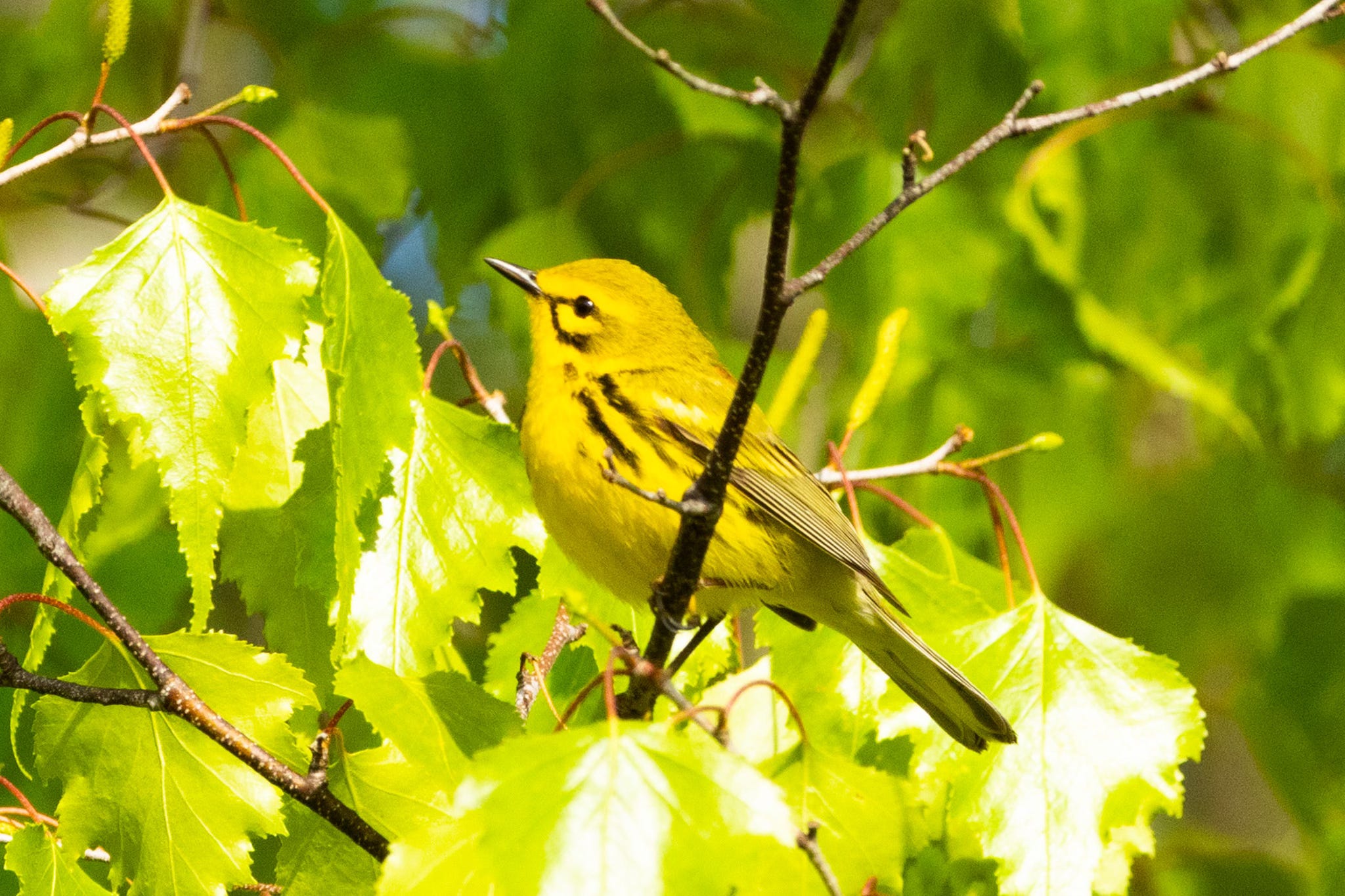
By Hap Ellis, Prairie Warbler - Kennebunk Plains, Kennebunk, ME.
7. Cities as stopover sites (hello, Central Park!): Songbirds generally make their migratory flights at night, and during spring migration tens of millions of birds may be streaming north above us as we sleep. But when the sun rises, where do these tired birds choose to stop, rest, and refuel?You may picture a nature preserve or grassy field, but a study published earlier this year in the journal Nature Cities shows that a large percentage of these birds are making their “stopovers” in cities, illustrating the importance of urban conservation efforts. Ornithologist Miguel Jimenez was a Ph.D. candidate at Colorado State University when he led the study as part of his dissertation. (via The Revelator)
8. Actually, you're going to have to wait a bit, sir: A truck sold by a Kansas dealership cannot be taken from the lot by its new owner because a family of robins is living atop one of the vehicle’s tires. The relatively novel situation has gained widespread attention after the dealership in the Kansas community of Olathe wrote about it on its Facebook page – and it perhaps taught many that active robin nests are protected by federal law from the US. A few weeks earlier, employees at the Olathe Ford Lincoln dealership discovered a robin building a nest atop a tire of the truck in question. The bird laid four stunningly blue eggs over the next few days, the dealership wrote in a 14 May Facebook post. The eggs hatched more recently, and the robin is caring for the baby birds, the dealership said. (via The Guardian)
9. From Hawaii, the always touchy subject of cats: Native species in Hawaiʻi evolved without predatory mammals. Cats are known to directly kill individuals of most of our native species: palila high on Mauna Kea, ʻōpeʻapeʻa, or Hawaiian hoary bat, in our forests, manu o Kū, or white tern, in Honolulu’s trees, ʻalae ʻula, or Hawaiian moorhen, in our marshes, and mōlī, or Laysan albatross, on our bluffs and beaches. Beyond predation, cats spread Toxoplasma gondii, a parasite transmitted through their poop, that can sicken people, kill nēnē and — through rainwater runoff — kill spinner dolphins and Hawaiian monk seals.Stating facts does not demonize cats. Many of us share our homes with cats we love, indoors, where they thrive and native wildlife is protected. (via Civil Beat)
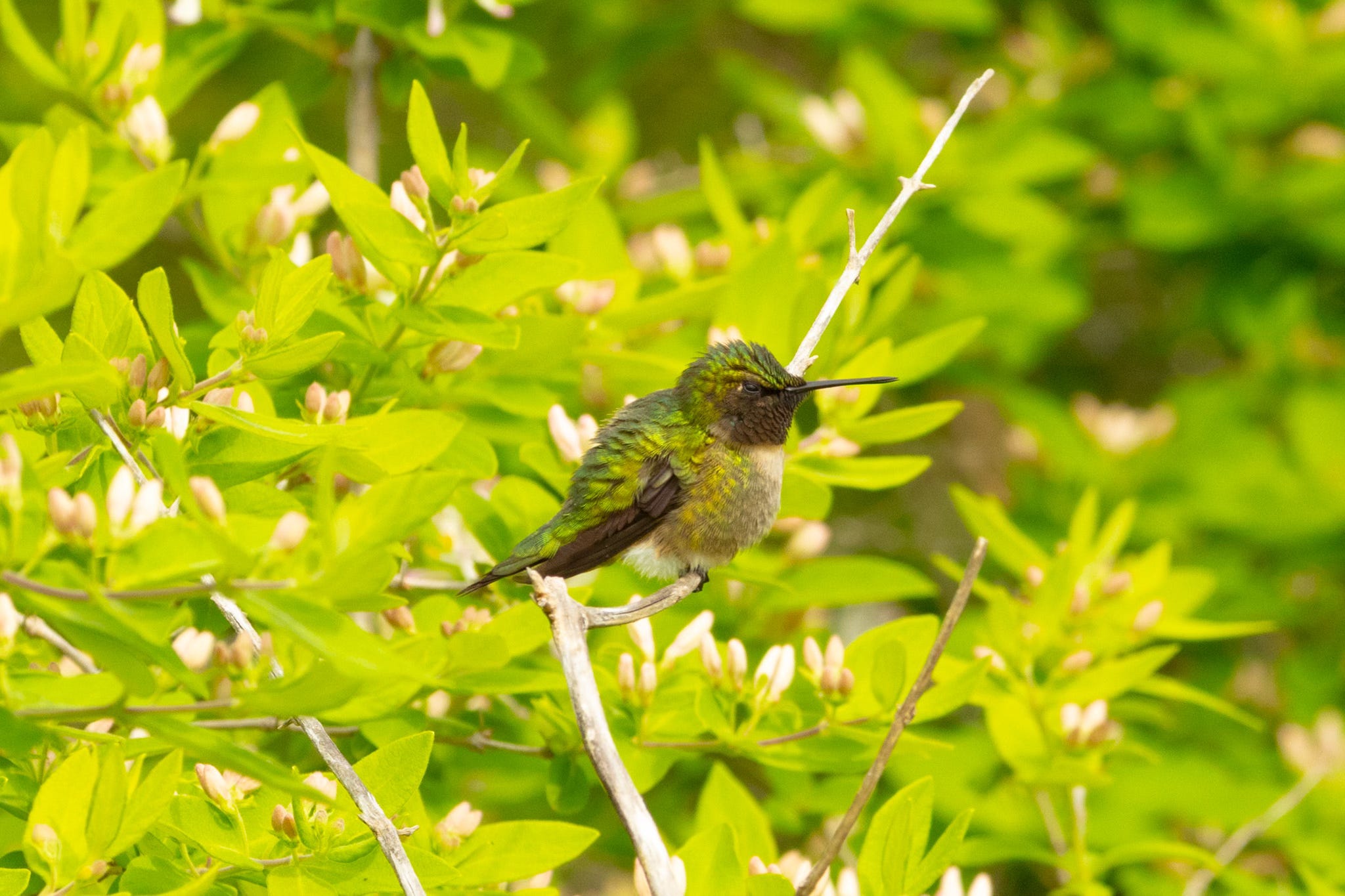
By Hap Ellis, Ruby-throated Hummingbird - Timber Point Trail, Biddeford, ME.
10. "Lights Out" in Utah: When you think of migrating animals, you might picture mule deer, or wildebeest — maybe even salmon. But some of the most extraordinary migration routes are carried out by birds, ranging in size from just a few ounces to a few pounds, and it’s happening here in Utah. “Birds live at a geographic scale that is so different than what we’re used to,” said Adam Brewerton, the avian conservation program coordinator with the Utah Division of Wildlife Resources. “Birds use landscape features and visual cues like stars, moon location,” Brewerton explained. “They’re really keyed into where light is and where light isn’t.” One way to reduce light pollution at home is to turn off unnecessary lights and consider installing shielded fixtures for outdoor lighting. Brewerton said there are uniquely designed programs to aid Utahns in this very task. “Lights Out programs, Lights Out Salt Lake City, Tracy Aviary has a lot of information and resources there for people.” (via Utah Public Radio)
11. The raptors the passengers on MV Hondius were looking for at the landfill: Birders visit landfills because they function almost like artificial feeding grounds, drawing gulls, rodents, scavengers, and eventually larger birds of prey into the same area. According to Audubon Magazine, some birds have become so dependent on landfills that their migration patterns have started to shift. In Europe, for example, White Storks increasingly remain near dumps year-round instead of migrating long distances. For birders traveling through remote places like Tierra del Fuego, that concentration of wildlife can make a landfill one of the most reliable places to spot several species in a single stop. The same landfill ecosystem that attracts birds alongside large rodent populations has also fueled debate over whether the site played any role in the MV Hondius outbreak. Local officials and birding guides have pushed back on suggestions that the landfill was definitively linked to the infections and suggest it may have occurred elsewhere. (via Discover Magazine)
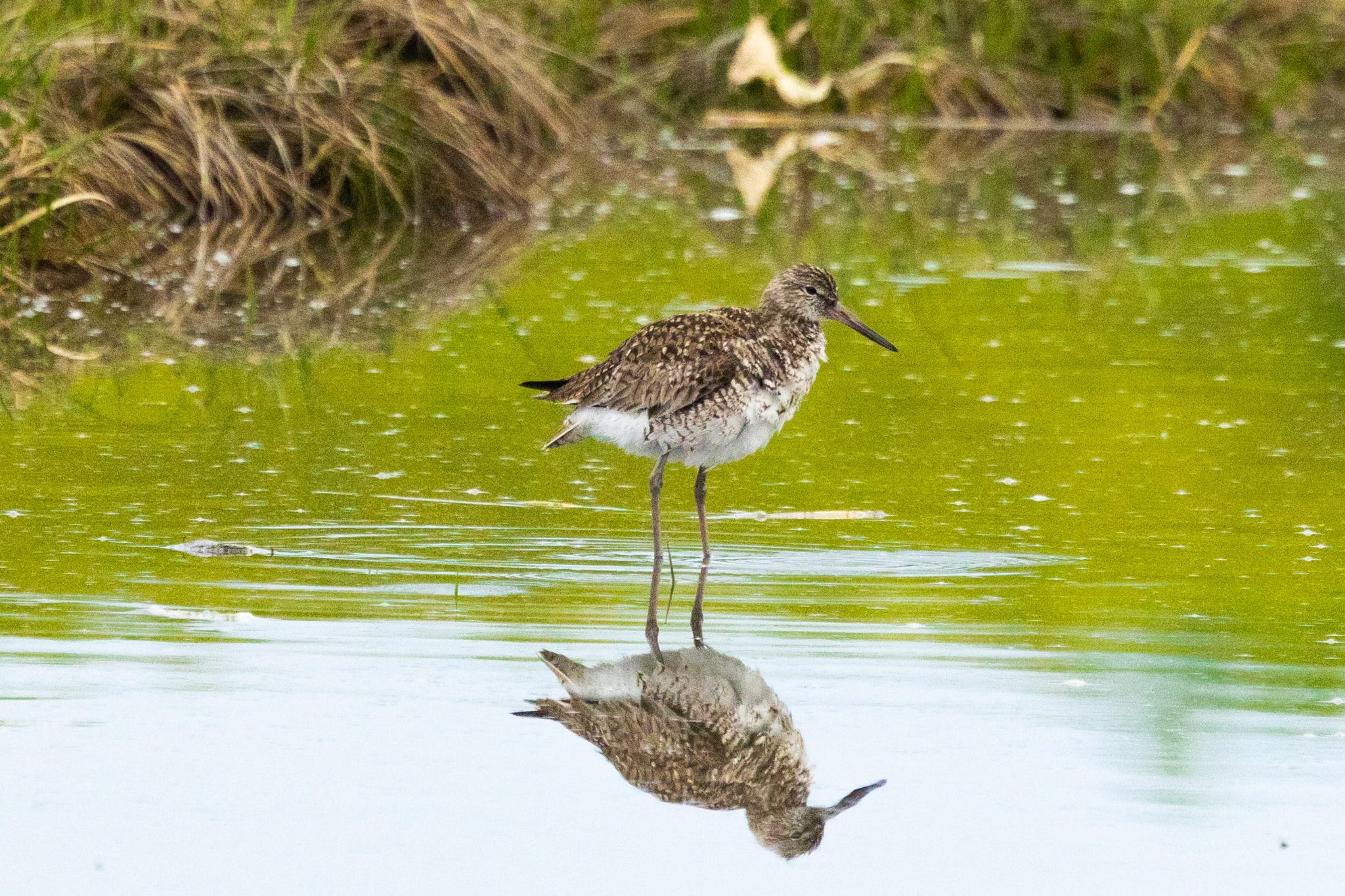
By Hap Ellis, Willet - Granite Point Road Salt Pannes - Biddeford, ME.
12. A $100 billion market?: At Barnside Creamery in Oak Harbor, Ohio, Tonia Tice says she owes a lot of the seasonal ice cream stand’s success to birdwatching. And yet, it’s a hobby she doesn’t really know much about.“As their birding week festivities have come to be more known and have grown, so has our business right alongside of it,” she said. Her shop is on a rural stretch of road, about 25 miles east of Toledo. It’s under a migratory flyway, about a mile away from the Lake Erie shore, so lots of birds stop in the area before attempting to cross the lake. That’s why Northwest Ohio is home to the country’s largest annual birdwatching festival.It was chilly and cloudy at the start of this year’s festival. That’s not traditional ice cream weather, but it’s Tice’s biggest week of the season. And the local businesses that supply her ingredients know it.“When I call for my order,” she said, “They’re like, ‘Yep, it’s birding week, because Tonia just stocked up.’” (via Marketplace)
13. What the crow knows - the WSJ reviews Louis Lefebvre's "A Bird's IQ": In 1921, a series of petty crimes swept through Southampton, England. Morning after morning, residents would retrieve the bottles of milk on their stoops only to find that a thief had skimmed off the cream. The culprit: a half-ounce bird called the blue tit. It had somehow learned to peel off the bottles’ lids and gulp the cream down. Milkmen fought back in various ways, putting stones atop the lids and draping cloths over them. Nothing worked: The wily birds thwarted every defense. The behavior then spread to blue tits in other cities. Like avian Fagins, the birds were indoctrinating others to a life of crime. Ever since then, scientists have been fascinated by innovations in birds, and especially how those innovations reflect avian intelligence. (via The Wall Street Journal)
14. Finally, birding advice for non-birders: I would not call myself a birder, though I certainly love to watch the lively fluttering that happens on my front porch in the mornings. I start by pouring a couple soup cans worth of birdseed onto platforms I’ve nailed across the corner of my porch railing. Then glorying in a new day — though sometimes still a little grumpy about the state of our nation — I sit in my favorite chair (big enough to accommodate Jackson) and sip decaf while watching the birds through my glass sliders. (via Chinook Observer)
Bird Videos of the Week
Video by BBTV, “The Kookaburra: The Legendary Snake Hunter”.

Cornell Live Bird Cam - A big meal for the littlest Red-tailed Hawk nestling!

Cornell Live Bird Cam - The Northern Royal Albatross chick got his weekly weigh-in with Department of Conservation (DOC).
What if I don't hunt? IF and a big if, we should fund USFWS as it is today, which is timid at best and pseudoenvironmentalist at worst (f-bomb alert ) https://socraticgadfly.blogspot.com/2025/08/fuck-us-fish-and-wildlife-service.html
Then we need something else.
Like, say, the old backpack tax that outdoors retailers like REI crushed 40 years ago. If you really care, would you back a $2 tax on a pack and $3 on boots? Lyle Lewis has more https://lylel.substack.com/p/the-backpack-tax-and-the-ecology
And we do need more, because the authors here should know, re the collated piece, that the number of hunters in the US continues to decline.
==
Side note: Why are cats "touchy"? The answer is simple: Keep them indoors. Beyond all the other issues, we need to talk more about people allergic to cats.