
Who Cooks for You?
Bird News Items
1. Let’s begin with a flower and an endangered woodpecker: The orchid was the answer: In 1994, Tennessee’s last Red-cockaded Woodpecker was seen in the rugged uplands of the Cherokee National Forest. Soon after, the soft tapping and raspy calls of the species fell silent across the state. In the years since, the small black-and-white woodpecker—with its ladder-striped back and bright white cheek patches—has been missing from Tennessee’s forests, as logging, conversion to fast-growing pine plantations, and the loss of fire on the landscape erased its preferred habitat in the state: open, shortleaf pine. Because of its historic declines, in the state and across its range in the southeastern U.S., the Red-cockaded Woodpecker is on the Tennessee and federal endangered species lists. Now efforts are underway to restore Red-cockaded habitat in a state park in Tennessee’s Cumberland Plateau, and the best hopes for bringing back the bird are rooted in a rare flower. (via All About Birds)
2. An update on the controversial plan to save the Spotted Owl: The next casualty in the owl wars appeared in the pickup truck’s headlights like a ghost, gliding across the dirt road in California’s Marble Mountains and disappearing into the forest. Danny Hofstadter stepped on the brakes, rolled down the window, and listened. The eerie call of a barred owl emerged from the night—a sound people have likened to a throaty “Who cooks for you? Who cooks for you all?” The University of Wisconsin–Madison (UW) wildlife ecologist quickly swung into action. He placed a small speaker on the hood of the truck and set it to play the same “Who cooks for you?” call on repeat, an irresistible provocation for the aggressively territorial owl species. Then, he pulled his 12-gauge Beretta shotgun from the truck’s cab and snapped a single birdshot-packed cartridge into place. (via Science)
More on the Spotted Owl here (via All About Birds)
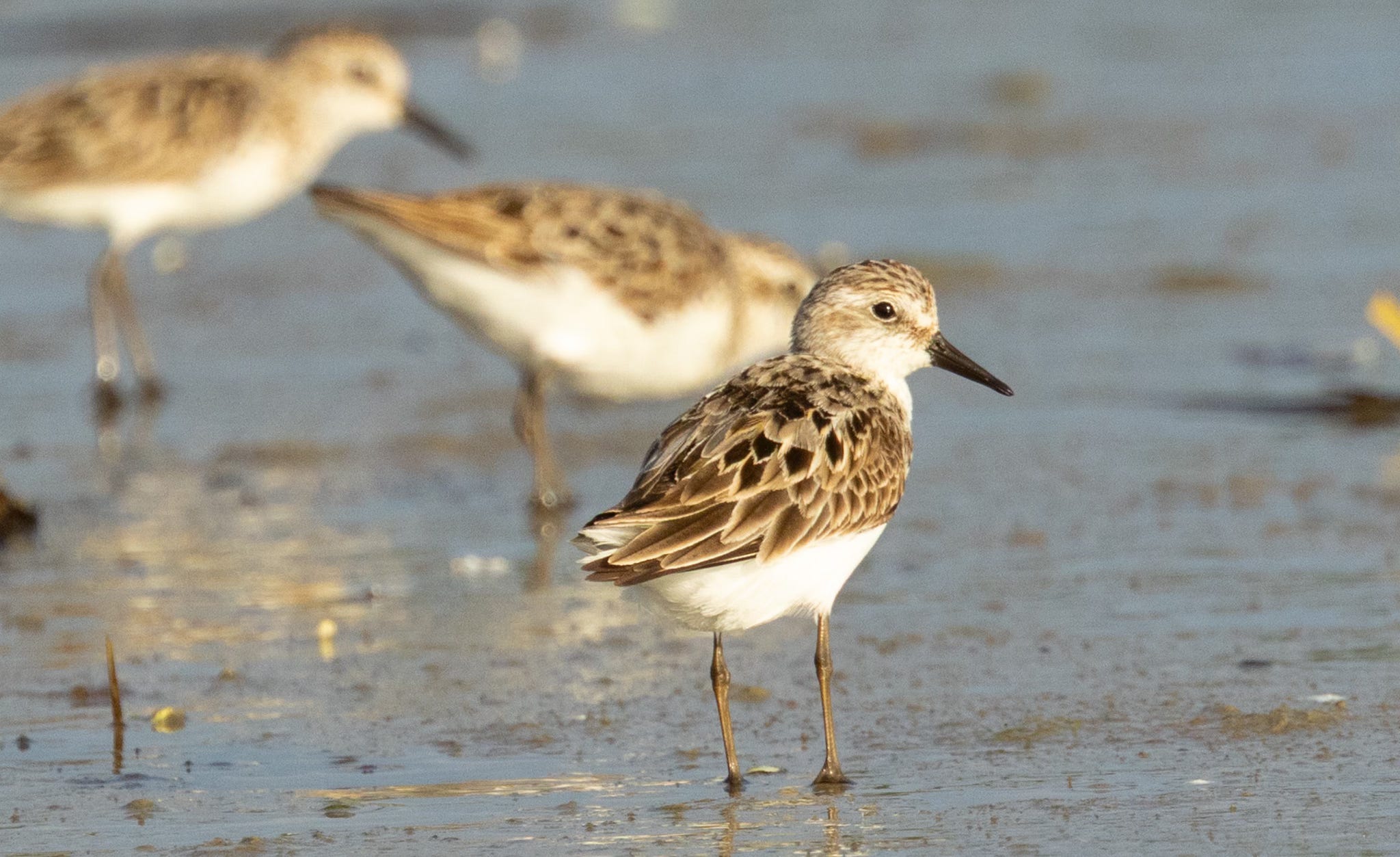
By Hap Ellis, Fall Migration (Semipalmated Sandpiper) - Cape Porpoise Harbor, ME.
3. Looking (way) back – 40,000-year-old bird figurines: Archaeologists excavating in the famous prehistoric Hohle Fels cave in Germany have uncovered two bird figurines carved from mammoth ivory. The thumbnail-size carvings add to the existing evidence that ice age humans had a sophisticated artistic sense 40,000 years ago. When the birds were found in 2025, they were lying just 5 feet (1.5 meters) from each other in a layer dating back 40,000 years, according to the statement. The sculptures bring the total number of bird figurines from Hohle Fels up to three; a small water bird was found there in 2001. (via Live Science)
4. The downside of being beautiful: Sometimes the birds that shine the brightest flame out the quickest. A new study published recently in Conservation Biology has revealed that colorful birds are more likely to be listed as endangered than drabber species. This finding is truer in some parts of the world than others—colorful birds in Southeast Asia and South Asia, in particular, suffer from this bias. In some regions, the factor impacting colorful birds may be the pet trade, as these individuals are more popular, but it doesn’t explain the whole problem. “In Southeast Asia, the pet trade is a huge problem for songbirds, but in Latin America and Africa it’s probably habitat loss and climate change that are more important,” said study author Natalia Ocampo-Peñuela, assistant professor in environmental studies at the University of California, Santa Cruz, in a press release. This finding may also be due to an inherent bias in conservation attention—one previous study has found that ugly birds receive less conservation and research attention. (via Wildlife)
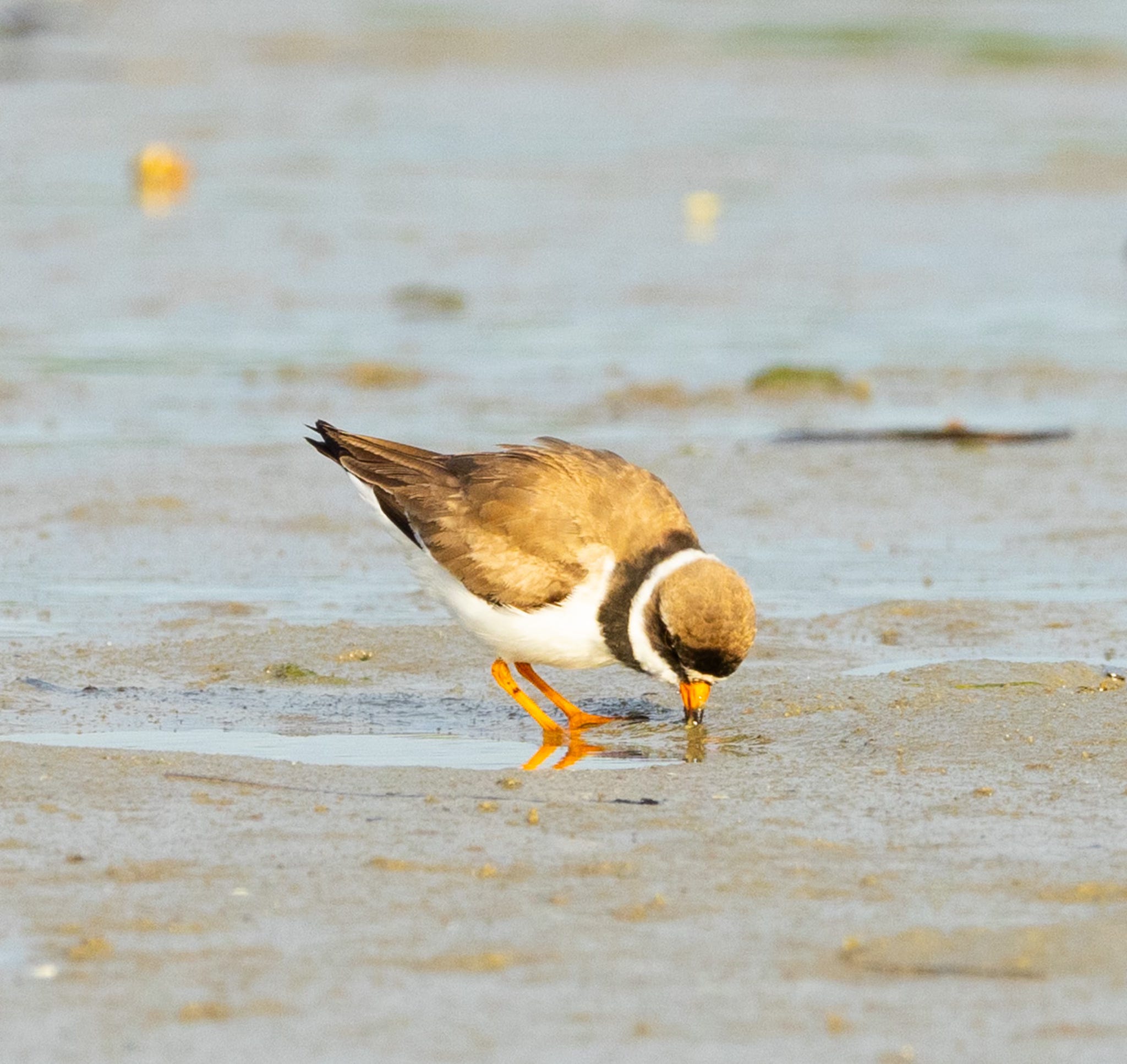
By Hap Ellis, Fall Migration (Semipalmated Plover) - Cape Porpoise Harbor, ME.
5. With Fall migration underway, we’ll be seeing a lot of these formations: Scientists have known for years that birds like geese and ibises gain an aerodynamic advantage from flying in a “V” formation. Now, researchers from Brown University have provided new insights into the nature of that advantage. In a study published in Proceedings of the National Academy of Sciences, Brown researchers Olivia Pomerenk and Kenny Breuer developed an aerodynamic model that simulates the forces at play when one flapping bird—specifically a northern bald ibis—follows another behind and off to the side, the classic V-formation sweet spot. The model showed that birds in that position experience an 11% reduction in the mechanical power needed for flight. Those savings are driven largely by a reduction in the vertical distance of their wing flaps. (via Phys Org)
6. Let’s go! Only 300 miles north of the Arctic Circle: Weeks later, I’m still enjoying my time from the Utqiaġvik Migratory Bird Festival. The fourth edition of the festival unfolded over three days in mid-June, at the Fred Ipalook Elementary School and birding sites throughout the community. The festival started in 2023 to bring together bird researchers, local residents, and visitors from Alaska and afar to celebrate birds and culture. Within the traditional homeland of the Iñupiaq people, the Utqiaġvik Migratory Bird Festival has deep multi-cultural character. Over thousands of years, the Iñupiaq people developed a complex culture and way of life rooted in relations with the land, waters, and wildlife. As the youngest of Alaska’s bird festivals, Utqiaġvik offers true grassroots ambience paired with a solid program. All events are free and open to the public, thanks to many sponsors, donors, and volunteers.
7. A beautiful Instagram post by Gerrit Vyn in America’s Arctic:
8. RIP Guy Tudor: Guy Tudor, a self-taught ornithologist, wildlife illustrator and MacArthur fellow whose field guides to birds trained generations of naturalists and citizen scientists about how to distinguish a Rufous-breasted Leaftosser from a Lesser Hornero, died on July 14 in Greenport, N.Y. He was 91. His death, at Stony Brook Eastern Long Island Hospital, near his home, was caused by pneumonia, Claudette F. Welch, a friend, said. Digital avian databases like eBird were far in the future when Mr. Tudor first set about documenting swaths of the avian world in watercolors and gouaches renowned for their delicacy and precision, and for the artist’s singular knack for capturing the quiddities of winged creatures with paint and brush. (via The New York Times)
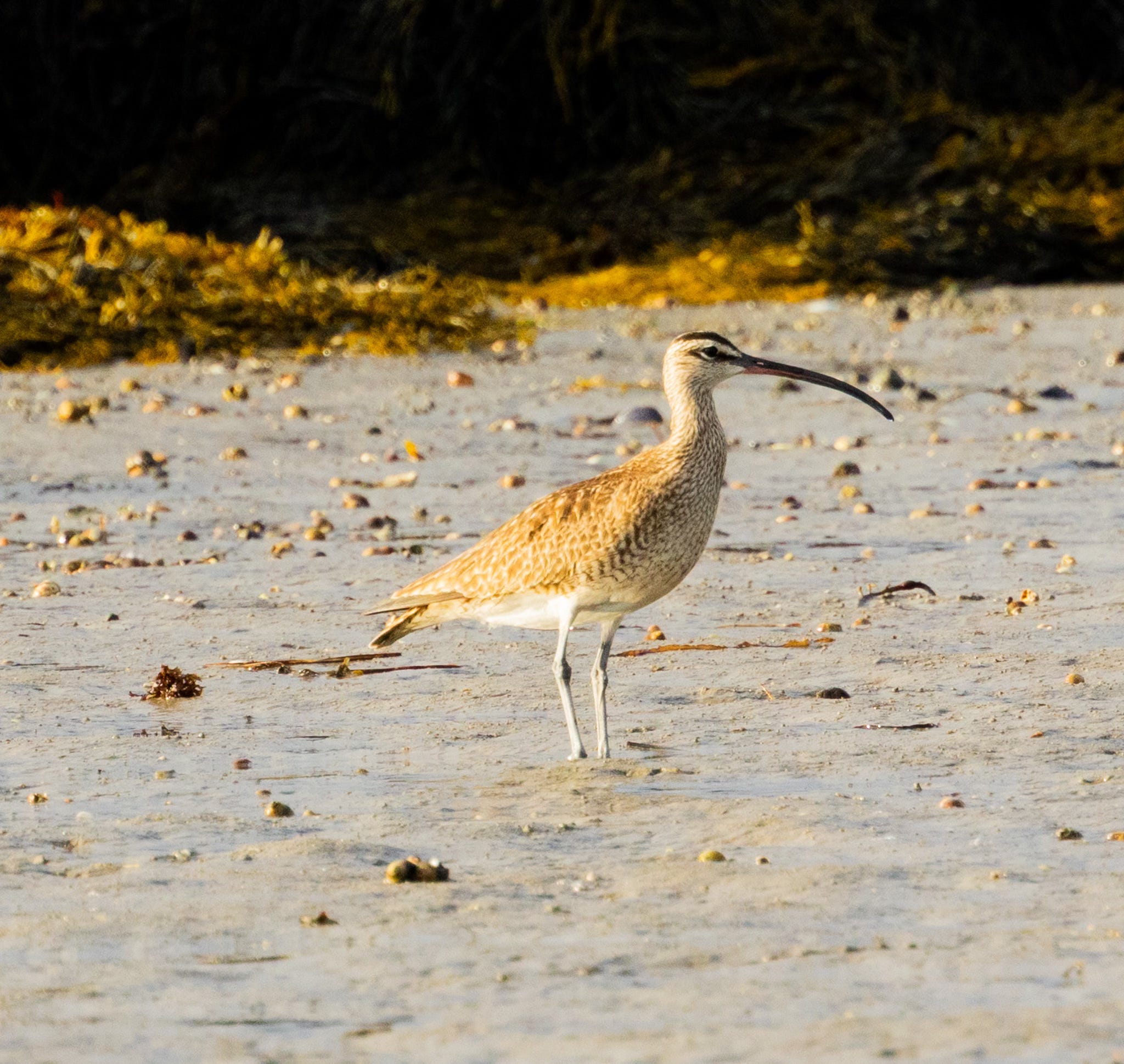
By Hap Ellis, Fall Migration (Hudsonian Whimbrel) - Cape Porpoise Harbor, ME.
9. Book Review from The Guardian: My children brought hawks into my life. My youngest son, especially, became fascinated by birds of prey at the age of six, drawing beautiful pictures and reciting endless facts to bird owners at various country shows. Eventually I decided, why not? We live in the countryside, after all, on Anglesey (Ynys Môn). So, during Covid, Bird, the Harris’s hawk, came into our lives. We got her from a breeder after she hatched. It was perfect timing: I was home-schooling my three kids, and at 2pm every day, rain or shine, with a brilliant local falconer, we would set out on to the headland to watch her fly. It was beautiful to see. For years, my youngest never missed a day, no matter how cold. (via The Guardian)
Note: Similar book – “H is for Hawk” by Helen Macdonald which was made into a film in 2025.
10. Excellent equipment review from the pro’s at B&H: Bird watching and photography seem to go hand in hand. While there are some who prefer to enjoy the sights free of distraction, there are others who like to record their findings to share with others. To do that, we need a camera and picking one can be overwhelming. Many opt for the tried-and-true bridge camera, but these are limited in the quality they can deliver. For this reason, we’re big proponents of the interchangeable lens camera systems, from DSLR to mirrorless. Years ago, bird watchers looking to seriously dabble in photographer fell into two schools: that of the Nikon D500 and that of the Canon 7D mark II. In those days, 10 frames per second continuous shooting rates, and 20 megapixels were all one could dream of. Today, things are quite different. (via B&H)

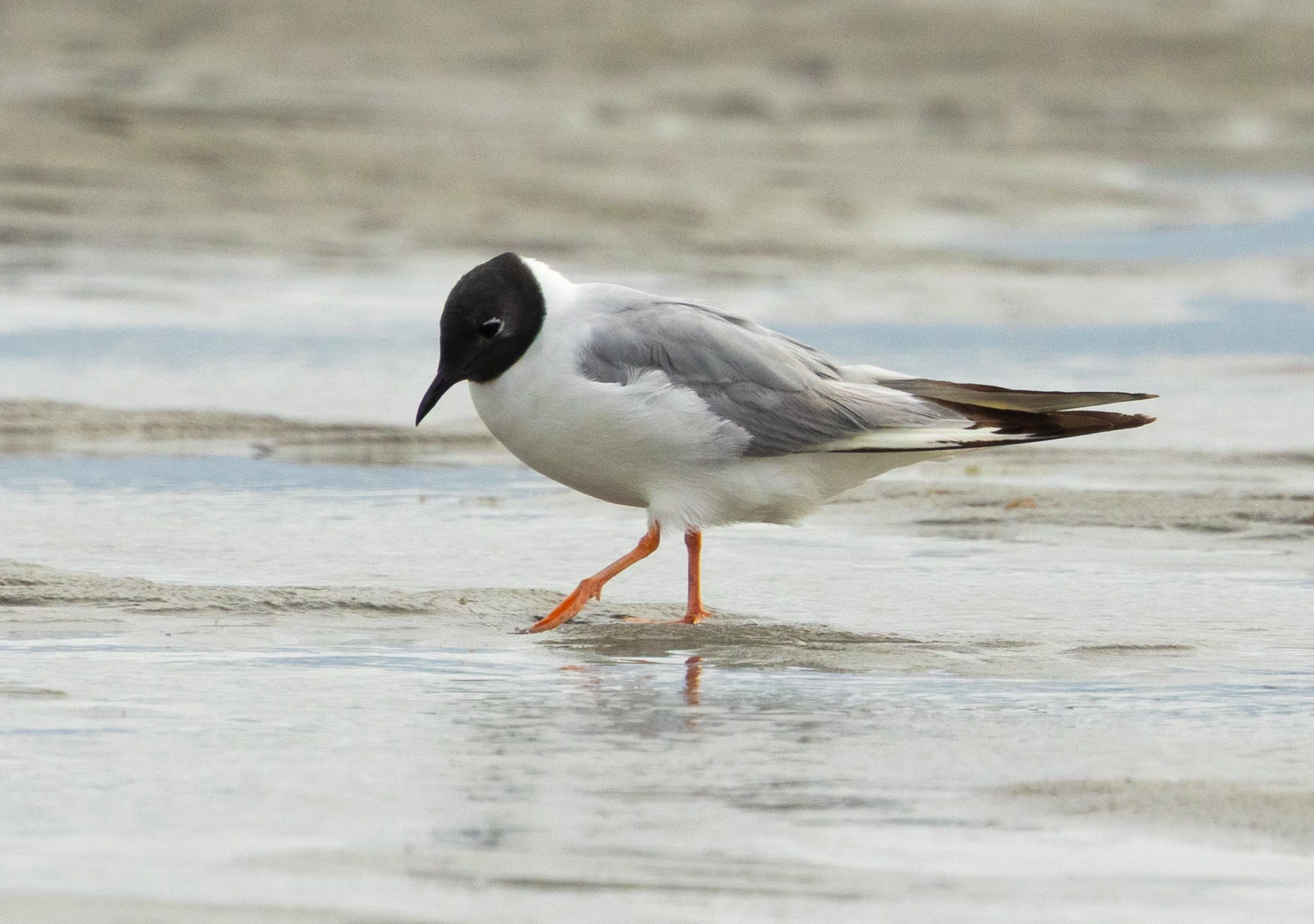
By Hap Ellis. Bonaparte's Gull - Goose Rocks Beach - Kennebunkport, ME.
11. Finally, get another cup of coffee and watch a wonderful 7 minute video from the Cornell Lab on the wonders of tree swallows:
Personally, from the time the idea was first broached, I have opposed the idea of shooting barred owls to try to save northern spotted owls. Beyond the ethical issues, the laundry list of past mismanaged human interventions into environmental issues, and their various add-on consequences, should lead us to say this one will turn out no better. (And on the preservation issues, the story notes that the western “invasion” of barred owls has put some pressure on other owls beyond the spotted owl’s two species; I still stand by the above.) I tagged an online friend, a retired wildlife biologist, in a Note, asking his take.