
Wood Stork.
Bird News Items
1. From northwestern Alaska to the wetlands of Brazil - we begin with a look at the Whimbrel and the researchers who study them: During a month of endless summer light, a mated pair of shorebirds teaches their four chicks how to catch insects. The babies grow fat and strong on the tundra high in northeastern Alaska. They are soon ready for their first migration. On a random day, the male then jumps off the cushion of northern plants and, done with Alaska, flaps eastward. The female pivots and flies west. The male whimbrel pauses for 25 days at Hudson Bay, continues over Nova Scotia and then follows the Atlantic coast on a nonstop journey to a wetland in Brazil. The female cuts over the nose of the Seward Peninsula and stops for two weeks on the Yukon Kuskokwim River Delta. The fattened bird then tracks the Pacific shoreline – resting a week in San Francisco Bay and then some at the mouth of the Colorado River – until it reaches Columbia. The whimbrels winter apart on opposite coasts of South America. The following summer, both birds reverse course, reaching northeastern Alaska in late May. (via The Cordova Times)
2. "Oh Crikey!": No good deed goes unpunished. Many householders feed wild birds in the belief it helps them. Increasingly,some experts are challenging that belief. They say the practice spreads disease, damages local biodiversity and destroys wildernesses overseas. You and I, fellow householder, are prime suspects in their ongoing investigation. Our humble bags of bird seed may figure as blunt instruments wielded in an eco-crime. Should we pull down our feeders and throw our bird tables on a bonfire to conceal further guilty evidence? I have been providing avian meals since I could stagger to my chubby feet and chuck a handful of breadcrumbs in the general direction of a house sparrow. I love having birds in my garden. It connects me to nature. (via The Financial Times)
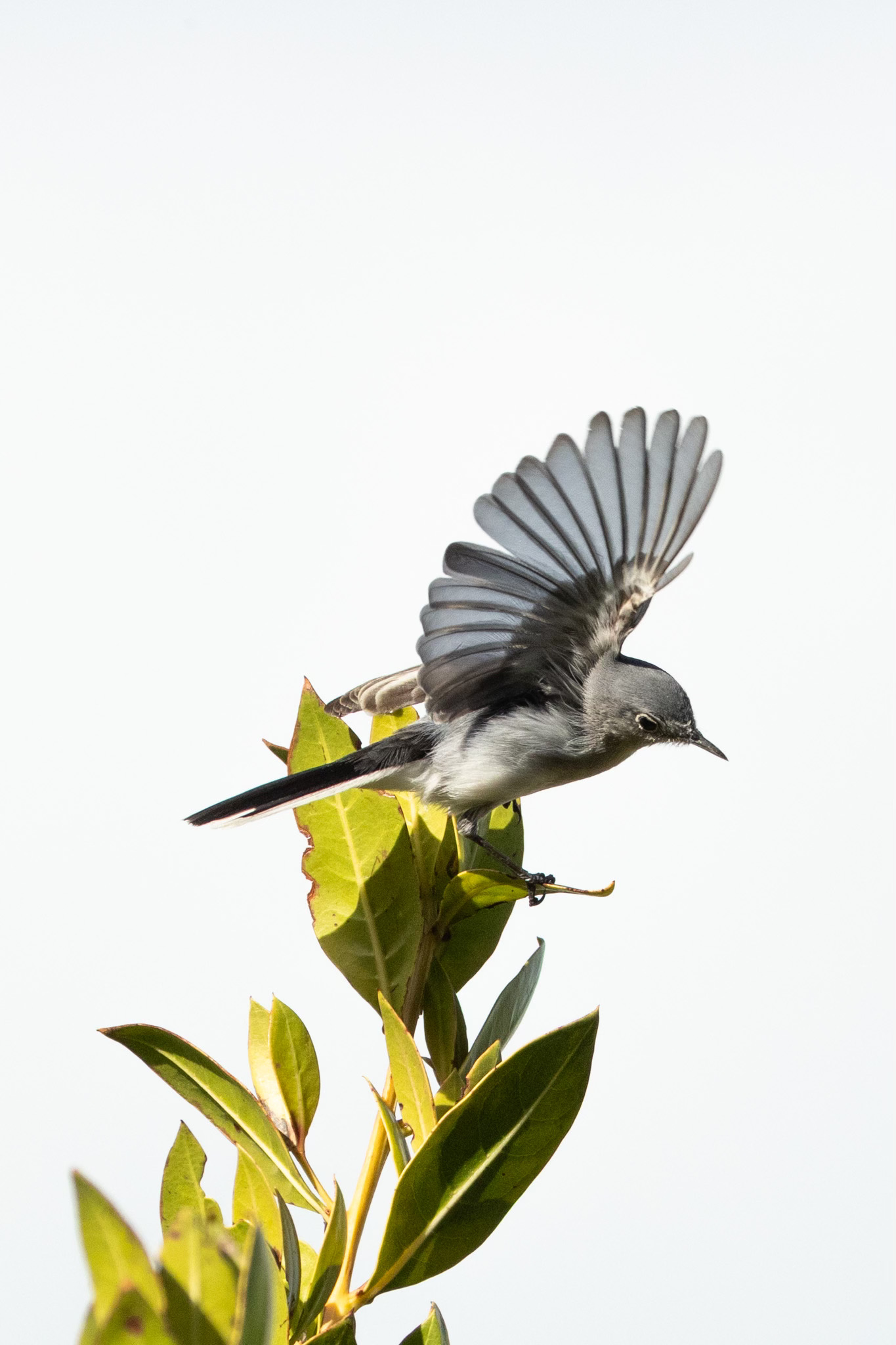
By Hap Ellis, Blue-gray Gnatcatcher - Perico Preserve, Bradenton, FL.
3. What it takes to restore legacy mine land in West Virginia: After driving winding, remote dirt roads in total darkness, Steven Price and his colleagues stand among the frozen morning dew under the shadow of the remaining red spruce stands. They watch as the sun peeks over the shoulder of the dark silhouette of a mountain, painting the sky a vibrant pink. The Monongahela Mountains are filled with damp wisps of fog, and the songs of mourning warblers (Geothlypis philadelphia) begin to fill the air with hope.The Appalachian Mountains are one of the oldest mountain ranges on Earth. But decades of surface mining have reshaped the ecology and geology alike across the landscape of states like West Virginia. Steven Price, a professor at the University of Kentucky, and his collaborators have found that native bird communities are beginning to return to restored legacy mine sites when specific restoration practices are used. (via The Wildlife Society)
4. The power of eBird - combining eBird data with fire severity predictions developed by the USDA Forest Service: Up to 30% of bird diversity hotspots, places where large numbers of different bird species occur, in the western United States face threats from high-severity wildfires in the future that could eliminate critical forest habitats, according to researchpublished in the journal Nature Communications. Scientists from the USDA Forest Service, Cornell Lab of Ornithology, and University of New Mexico have combined advanced fire forecasting with bird distribution data from eBird to create the first comprehensive map showing where changing fire regimes will have the most impact on bird communities across the western United States. (via Phys Org)
5. What it takes to be named the 2026 Sloan Research Fellow: School of Biological Sciences Assistant Professor Benjamin Freeman has been named a 2026 Sloan Research Fellow by the Alfred P. Sloan Foundation. Regarded as one of the most competitive and prestigious awards available to early-career scholars, the Fellowship recognizes researchers “whose creativity, innovation, and research accomplishments make them stand out as the next generation of leaders.” Known for his groundbreaking research in climate change and bird ecology, Freeman studies birds worldwide from Appalachia to Ecuador. He specializes in tropical populations where his work is centered on understanding how mountain species respond to a changing climate — and how to facilitate their survival. (via Georgia Tech)
6. GBBC Report from FL Audubon: Back yards in Florida range from grassy fenced suburbs to sandy beach views, screened pools to oak-shaded forests, and all of them can be good places to spot birds. The Great Backyard Bird Count (GBBC), hosted each February by Audubon in partnership with Cornell Lab of Ornithology and Birds Canada, is an opportunity for anyone, anywhere to participate in community science by simply going outside and counting birds for at least 15 minutes. For many people, including several Audubon Florida staff members, the Great Backyard Bird Count is a fun late winter tradition. This year’s count was held February 13-16, and Audubon Florida staffers were excited to share their sightings from wherever they were this weekend. (via Audubon)
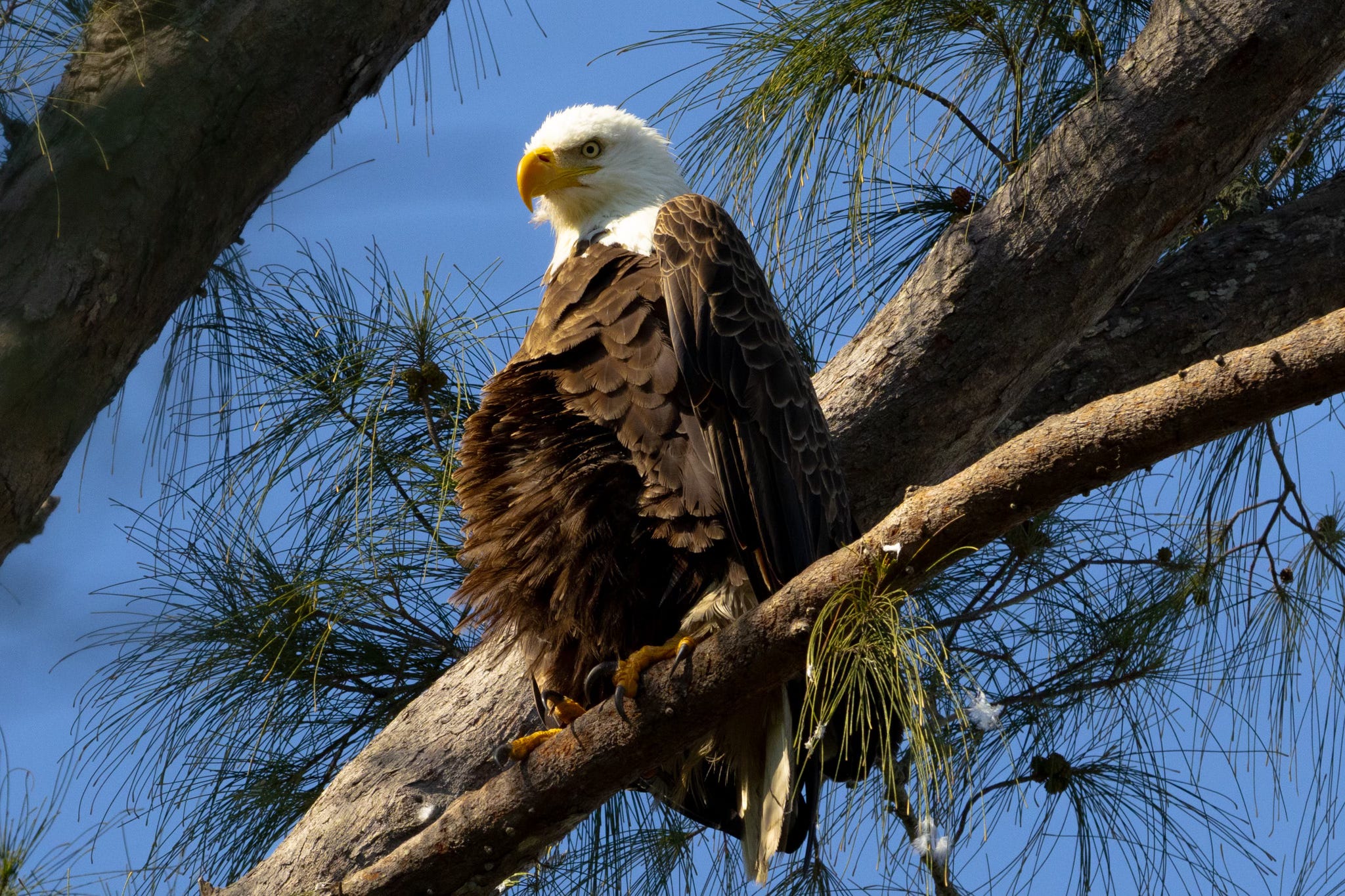
By Hap Ellis, Bald Eagle - Longboat Key, FL.
7. More on the complex paper regarding the inner avascular retina of birds: Seeing is an energy-intensive activity, typically calling for oxygen to generate cellular fuel. But the inner retina of birds—unlike that of most other vertebrates—powers sight without it, according to a new study. “While most people in the field were aware that the inner retina survives with low oxygen tension, this new paper has found that the inner avascular retina of birds works largely anaerobically,” explains Frank Schaeffel, senior professor of ophthalmology at the University of Tübingen, who was not involved in the study. In birds, the inner retina instead meets its energy demands by breaking down glucose anaerobically, the new study shows. “Although this process is 15 times less efficient than oxygen-based metabolism, the tissue compensates through massive-scale glycolysis,” says study investigator Jens Nyengaard, professor of clinical medicine at Aarhus University. (via The Transmitter)
8. Your bird of the day? The American Bird Conservancy looks at the Black-billed Magpie: More than most, the Black-billed Magpie is a bird that inspires strong emotions in humans. A familiar species across much of the West, the Black-billed Magpie is intelligent, adaptable, and bold. For these attributes, they are both admired and loathed. While considered an annoyance or an inconvenience by some, they are also highly social and will occasionally leave “gifts” for humans who feed them. Like many other intelligent and opportunistic corvids, magpies will take advantage of whatever resources they can. (via ABC Birds)
9. A "mean body mass" reduction of 72%?: Birds currently inhabiting many territories across Africa, Latin America and Asia are, on average, considerably smaller than those that predominated in 1940. This is the conclusion of an international study led by the Institute of Environmental Science and Technology at the Universitat Autònoma de Barcelona (ICTA-UAB), which documents—drawing on the collective ecological memory of 10 Indigenous Peoples and local communities—a reduction of up to 72% in the mean body mass of the bird species present in their territories between 1940 and 2020. (via Phys Org)
10. Avian flu - or not?: For 22 years, John Cane has enjoyed the view of the small lake behind his home in Hainesport, New Jersey. But this past week, he said it’s been traumatizing to see large numbers of geese in distress and others dead in the water and in his yard inside the Lakeside at Creekview Community. “It’s very concerning, I have pets, and they want to see the backyard, but I can’t let them go out because they can get infected,” Cane said. In Gloucester County, Betty Park and Alcyon Park in Pitman remain closed after 50 to 75 dead geese were found on Alcyon Lake Tuesday. The New Jersey Department of Environmental Protection said more than 1,100 dead birds have been reported statewide between Saturday and Monday. Most reports involved Canada geese. (via CBS News)
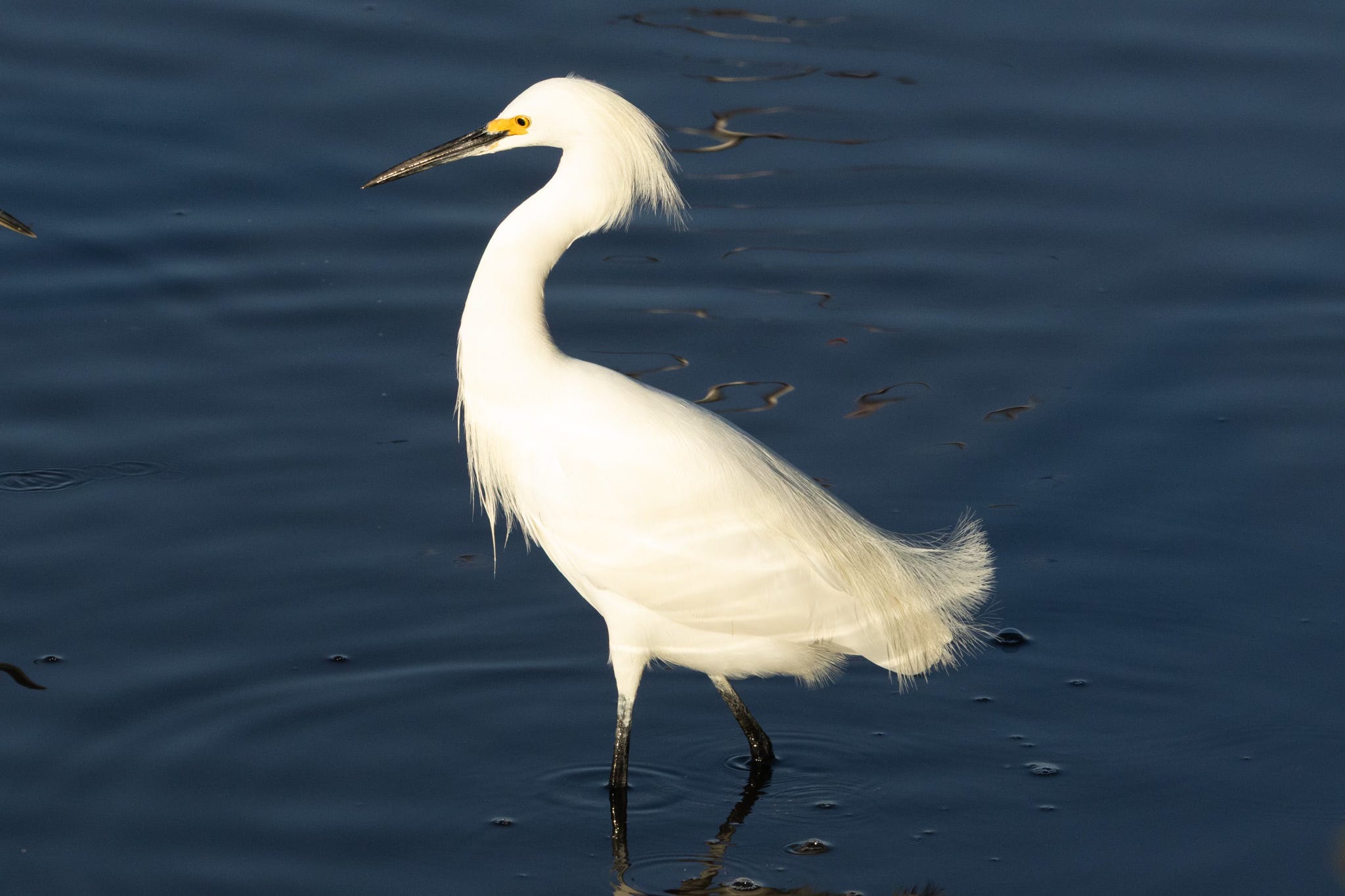
By Hap Ellis, Snowy Egret - Perico Preserve, Bradenton, FL.
11. Wood Storks on the move: After over 40 years of recovery efforts, one population of the wood stork (Mycteria americana)is being removed from the federal list of endangered and threatened wildlife. The large birds are as tall as 45 inches with wingspans that can reach 65 inches and are the only native storks in the United States. They are primarily found in the southeastern United States, where they feed on fish. Wood storks were listed as endangered in 1984, when its population had dropped by over 75 percent—from roughly 20,000 nesting pairs to about 5,000 nesting pairs—primarily due to wetland loss. (via Popular Science)
12. More on the endless fascination with parrots: If you’ve ever looked at an animal and wondered, what’s going on in their head, You’re far from being the only one (though it’s pretty clear what this little raccoon was thinking when he shoved his head into a peanut butter jar). While answering this question might seem like an impossible task—it’s hard enough to decode what humans think about, after all—one way to understand animal minds is by studying their communication. According to Christine Dahlin, a biology professor at the University of Pittsburgh Johnstown, their communication involves the direct expression of feelings or thoughts. Within this context, Dahlin is particularly interested in parrots. While these iconic birds can copy human speech shockingly well, enabling them to be impressive communicators, the role this plays in their independent lives remains a mystery. (via Popular Science)
13. And speaking of parrots, a paean to the Rosy-faced Lovebirds of Phoenix: Minutes after getting to a park in the middle of Phoenix, you can see flashes of green in the sky and hear chatter because love is in the air — or at least, the lovebirds are. The small parrots are transplants from the other side of the world that are thought to be descendants of pet birds. Arizona is believed to be home to the largest colony of rosy-faced lovebirds outside southwestern Africa. They’ve been able to survive in a place known for sweltering weather by sticking close to humans and their air conditioning. The lovebirds may have something to teach humans this Valentine’s Day about keeping strong romantic bonds. (via WRAI)
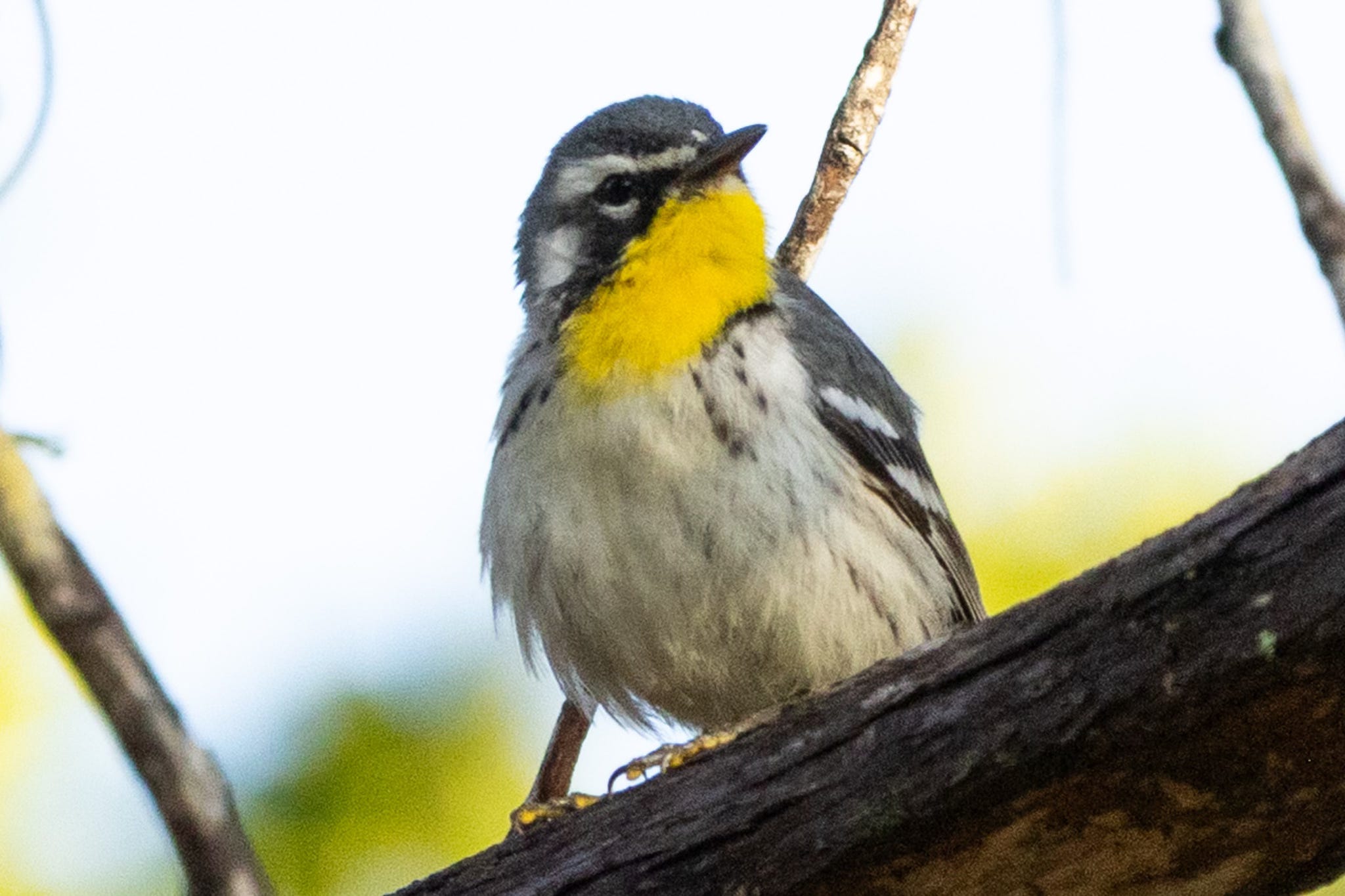
By Hap Ellis, Yellow-throated Warbler - Longboat Key, FL.
14. A deep dive into stubborn Zebra Finches: We like to think that animals follow the crowd. If most of the group does something, surely the individual will copy. But what if the story is more complicated? What if the deciding factor isn’t just what the majority is doing, but how strongly you already feel about it? That’s the question we set out to test in zebra finches. Zebra finches are small, social songbirds. They breed in colonies in the Australian outback and build intricate dome-shaped nests. Importantly for us, they build nests in our laboratory year-round using different materials, including brightly colored string. And here’s the key: Individual male zebra finches, the nest builders in this species, show stable color preferences. Some strongly prefer blue. Others lean yellow. Some are almost obsessive about it. We asked: If a male finch prefers one color, and he enters a “population” where most nests are built of the other color, will he conform? And more specifically: Does the strength of his original preference matter? To answer that question, we ran a three-phase experiment, described in detail in our study published in PLOS One. (via Phys Org)
15. Finally, "When you hear the chorus of birds, the dawn chorus at Hakalau, that's probably the closest you can get to what Hawai'i used to sound like." Love this quote and this article: My alarm went off at 5 a.m., which is not a time I usually greet with enthusiasm. As I reached the windward slopes of Mauna Kea, dawn was just breaking. Mist hovered in the grass, and ʻōhiʻa trees rose into a clear blue sky. The grass was cold from the night. No traffic, no machines, no distant leaf blowers. Just birds. The sound came first — a chorus of native birds echoing through the koa trees. It was exactly as Patrick Hart described in the opening of the documentary Na Leo O Hakalau: “When you hear the chorus of birds, the dawn chorus at Hakalau, that’s probably the closest you can get to what Hawai‘i used to sound like.” (via Honolulu Civil Beat)
Bird Video of the Week
Video by BBC, “Inside the world of weaverbirds’ stunning nest creation”